Returning to Work

Returning to work after cancer can bring both hope and challenges. This workshop, led by experts in vocational rehabilitation, offers practical strategies, self-advocacy tools, and supportive guidance to help you prepare, build confidence, and create a plan that works for you.
About this Workshop
What you will learn:
Physical, emotional, and cognitive factors that can impact work
How to assess your abilities and prepare for your role
How to understand the demands of work
Ways to identify and establish workplace supports
Self-defence tips that can help you and your employer manage work expectations
Suggested ways to monitor the situation
Expert advice in a supportive environment
Delivered by Dr. Christine Maheu and Maureen Parkinson, experts in vocation and
rehabilitation, this workshop is offered so our community can have the latest supportive
information to facilitate a smoother transition back into the workplace.
The information and dialogues are designed to help you understand:
The impact of cancer on work and how to manage it
How to assess your abilities and prepare for your roles
Strategies for managing job demands
Building a support network
Creating a personalized return-to-work plan
This session is available online.
Join us!
- This workshop delivered online with in English with live French translation.
- It is roughly an hour and fifteen (1:15) minutes in length and is delivered over Zoom.
- Be sure to add your questions on the registration form.
Ready to register?
Who should attend this workshop?
- Individuals undergoing treatment, post-treatment, or living with cancer and considering returning to work.
- Anyone interested in the impact of cancer on work, regardless of the stage of the disease.
Make LGFB part of your back to work plan
LGFB Magazine
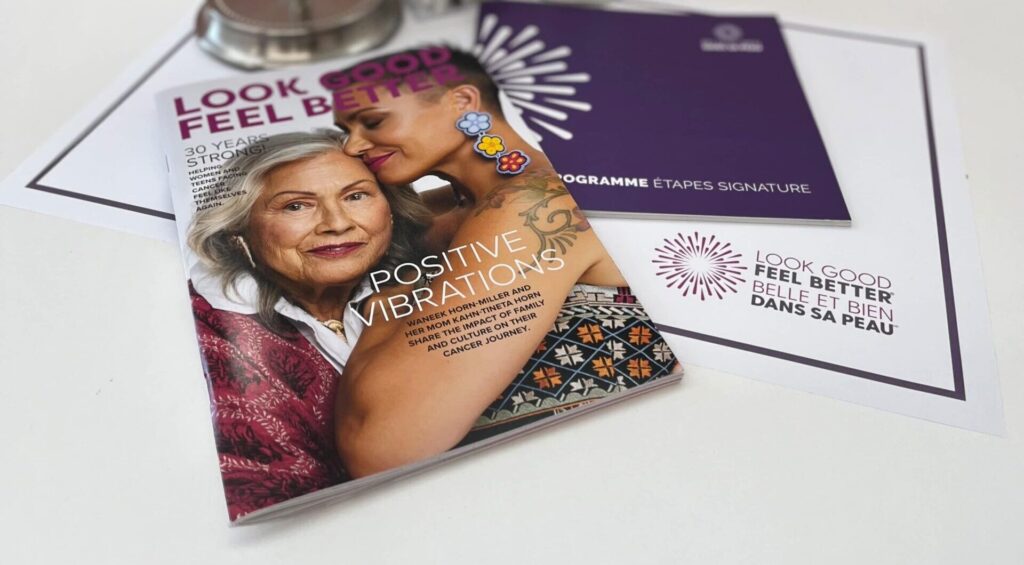
Check out our interactive magazine, filled with heartwarming stories, useful tips, and so much more! Look for the play button on our feature articles! Just click to watch and listen as our experts walk you through skincare, fitness, scarf-tying, cosmetics, mindfulness and more.
Like hands-on learning?
Get expert advice, practical tips, and support in our workshops.
Here are some ways to take care of yourself while caring for others:
Ask for and Accept Help
Share responsibilities. Make a list of what needs to be done and delegate specific tasks. Friends and family often appreciate having concrete ways to help.
Set boundaries. Be clear about what you need from others, and don’t be afraid to say no to requests that don’t feel manageable.
Care for Your Body
Stay active. Engaging in physical activities you enjoy—whether it’s a short walk, a bike ride, or a tennis match—can help reduce stress and boost your energy.
Eat well. Aim for balanced meals and plenty of water whenever possible.
Prioritize sleep. Create a calming bedtime routine and try for 7–9 hours of rest each night.
Don’t neglect your health. Keep your own medical appointments, take medications as prescribed, and address health concerns promptly.
Support Your Mind
Practice relaxation. Try mindfulness, meditation, yoga, tai chi, or other calming activities to help restore balance.
Make time for joy. Schedule activities that have nothing to do with caregiving, like reading, watching a movie, gardening, or spending time with supportive friends.
Talk it out. Share your feelings with a trusted friend, a support group, or a mental health professional. Naming emotions often makes them easier to manage.
Be Gentle with Yourself
Release expectations. You don’t need to be optimistic, organized, or calm all the time. It’s natural to feel overwhelmed, sad, frustrated, or guilty.
Practice self-compassion. Acknowledge that caregiving is hard and remind yourself that you’re doing your best.
When to Seek Extra Help
It’s normal to feel stressed by caregiving responsibilities, and many caregivers benefit from professional support. Please reach out to a healthcare provider or mental health professional if you notice:
Persistent feelings of depression or hopelessness
Thoughts of harming yourself or mistreating those you care for
Increasing reliance on alcohol or drugs
Stopping care for your own basic needs
Getting help is not a sign of weakness…
it’s an important step in protecting both you and your loved one.
“When my mom was diagnosed with cancer, we both took on new roles. It wasn’t always perfect, but caring for her helped me bring our love full circle. And, it demonstrated to my kids that none of us can take on anything alone. We were all in this together. The Look Good Feel Better workshops brought her a lot of joy and support. They also showed me real, tangible ways family and friends could help.”
Chelsea W., Caregiver of Workshop Participant
Cancer runs in my family — it has affected six out of eight siblings, my mom, my aunt, my grandmother, my cousins, and even my niece and nephew. But I’ve never let it define me. I don’t even like to use the “C” word — I call it “the unwelcome intruder.” It infiltrated my body and so now we’re just working on getting it out of there. I don’t allow it to control me or have authority over my body.
Throughout my treatment, some things have stayed constant in my life, and this grounds me. I’ve kept working, because I love my job and it gives me a sense of normalcy. My children are there for me — I’m a single mom of four kids, 22-year-old triplet daughters and a 24-year-old son. I love going on walks with my little nine-year-old Havanese and reading psychological thrillers.
My faith has been another constant source of strength. When I had a recurrence of the unwelcome intruder, I prayed a lot. I was like, “I can’t go through this a second time. Lord, what are you doing?” And I received a message saying that this was not a journey I was to take alone — that this was going to be a community-based journey for me. I have a habit of isolating myself, especially during times of struggle. Thanks to this message that came through, I’ve been staying connected and sharing my journey, especially through the women’s connect group at my church. We all go through struggles in our lives, and my hope is that by sharing mine, it’ll help people to see their own challenges in a better light and to know they’re not alone or stuck. I know there’s an end to this.
It wasn’t just my church community, either. Once I decided to overcome my habit of cutting myself off from others, I was surprised at how vast this community travelled. More and more people outside of my church, outside of my faith, have come to walk alongside me. They send texts, stop by, bring me meals, go for walks with me, and even attend appointments. It has been really uplifting, encouraging, and inspiring. I feel held and supported.
This community extends to Look Good Feel Better (LGFB) as well. Losing my hair was a big thing for me. I cried and cried for weeks on end in anticipation. I just turned 61, but I don’t feel old —and I didn’t want to look old, or sick. My hair started falling out just two days before my LGFB workshop. I felt really shut down. I almost didn’t go. But I’m so glad I did, because the workshop really helped me get through it.
I loved how the volunteer talked about hair loss — so calmly, so casually. She’d rip off her wig, put on another, and then switch to a bandana. Something opened up in me when she was doing that. It felt so freeing. I realized I was no longer stuck to my hair, and that it was okay that it was gone. My hair falling out felt like the end of the world for me, but the workshop helped me realize that hair is just hair. It doesn’t define who I am. This new perspective changed the entire trajectory of my journey. The workshop gave me my life back, basically. It was so empowering. As a bonus, I’ve been having a lot of fun with wigs, trying different hair styles and colours.
My positive mindset has really helped me through this journey. Prayer, connection, community — these have been instrumental. And I really do treat this as a journey — not just a medical, physical journey but also a mental, spiritual, soul-deep transformation. I don’t have to worry about the unwelcome intruder in my body because that’s what my medical team does. My responsibility is to make sure that I’m staying as healthy as possible, physically and mentally. I’m not just focusing on the cancer, but on making myself better.
Cancer-Related Fatigue Workshop

Cancer-related fatigue is one of the most common and overwhelming side effects of treatment. It can continue well after treatment has ended. In this workshop, Dr. Scott Adams shares practical strategies and the latest best practices to help manage fatigue and rebuild energy.
About this Workshop
The information and dialogues are designed to help you understand:
What cancer-related fatigue is, and how it differs from everyday tiredness
The main causes of fatigue during and after treatment
How movement and exercise therapy can support recovery by improving strength, aerobic efficiency, and energy use
Best practices from cancer fatigue programs, including the role of cardiopulmonary exercise testing (CPET)
Practical pacing and self-monitoring strategies to manage fatigue safely
How to access support from physiotherapists and rehab professionals
Expert advice in a supportive environment
Delivered by Dr. Scott Adams, Founder of Cancer Fatigue Services, this workshop is offered so our community can have the latest supportive information to help reduce and relieve the side effects they are experiencing.
Topics Covered in Cancer-Related Fatigue include:
Energy pacing and the “boom-bust” cycle
Self-monitoring tools (talk test, fatigue logs, perceived effort)
Examples of safe starting points for movement (including for those with severe fatigue)
How strength and aerobic conditioning support daily life recovery
Navigating referrals and accessing rehab supports
This workshop is available ONLINE
Join us!
- This workshop delivered via a Q&A with our health professional.
- It is roughly an hour and fifteen (1:15) minutes in length and is delivered over Zoom.
- Be sure to add your questions on the registration form.
Ready to Register?
Who should attend this workshop?
- Individuals who are currently in treatment.
- Individuals who are post-treatment, but still may be experiencing side-effects impacting fatigue or energy levels.
- Anyone interested in fatigue-related concerns wherever people are in their cancer continuum.
Tackle cancer-related fatigue with expert advice
Register today
Cleansing and Moisturizing
- Gentle cleanser labelled for sensitive skin or for eczema
- Non-irritating and pH balanced or neutral
- Use lukewarm or cool water (hot water strips natural oils). Keep showers brief (less than 10 minutes) to minimize skin irritation
A cream is likely best for you right now. The type of moisturizer you choose (called the “vehicle”) matters because your skin may be more sensitive and dry during treatment.
Understanding moisturizer types:
- Gels – Lightest, may not provide enough moisture during treatment
- Lotions – Light to medium, absorb quickly but need frequent reapplication
- Creams – Thicker and more moisturizing, ideal for treatment-sensitive skin
- Ointments – Heaviest and most protective, but can feel greasy
Creams typically provide the right balance of moisture and protection for treatment-sensitive skin without being too heavy for daily facial use. Look for cream-based products that are:
- Hypoallergenic
- Fragrance free
- pH balanced or neutral
- Avoid anything labelled “anti-ageing”
Fragrance-free and scent-free are not the same. Scent-free products may still contain masking fragrances, which can be irritating. Look for ‘fragrance-free’ on the label whenever possible.
Moisturize immediately after patting your skin dry from bathing to lock in moisture. If you don’t bathe daily, moisturizing on dry skin is still beneficial.
It’s important to note that oils don’t add moisture – they lock in existing hydration.
For best results, apply oils to slightly damp skin or use them in combination with a moisturizer. The exception is scalp care when you have hair, where oils can be used alone since applying cream to the scalp isn’t practical.
If you want to use oils to lock in moisture, look for ones that are fragrance-free and non-comedogenic (won’t clog pores). Gentle, non-comedogenic options include:
- Rosehip seed oil
- Shea butter
- Squalene
- Argan oil
- Grapeseed oil (cosmetic grade)
- Castor oil
- Baby oil
- Petroleum Jelly
- Bio-oil
Coconut oil can be absorbed through skin and may affect cholesterol levels in some cases. It may cause allergic reactions in those sensitive to cocamidopropyl betaine. It’s better to avoid using cooking oils on your skin and opt for products specifically designed for skincare.
Always test on a patch test on a small skin area that isn’t your face first.
Skincare Ingredients and Treatments
Treat your skin as if you have eczema. Hyaluronic acid is suitable for sensitive skin, but put aside other acids until 6 months after treatment ends. That includes retinol any other active ingredients.
Wait until treatment is complete, or ensure the practitioner is trained to work with cancer patients using extremely gentle, non-irritating products.
Toners are OK if your skin tolerates them and they’re not too drying. With a neutral cleanser and moisturizer, you may not need toner.
Vitamin C serums are generally safe during cancer treatment. Vitamin C is an antioxidant and unlikely to cause problems. However, avoid Vitamin C serums mixed with retinol, as retinol can be drying and harsh on sensitive skin during treatment.
- Start slowly – use every other day to test tolerance
- Choose lower concentrations (10-15%) and stabilized forms for gentler application
- Stop if you experience stinging, redness, or irritation
- Always follow with moisturizer and sunscreen
We’re here for you.
Find more support and connect with experts in our Skincare & Makeup Workshop.
It really depends. While many people associate hair loss primarily with scalp hair, other hair types, including eyelashes and eyebrows, can also be affected. Some people might experience thinning rather than complete loss of eyelashes and eyebrows, and others may not lose them at all. Your treatment team may have more information about your specific protocol and the side effects others have experienced.
Deciding when to shave your head is a personal choice that varies by individual. Many people notice significant thinning or loss a few weeks into treatment, making that a good time to consider shaving if you’re uncomfortable with your hair’s appearance.
Shaving can provide a sense of relief and control, especially if your scalp becomes sensitive due to chemotherapy. It also creates a smooth surface for wearing wigs or head coverings.
If you’re unsure, discussing the decision with a trusted friend or healthcare provider can offer support. Ultimately, do what feels right for you. But be sure to use clippers with a #1 guard, leaving 1/8″ of stubble.
Do what feels right to you but do not go shorter than 1/8″ as this could irritate the scalp. Many people find that cutting their hair shorter before treatment makes the hair loss process feel more manageable. Keeping short hair can also make regrowth look more even.
It’s a personal choice. You may want to keep a short cut which can make thinning less noticeable.
It could be irritation, inflammation of the hair follicles or ingrown hairs. Instead of using a razor, use clippers with #1 guard to remove hair to prevent bumps from appearing or reoccurring.
You can use either shampoo or facial cleanser on your scalp. Either continue your facial cleanser upward to your scalp, use body wash if tolerated, or try moisturizing shampoo. Look for shampoos that are sulfate-free, gentle and moisturizing. Choose products that are gentle, hypoallergenic, and pH balanced or neutral.
Yes! Gently massage your scalp with facial moisturizer to:
- Increase comfort and circulation
- Reduce sensitivity and itchiness
- Make wigs, scarves, or hats more comfortable
Jojoba oil is particularly good for scalp care as it’s known for its soothing properties and ability to lock in moisture. Other gentle, non-comedogenic options include:
- Rosehip seed oil
- Shea butter
- Squalene
- Argan oil
- Grapeseed oil (cosmetic grade)
- Castor oil
- Baby oil
- Petroleum Jelly
- Bio-oil
Exfoliating the scalp can be beneficial as it helps remove dead skin cells, excess oil, and product buildup. Use a gentle cleanser and a baby washcloth to remove dry skin, then follow up with a moisturizer. If you require further exfoliation, try a gentle exfoliating product for sensitive skin.
If your scalp is sensitive, irritated, or doesn’t have visible flaking, avoid exfoliating entirely. When in doubt, stick to gentle cleansing and moisturizing only.
We’re here for you.
Find community and practical advice in our Wigs & Scarves workshop.
- For general comfort and sensitive scalps:
Bamboo, cotton, linen, and modal are excellent choices because they are lightweight, moisture-wicking, and allow for good airflow. Bamboo regulates temperature and is soft on sensitive skin, while cotton offers all-day comfort and linen is highly breathable.
- For winter/cold weather:
Look for soft, breathable, and non-irritating fabrics like bamboo, fleece-lined cotton, and wool blends with a soft inner lining. Avoid scratchy wool or synthetic fibres that can cause irritation. A silk or satin lining inside hats can also help prevent friction and dryness.
- For maximum coolness:
Bamboo, cotton, linen, and modal are your best options. In terms of design, loose-fitting caps and lightweight scarves offer versatility, while turban-style wraps provide full coverage.
Consider owning at least 3 to 5 head coverings to ensure you have enough options for different occasions while allowing for washing and drying. Sleep head coverings should be made from softer, more comfortable materials that provide warmth and minimise friction against the scalp, making cotton or bamboo ideal choices. Like pyjamas, it’s important for hygiene to reserve specific items for sleep to reduce transfer of dirt and sweat from daytime activities to bed.
For daily wear, a variety of styles, including caps, scarves, turbans, and hats, can be beneficial. These should be made from lightweight, breathable fabrics that keep the scalp cool and comfortable while providing coverage.
Head coverings can be purchased from various sources, both online and in stores. Most wig boutiques will also carry head coverings and many other accessories. You can also find head coverings on specialty websites that cater specifically to those undergoing treatment. Cancer support organisations often provide resources or even free caps. Department stores and local boutiques may also carry suitable headwear. Additionally, some hospitals/cancer centres provide head coverings or purchasing resources. When selecting a head covering, consider comfort, material, and style to find the best option for your needs.
Ideally, you should wash them every 2 to 3 days, especially if you sweat or wear them for extended periods; daily wear may necessitate more frequent washing. The fabric type can also influence washing frequency—cotton and bamboo can be laundered more often without damage, while delicate fabrics like silk may require less frequent cleaning. Additionally, since chemotherapy can make the skin more sensitive, it’s important to use gentle, hypoallergenic detergents and avoid fabric softeners that could irritate the scalp. If you notice any odours, visible dirt, or signs of irritation on your scalp, wash your head coverings immediately.
A sleep cap is designed for nighttime use and is made from soft breathable material. They help keep the head warm while collecting hair that is coming out and protecting the scalp from friction against pillows.
Unless it is specifically listed as having UV protection you should wear sunscreen under a head covering because UV rays can penetrate these materials. The scalp may be more sensitive during and after chemotherapy, increasing the risk of sunburn. If you plan to be outside for an extended period, sunscreen adds an essential layer of protection, providing peace of mind, particularly if you adjust or remove your head covering throughout the day.
Keep sun protection top of mind by wearing a waterproof sunscreen and/or a swim cap, wide-brimmed hat or head covering with UV protection.
Wear a head covering like a simple cap or wig grip band underneath.
Scarf Styling and Techniques
The square knot (or reef knot) is recommended due to its simplicity and security. To tie a square knot, start by positioning the scarf on your head so that the ends hang evenly down your back or to the sides, depending on your style preference. Cross the right end of the scarf over the left end, then bring the right end under the left and pull both ends tight to form the first part of the knot. Next, take the left end and cross it over the right end, bringing the left end under the right and pulling both ends tight again to complete the knot. The square knot is known for staying tied, making it suitable for all-day wear, and it can be easily adjusted to tighten or loosen the fit as needed. Additionally, the knot lies flat against your head, preventing bulkiness and discomfort.
Yes, at minimum the top of the ears should be covered to create a more comfortable and polished look.
Yes! Search terms like “scarf tying tutorial for cancer patients,” “how to tie a scarf for hair loss,” and “headscarf tying techniques for chemotherapy.” Other effective phrases include “chemo scarf styles,” “head covering tutorials for cancer,” and “easy scarf styles for cancer patients.” Utilizing these search terms on platforms like YouTube or Google can help you find a variety of helpful tutorials tailored to your needs.
Still have questions? We cover these topics and a LOT MORE in our workshops.
We're here to help.
- Blend until colour matches your natural scalp colour
- Use a disposable sponge for smoother blending
- Limit makeup on forehead to reduce stark transitions
Yes. Foundation helps eyebrow pencil cling to skin. Apply foundation first, let dry, then draw in eyebrows.
Yes. This creates a lighter, more hydrating base that’s comfortable on dry or sensitive skin. It may reduce coverage, so experiment to find your balance.
Many prefer foundation first to create an even base, then concealer to spot-correct areas needing extra coverage.
Apply concealer dots from inner to outer corner of eye with clean finger, applicator, or disposable sponge, then blend gently.
- Purple: brightens dullness, evens yellow skin
- Yellow: conceals dark purple or blue discolouration
- Green: hides red blemishes, blotchiness, sun spots
- Peach: cancels dark circles (light skin tones)
- Orange: cancels dark circles (darker skin tones)
To prevent makeup from melting:
• Press translucent powder with cotton round to absorb oils
• Blot oil before applying powder
• Consider lightweight primer
• Ensure sunscreen and moisturiser are fully absorbed first
Foundation and Base Makeup
Foundation provides the most coverage and is best for evening out skin tone and covering discolouration.
BB creams (Beauty Balm) offer lighter coverage and often include moisturiser, sunscreen, and skin-caring ingredients. They’re ideal when you want a natural look with some coverage and added skin benefits.
CC creams (Colour Correcting) focus on evening out skin tone and correcting discolouration with light to medium coverage. They’re useful when you want to address redness or uneven colour without heavy coverage.
During treatment, BB and CC creams can be gentler options for your skin since they’re typically more hydrating and less heavy than traditional foundation. Choose products that are hypoallergenic, fragrance-free, and pH balanced, and use whichever feels most comfortable on your sensitive skin.
No, it’s not a good idea. It’s better to use them separately to avoid diluting the sunscreen’s potency and losing protection.
You likely won’t use enough foundation for adequate coverage, and areas like ears and neck would be missed. It’s best to use sunscreen, let it absorb in the skin and then apply foundation. You may also like a mineral sunscreen powder for re-application over makeup.
It’s a personal preference. Use photos where you liked your eyebrows as a reference guide.
Look for a universal taupe pencil – a slightly warm tone that’s not too grey or silvery.
Rub the pencil on the back of your hand to warm and soften it.
No, but be very gentle when removing makeup to protect delicate regrowth.
No, procedures that create open wounds aren’t recommended during treatment.
Its effectiveness isn’t scientifically proven. If you try it, do a patch test on skin first, avoiding eyes. Ask your healthcare team if unsure.
Yes! Follow proper hygiene, don’t apply to waterline, and sharpen pencils between uses or spray isopropyl alcohol on the tip to disinfect it.
Avoid eye makeup while eyes are watering. Focus on brows and blush for facial dimension.
These aren’t recommended. Glue can irritate sensitive skin, and magnetic lashes may require excessive rubbing to remove.
No, but be gentle removing it. To protect your lashes:
• Avoid waterproof formulas
• Use gentle remover (see eye makeup remover question below)
Any gentle cleanser labelled for sensitive skin works. It should be non-irritating and non-oily. Use a cotton pad, hold on eyelid for a few seconds, then wipe downwards from inner to outer corner.
During treatment, lipstick is OK for 3 months if applied with Q-tips or disposable applicators.
Using Q-tips or disposable applicators to apply lipstick is the best way to keep your lipstick clean. If applying directly, spray with isopropyl alcohol after each use.
Ask your pharmacist for products specifically formulated for severely dry skin/lips.
Ask your medical team or pharmacist for mouth rinse recommendations – they often have samples.
Makeup Hygiene and Safety
- Use pump dispensers when possible
- Use spatulas to remove products instead of fingers (and no double-dipping with spatulas)
- Close lids tightly after use
- Never blow on applicators
- Don’t share products
- Test new products on hands/wrists, not face
- Follow expiry dates
Regular brushes and sponges hold bacteria. Use disposable applicators or clean fingers to apply makeup during treatment. You can find disposable applicators online, at dollar stores, or in the makeup sections of large retailers.
- Mascara: 1 month once opened
- Most other products: 3 months with proper hygiene
Sunscreen and hand sanitizer become less effective after expiry. Throw away makeup with separation or off-odours, even before the expiry date.
We’re here for you.
Connect with others and get hands-on learning in our Skincare & Makeup Workshop.