LGFB Magazine
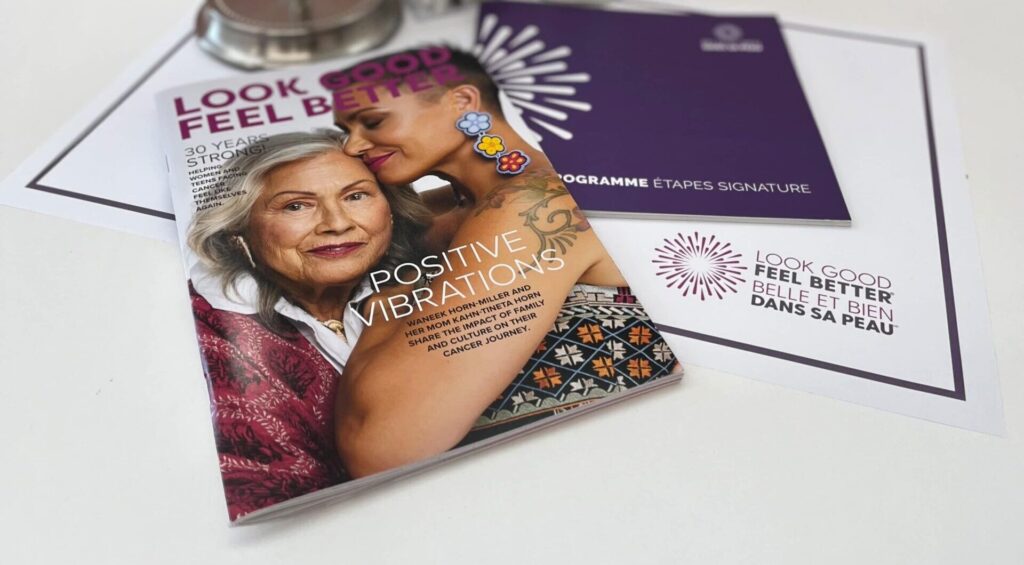
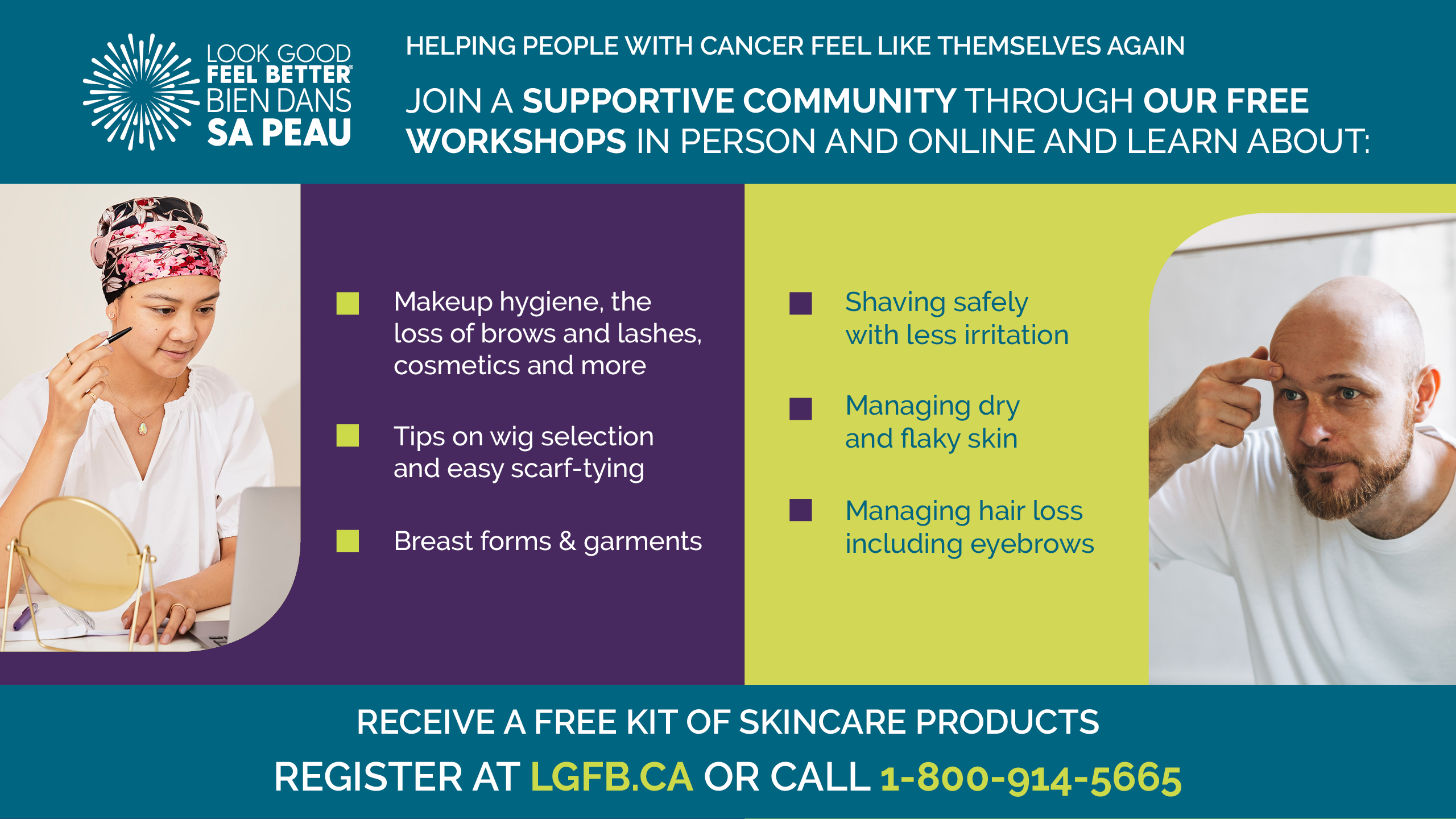
Check out our interactive magazine, filled with heartwarming stories, useful tips, and so much more! Look for the play button on our feature articles! Just click to watch and listen as our experts walk you through skincare, fitness, scarf-tying, cosmetics, mindfulness and more.
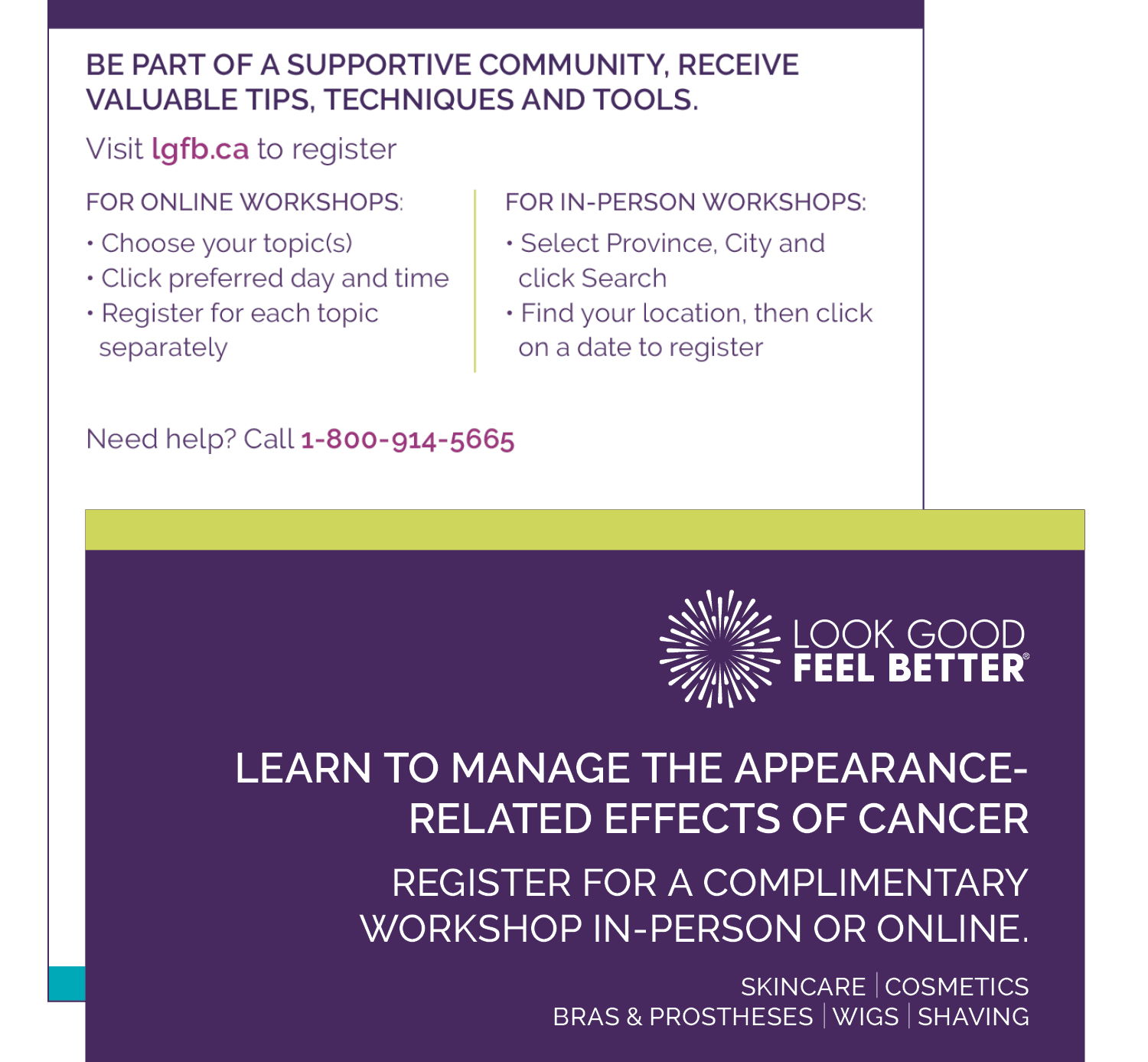
Like hands-on learning?
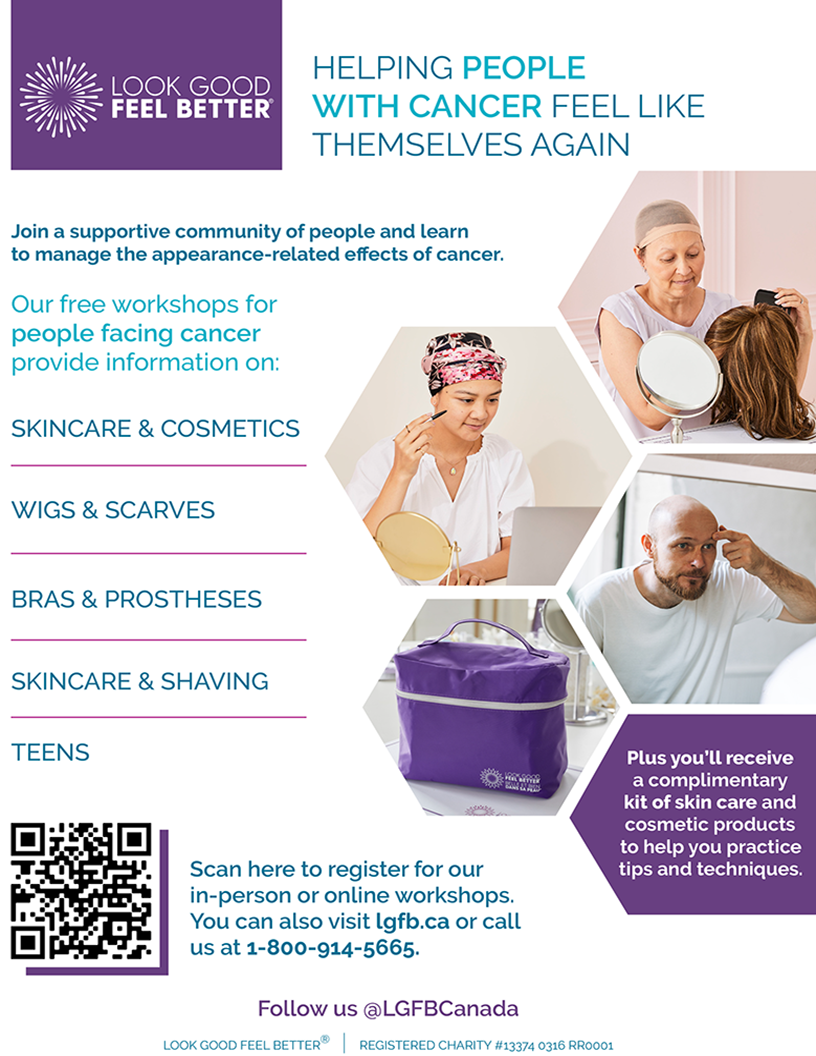
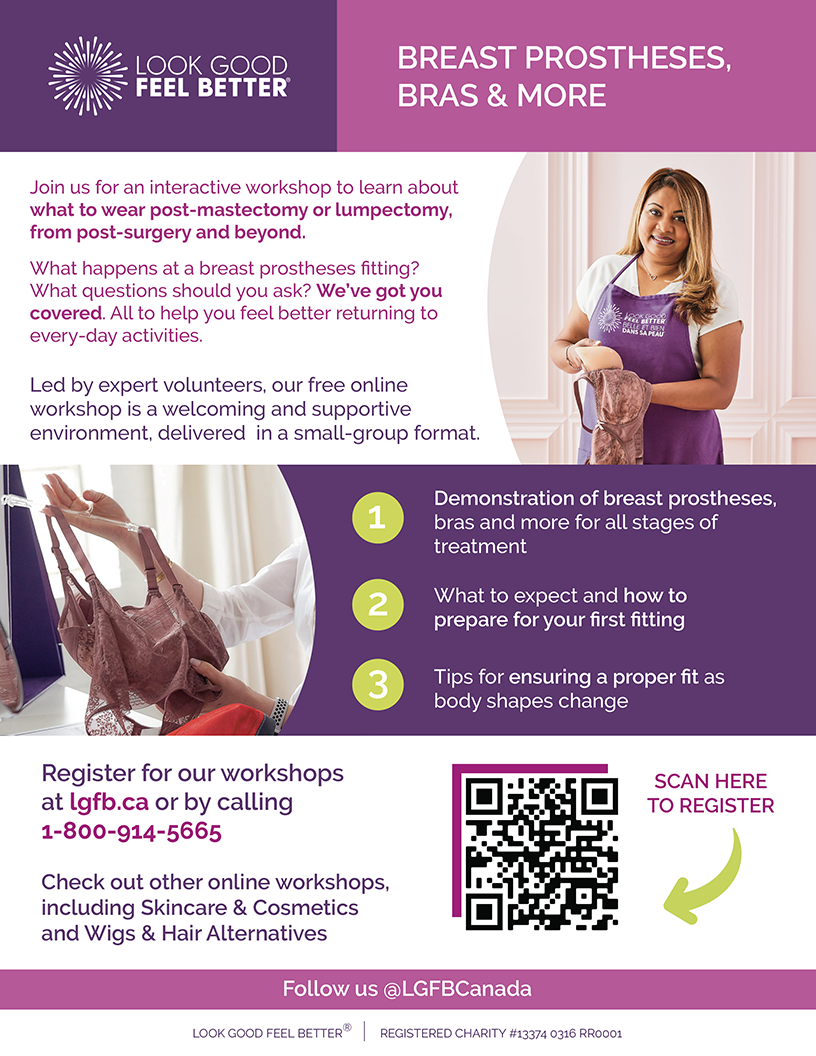
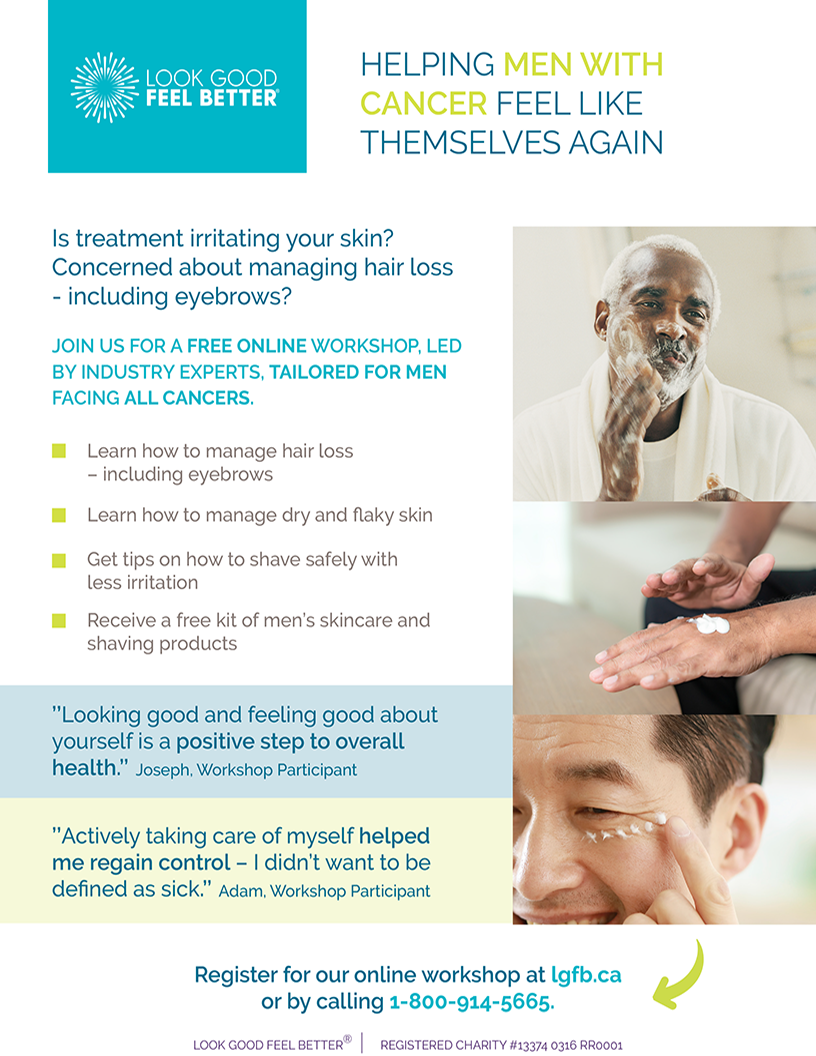
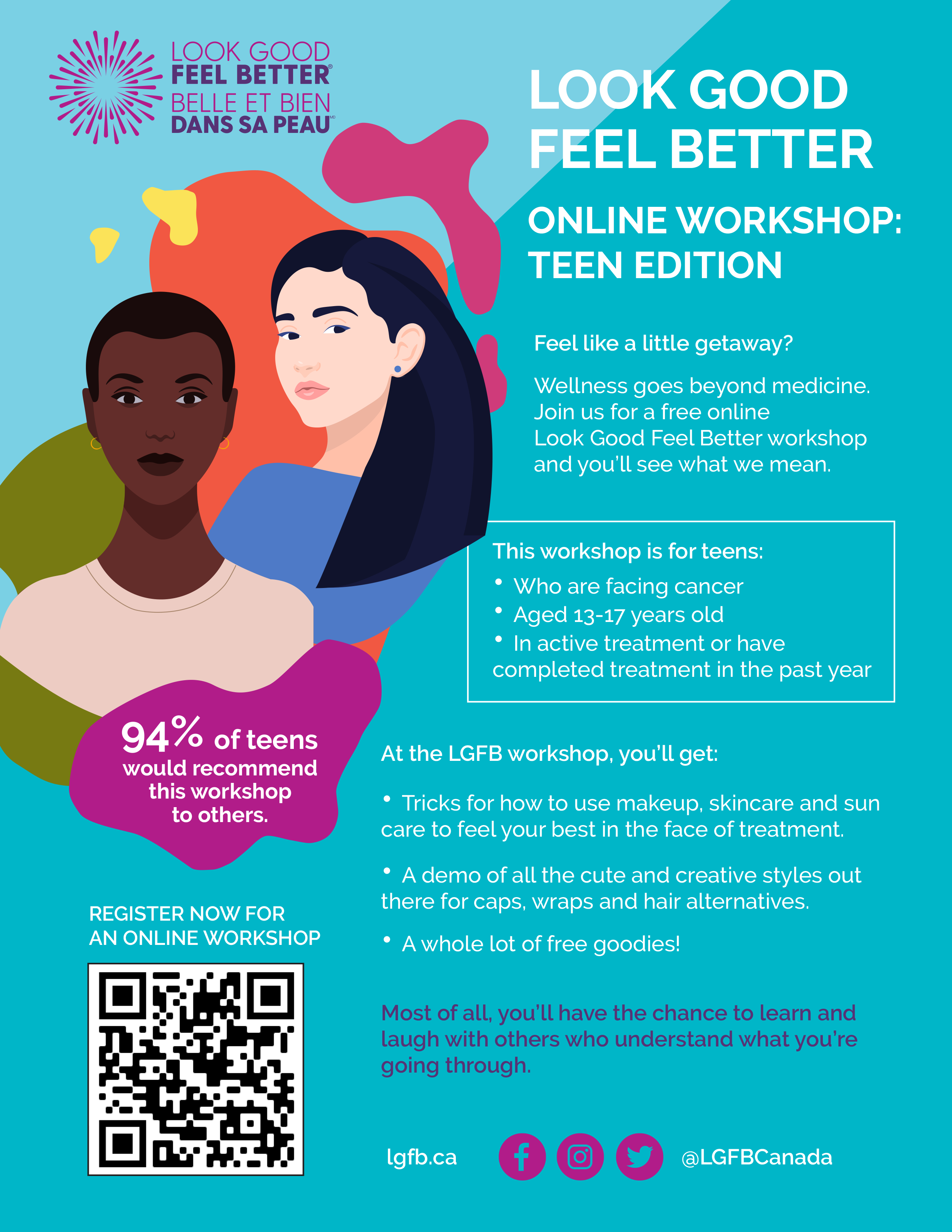
Get expert advice, practical tips, and support in our workshops.
Tips for “the village” of caregivers
In many families, one person — often a spouse, child, or sibling who lives nearby — takes on most of the everyday responsibilities of caring for someone with cancer. But friends, neighbours, and co-workers can also play a vital role in supporting both the person with cancer and their primary caregiver.
Practical Support
As you spend time with your friend and see how cancer is shaping their daily life, you’ll discover meaningful ways to help. Here are some places to begin:
Stay in touch. Send short, frequent texts or emails, or make quick calls at times that work for them. Setting a regular check-in can take the pressure off them to reach out.
Support the primary caregiver too. Ask what they need. Offer to take one or two regular tasks off their plate, or simply listen without judgment.
Show up. Cancer can feel isolating. Even a short visit matters, whether or not your loved one feels like talking. Your role is to be present without pressure.
Be specific. Instead of saying “Let me know what I can do,” offer concrete help and follow through — a weekly meal, grocery run, school pickup, or light housework. Small, consistent contributions add up.
Compassionate Conversation
Many people worry about “saying the wrong thing.” What matters most is showing up, listening, and meeting your loved one where they are.
Let them lead. If they’re withdrawn or quiet, don’t push them to be positive. If they’ve had good news, check how they feel before celebrating.
Offer grace. Treatments, side effects, and fatigue can impact mood. Don’t take irritability or withdrawal personally — it’s often a normal part of coping.
Talk openly — but not only about cancer. Acknowledge their illness when it feels right, but remember they may also want to chat about everyday topics or weigh in on what’s happening in your life.
Offer quiet presence. If they’re comfortable, sitting beside them or holding their hand can be more powerful than words.
Skip false reassurances
Phrases like “It will all be okay” can feel dismissive.
Try instead:
“I’m with you every step of the way.”
“I hope you’ll be back to doing the things you love soon.”
Guidance for the Caregiver Journey
Caring for someone with cancer is both an act of love and a profound responsibility.
Beyond medical appointments and treatment plans, caregivers often find themselves managing small, everyday details that bring comfort, dignity, and emotional support. Psychosocial cancer care isn’t just support for the person with cancer. It also includes emotional and practical resources for their family and caregivers. And, LGFB is here to support you both.
Practical Ways to Comfort and Care
1. Supporting Post-Treatment Nutrition at Home
Help your loved one regain strength and vitality with balanced meals and gentle hydration support. You can make a difference by offering small, frequent meals that suit their changing tastes and energy levels.
Nutrition Resource
Post-treatment Nutrition Workshop
Help with healthy eating
Explore our Post-Treatment Nutrition Workshop and Nutrition resources for food suggestions, meal planning tips and ways to avoid food becoming a source of anxiety.
2. Helping Manage Treatment-Related Skin Changes
Learn how to soothe dryness, irritation, or sensitivity with gentle, effective routines. Even simple suggestions like simplifying to just a calming cleanser and moisturizer or products made for eczema can make everyday comfort much easier.
Skincare Resources
Simplify skincare routines
Visit our Skin Care Resources for dermatologist-approved guidance.
Prevent or relieve some physical side effects
Encourage the person you are caring for to sign up for our Skincare & Makeup or Shaving & Men’s Skincare workshops to learn step-by-step application methods and / or visit our Skincare resources to help someone master these skills.
Learn more with us
Check out our Hair Loss, Wigs, Scarves and other hair related resources for practical and emotional advice.
5. Assisting with Wig Care and Scarf Styling
Learn how to wash, maintain, and style wigs—or master scarf tying together. Turning it into a shared activity can make the process more lighthearted and fun.
Caring for your Wig Resources
Help with hair alternatives
See our Wig Care Tutorials and Scarf Tying Demonstrations.
6. Helping with Bras and Breast Forms After Surgery
The right post-surgical garments and bras and breast forms that help someone feel confident about their body after surgery can be very meaningful to someone after breast cancer. Taking the time to explore options together can help your loved one feel supported both physically and emotionally.
Breast, Bras, & Prostheses Resources
Visit our resources
Read our Guide to Bras & Breast Forms for fitting tips and trusted suppliers.
7. Nail Care for Comfort and Confidence
Learn how to manage brittle, ridged or discoloured nails, a common side effect to many kinds of cancer treatment. Small touches, like a gentle hand massage or moisturizing cuticles can offer both physical relief and emotional connection.
Nail Care Resources (Adults)
Nail Care Resources (Teens)
During and after treatment
Read our Nail Care resources for practical advice to counter these side effects.
8. Care for Yourself While Caring for Them
Protect your own health and well-being to so that you can be there for the person you are helping. Prioritizing your rest, nutrition, and emotional support isn’t selfish—it’s essential for both of you.
Self Care & Mindfulness Resources
Prioritize self care
Access our Self care & Mindfulness Resources access our self-care tools and suggestions.
Every caregiving journey is unique.
There isn’t a “right” way support someone through their cancer journey.
What matters most is the love, patience, and presence you bring each day. Don’t forget to care for yourself along the way. We hope these resources help you feel informed, empowered, and remind that you are not alone in this role. Look Good Feel Better is here for all Canadians facing cancer and the people who love and care for them.
We’re here for you and the person you are caring for.
Find advice and support in our workshops.
“When my mom was diagnosed with cancer, we both took on new roles. It wasn’t always perfect, but caring for her helped me bring our love full circle. And, it demonstrated to my kids that none of us can take on anything alone. We were all in this together. The Look Good Feel Better workshops brought her a lot of joy and support. They also showed me real, tangible ways family and friends could help.”
Chelsea W., Caregiver of Workshop Participant
Cancer runs in my family — it has affected six out of eight siblings, my mom, my aunt, my grandmother, my cousins, and even my niece and nephew. But I’ve never let it define me. I don’t even like to use the “C” word — I call it “the unwelcome intruder.” It infiltrated my body and so now we’re just working on getting it out of there. I don’t allow it to control me or have authority over my body.
Throughout my treatment, some things have stayed constant in my life, and this grounds me. I’ve kept working, because I love my job and it gives me a sense of normalcy. My children are there for me — I’m a single mom of four kids, 22-year-old triplet daughters and a 24-year-old son. I love going on walks with my little nine-year-old Havanese and reading psychological thrillers.
My faith has been another constant source of strength. When I had a recurrence of the unwelcome intruder, I prayed a lot. I was like, “I can’t go through this a second time. Lord, what are you doing?” And I received a message saying that this was not a journey I was to take alone — that this was going to be a community-based journey for me. I have a habit of isolating myself, especially during times of struggle. Thanks to this message that came through, I’ve been staying connected and sharing my journey, especially through the women’s connect group at my church. We all go through struggles in our lives, and my hope is that by sharing mine, it’ll help people to see their own challenges in a better light and to know they’re not alone or stuck. I know there’s an end to this.
It wasn’t just my church community, either. Once I decided to overcome my habit of cutting myself off from others, I was surprised at how vast this community travelled. More and more people outside of my church, outside of my faith, have come to walk alongside me. They send texts, stop by, bring me meals, go for walks with me, and even attend appointments. It has been really uplifting, encouraging, and inspiring. I feel held and supported.
This community extends to Look Good Feel Better (LGFB) as well. Losing my hair was a big thing for me. I cried and cried for weeks on end in anticipation. I just turned 61, but I don’t feel old —and I didn’t want to look old, or sick. My hair started falling out just two days before my LGFB workshop. I felt really shut down. I almost didn’t go. But I’m so glad I did, because the workshop really helped me get through it.
I loved how the volunteer talked about hair loss — so calmly, so casually. She’d rip off her wig, put on another, and then switch to a bandana. Something opened up in me when she was doing that. It felt so freeing. I realized I was no longer stuck to my hair, and that it was okay that it was gone. My hair falling out felt like the end of the world for me, but the workshop helped me realize that hair is just hair. It doesn’t define who I am. This new perspective changed the entire trajectory of my journey. The workshop gave me my life back, basically. It was so empowering. As a bonus, I’ve been having a lot of fun with wigs, trying different hair styles and colours.
My positive mindset has really helped me through this journey. Prayer, connection, community — these have been instrumental. And I really do treat this as a journey — not just a medical, physical journey but also a mental, spiritual, soul-deep transformation. I don’t have to worry about the unwelcome intruder in my body because that’s what my medical team does. My responsibility is to make sure that I’m staying as healthy as possible, physically and mentally. I’m not just focusing on the cancer, but on making myself better.
Promotional tools for our Health Care Partners

Electronic and print resources geared to help you easily and effectively provide the information necessary for your patients to benefit from Look Good Feel Better online and in-person workshops and side-effect related resources.
Promotional Posters, Cards and Digital Ads
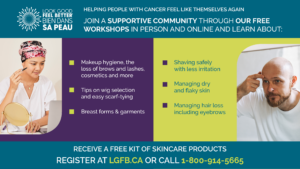
LGFB Digital Ad
This digital ad provides a quick snapshot of our offerings. Great to display in high traffic areas such as waiting rooms, elevators and hallways.
Download Now
We’re here for your patients.
They’ll find community, support, and practical advice in our workshops.
Cleansing and Moisturizing
- Gentle cleanser labelled for sensitive skin or for eczema
- Non-irritating and pH balanced or neutral
- Use lukewarm or cool water (hot water strips natural oils). Keep showers brief (less than 10 minutes) to minimize skin irritation
A cream is likely best for you right now. The type of moisturizer you choose (called the “vehicle”) matters because your skin may be more sensitive and dry during treatment.
Understanding moisturizer types:
- Gels – Lightest, may not provide enough moisture during treatment
- Lotions – Light to medium, absorb quickly but need frequent reapplication
- Creams – Thicker and more moisturizing, ideal for treatment-sensitive skin
- Ointments – Heaviest and most protective, but can feel greasy
Creams typically provide the right balance of moisture and protection for treatment-sensitive skin without being too heavy for daily facial use. Look for cream-based products that are:
- Hypoallergenic
- Fragrance free
- pH balanced or neutral
- Avoid anything labelled “anti-ageing”
Fragrance-free and scent-free are not the same. Scent-free products may still contain masking fragrances, which can be irritating. Look for ‘fragrance-free’ on the label whenever possible.
Moisturize immediately after patting your skin dry from bathing to lock in moisture. If you don’t bathe daily, moisturizing on dry skin is still beneficial.
It’s important to note that oils don’t add moisture – they lock in existing hydration.
For best results, apply oils to slightly damp skin or use them in combination with a moisturizer. The exception is scalp care when you have hair, where oils can be used alone since applying cream to the scalp isn’t practical.
If you want to use oils to lock in moisture, look for ones that are fragrance-free and non-comedogenic (won’t clog pores). Gentle, non-comedogenic options include:
- Rosehip seed oil
- Shea butter
- Squalene
- Argan oil
- Grapeseed oil (cosmetic grade)
- Castor oil
- Baby oil
- Petroleum Jelly
- Bio-oil
Coconut oil can be absorbed through skin and may affect cholesterol levels in some cases. It may cause allergic reactions in those sensitive to cocamidopropyl betaine. It’s better to avoid using cooking oils on your skin and opt for products specifically designed for skincare.
Always test on a patch test on a small skin area that isn’t your face first.
Skincare Ingredients and Treatments
Treat your skin as if you have eczema. Hyaluronic acid is suitable for sensitive skin, but put aside other acids until 6 months after treatment ends. That includes retinol any other active ingredients.
Wait until treatment is complete, or ensure the practitioner is trained to work with cancer patients using extremely gentle, non-irritating products.
Toners are OK if your skin tolerates them and they’re not too drying. With a neutral cleanser and moisturizer, you may not need toner.
Vitamin C serums are generally safe during cancer treatment. Vitamin C is an antioxidant and unlikely to cause problems. However, avoid Vitamin C serums mixed with retinol, as retinol can be drying and harsh on sensitive skin during treatment.
- Start slowly – use every other day to test tolerance
- Choose lower concentrations (10-15%) and stabilized forms for gentler application
- Stop if you experience stinging, redness, or irritation
- Always follow with moisturizer and sunscreen
We’re here for you.
Find more support and connect with experts in our Skincare & Makeup Workshop.
- For general comfort and sensitive scalps:
Bamboo, cotton, linen, and modal are excellent choices because they are lightweight, moisture-wicking, and allow for good airflow. Bamboo regulates temperature and is soft on sensitive skin, while cotton offers all-day comfort and linen is highly breathable.
- For winter/cold weather:
Look for soft, breathable, and non-irritating fabrics like bamboo, fleece-lined cotton, and wool blends with a soft inner lining. Avoid scratchy wool or synthetic fibres that can cause irritation. A silk or satin lining inside hats can also help prevent friction and dryness.
- For maximum coolness:
Bamboo, cotton, linen, and modal are your best options. In terms of design, loose-fitting caps and lightweight scarves offer versatility, while turban-style wraps provide full coverage.
Consider owning at least 3 to 5 head coverings to ensure you have enough options for different occasions while allowing for washing and drying. Sleep head coverings should be made from softer, more comfortable materials that provide warmth and minimise friction against the scalp, making cotton or bamboo ideal choices. Like pyjamas, it’s important for hygiene to reserve specific items for sleep to reduce transfer of dirt and sweat from daytime activities to bed.
For daily wear, a variety of styles, including caps, scarves, turbans, and hats, can be beneficial. These should be made from lightweight, breathable fabrics that keep the scalp cool and comfortable while providing coverage.
Head coverings can be purchased from various sources, both online and in stores. Most wig boutiques will also carry head coverings and many other accessories. You can also find head coverings on specialty websites that cater specifically to those undergoing treatment. Cancer support organisations often provide resources or even free caps. Department stores and local boutiques may also carry suitable headwear. Additionally, some hospitals/cancer centres provide head coverings or purchasing resources. When selecting a head covering, consider comfort, material, and style to find the best option for your needs.
Ideally, you should wash them every 2 to 3 days, especially if you sweat or wear them for extended periods; daily wear may necessitate more frequent washing. The fabric type can also influence washing frequency—cotton and bamboo can be laundered more often without damage, while delicate fabrics like silk may require less frequent cleaning. Additionally, since chemotherapy can make the skin more sensitive, it’s important to use gentle, hypoallergenic detergents and avoid fabric softeners that could irritate the scalp. If you notice any odours, visible dirt, or signs of irritation on your scalp, wash your head coverings immediately.
A sleep cap is designed for nighttime use and is made from soft breathable material. They help keep the head warm while collecting hair that is coming out and protecting the scalp from friction against pillows.
Unless it is specifically listed as having UV protection you should wear sunscreen under a head covering because UV rays can penetrate these materials. The scalp may be more sensitive during and after chemotherapy, increasing the risk of sunburn. If you plan to be outside for an extended period, sunscreen adds an essential layer of protection, providing peace of mind, particularly if you adjust or remove your head covering throughout the day.
Keep sun protection top of mind by wearing a waterproof sunscreen and/or a swim cap, wide-brimmed hat or head covering with UV protection.
Wear a head covering like a simple cap or wig grip band underneath.
Scarf Styling and Techniques
The square knot (or reef knot) is recommended due to its simplicity and security. To tie a square knot, start by positioning the scarf on your head so that the ends hang evenly down your back or to the sides, depending on your style preference. Cross the right end of the scarf over the left end, then bring the right end under the left and pull both ends tight to form the first part of the knot. Next, take the left end and cross it over the right end, bringing the left end under the right and pulling both ends tight again to complete the knot. The square knot is known for staying tied, making it suitable for all-day wear, and it can be easily adjusted to tighten or loosen the fit as needed. Additionally, the knot lies flat against your head, preventing bulkiness and discomfort.
Yes, at minimum the top of the ears should be covered to create a more comfortable and polished look.
Yes! Search terms like “scarf tying tutorial for cancer patients,” “how to tie a scarf for hair loss,” and “headscarf tying techniques for chemotherapy.” Other effective phrases include “chemo scarf styles,” “head covering tutorials for cancer,” and “easy scarf styles for cancer patients.” Utilizing these search terms on platforms like YouTube or Google can help you find a variety of helpful tutorials tailored to your needs.
Still have questions? We cover these topics and a LOT MORE in our workshops.
We're here to help.
Yes. Remove with oily, acetone-free remover. Use petroleum jelly instead of cutting cuticles. Avoid acrylics (bacteria risk) and wear rubber gloves for chores.
Ask if professionals are trained for cancer patients. Avoid anything causing breaks or bleeding. Skip acrylics due to infection risk. Do not push back, cut, or push down cuticles. Only basic nail polish application is recommended—avoid other specialty services.
Petroleum jelly can be applied to nails to moisturize and act as a barrier cream, helping protect them from everyday damage. You can also consider using a hydro-soluble nail strengthener. Ask your healthcare team or pharmacist for recommendations on products specifically designed to strengthen brittle nails during treatment.
Yes, as long as skin isn’t scratched or broken and you tolerate it.
Recovery timelines:
Fingernails: Nails grow one millimetre per month, so full recovery takes six to twelve months. Bumpy ridges are from treatment interrupting nail growth—they’ll grow out normally.
Toenails: Toenails grow half a millimetre per month, so full regrowth takes twelve to eighteen months, especially the big toe.
Is treatment impacting your nails?
Find help in our Nail Care Workshop.
Understanding Your Wig Options
Both kinds of wigs have their advantages and disadvantages. Synthetic hair wigs are lightweight and comfortable to wear and generally easy to care for and style. They are often much less expensive than real hair wigs and are available in a wide variety of colours and styles. Their drawbacks are that they can be damaged by heat and steam, including hair dryers, hair curlers, heat from the oven and steam from a dishwasher.
Human hair wigs feel natural and can be styled using regular hair tools like hair dryers, curling irons and flat irons. They are also quite durable. But, they are more expensive, their colours can fade and they take more maintenance to clean and style.
Hair toppers share characteristics of both hair extensions and wigs. They clip in at the top of your hair, but they generally just cover the crown of the head. Since they have a smaller cap, they sit flatter on the head. Toppers allow you to still use your natural hair and blend it in with the topper. Similar to other forms of wigs and extensions, you can purchase curly hair toppers, toppers with bangs, or even custom pieces with balayage to match your own style.
Halo wigs are a curtain of hair that fit around your head similar to a headband. These are usually used if you have thinning hair or if you are bald and want a curtain of hair on the sides and back of your head under a hat or scarf wrap, but don’t want to wear a full wig.
If you were to wear a halo wig with existing hair, a thick weft of hair wraps around your head and has a thin, clear “fishing line” or elastic that hides under your natural hair to make the halo extension blend in with your hair and be hidden.
Choosing & Purchasing a Wig
Yes, you can buy a wig online. There are pros and cons to looking at wigs online versus visiting a wig salon with medical quality wigs. Online allows you privacy and anonymity with lots of wig styles available. Some people find the options overwhelming, so seeing a few wigs in a salon may feel more manageable. Generally, online wigs are less expensive than wigs in stores. Just remember that it’s harder to tell texture, colour and quality from an online photo and there’s no way to try it on for fit.
It can be useful to talk to an expert, regardless of how you choose to shop. Some online wig shops do offer consultations with a wig professional over zoom, chat or email.
- The climate you live in, especially if you live somewhere with frequent hot or rainy weather.
• Do you want a full or partial wig? You can also opt to attach bangs, side pieces, and ponytails to any remaining hair or head coverings. Think about potential accessories, including scarves, barrettes, and clips.
• Do you want to wear a wig similar to your regular hairstyle? If so, snap a few pics of your current hair and bookmark recent photos. Cut a lock of hair to represent your desired wig colour. Always use natural light to compare wigs to your hair sample.
• If you decide to try out a new style, colour, or length, gather a collection of photos to use for inspiration. You can have a chat with your hairstylist for tips, ideas, and insights. In fact, buying a wig can be a great way to try out a new look.
Medical-grade wigs are designed for long-term wear and can sometimes be covered by health insurance due to their necessity for medical reasons. Both medical-grade and higher-quality wigs are constructed to feel natural and fit well on the scalp, using materials that are hypoallergenic, gentle on the scalp, and designed for extended wear during treatment.
More expensive wigs (whether medical-grade or high-quality beauty wigs) typically have better cap construction, more natural-looking hairlines, and superior craftsmanship. Less expensive wigs may use lower-quality materials and construction that don’t feel as natural and may not be as comfortable for extended wear during treatment.
The Canadian Cancer Society offers an online wig bank where you can submit a picture of your hair style, and they will ship you a wig that best matches what you are looking for (based on their inventory). If you would prefer something local/in-person, you may find a wig bank at your local cancer support organisation, wig shop or at the cancer centre.
If you still have hair but anticipate that you’ll lose it all, you will want to consider this when trying on wigs. You can wet or slick down your hair to help with getting proper sizing. Find out the measurement of your head using a soft measuring tape around your forehead, above your ears, and around the nape of your neck. Wigs typically come in petite, average, and large sizes, so compare your measurements to the manufacturer’s sizing chart. Be sure to always wear a hygiene cap when trying on wigs. Position the wig comfortably at your natural hairline (this is four fingers above your eyebrows), making sure the front aligns with your forehead, and the back covers the nape of your neck.
There are several effective methods:
• Wig grip bands: Adjustable, non-slip bands worn underneath the wig that sit firmly around your head like a headband, providing a surface for your wig to ‘grab’ onto.
• Wig tape: Double-sided, hypoallergenic tape applied to small areas like the front hairline, sides, and nape of the neck. Clean your scalp first, apply tape to scalp, then position the wig and press down where tape is applied.
• Wig liners: Preferably non-slip or silicone-lined, these create a smooth surface that helps prevent slippage.
• Adjustable straps: Many wigs feature built-in straps that can be tightened for a better fit.
• Secure cap constructions: Lace fronts or polyurethane bases provide additional grip.
When removing wig tape, gently lift the wig off and use an adhesive remover or gentle oil to dissolve any remaining residue. Many people find wig grip bands easier to use than tape.
For wigs that are too big:
Many wigs come with adjustable straps inside the cap that can be tightened. Wearing a wig liner can help reduce excess space and provide a snugger fit. For a professional solution, a stylist who specialises in wigs can make alterations, such as taking in the sides or adding structure.
For very large or very small heads:
Look for specialty brands that offer wigs specifically designed for your head size. Choose wigs with adjustable straps or hooks for a customised fit. Stretch caps or lace front wigs provide additional flexibility. If you have difficulty finding a suitable option, consider investing in a custom-made wig tailored to your specific measurements.
If it’s mesh on the front of the wig, the excess lace/mesh can be cut off right back to your hairline (you may want professional help for this). Another option is to hide the mesh along the hairline with eyeshadow, or try dark or dim earthy coloured nontoxic marker or eyeliner to shade the zones where tracks are appearing.
Try these solutions:
Securing the wig: Use small pieces of wig tape on the hearing aids or close to the ear to stop the wig from shifting.
Securing your hearing aids: Look for ear grips (also called anchors or retention lines)—plastic wires that attach to your hearing aid and coil up inside your outer ear, holding the hearing aid in place even with slight jostling from your wig.
Managing Wig Comfort Issues
Synthetic wigs are lighter and cooler than human hair wigs. You may also want to opt for a shorter style so that airflow reaches your neck. Look for wigs that are wefted at the back to allow air flow to the scalp—these are also called cap-less or open capped wigs.
Choose lightweight, breathable wigs with cap designs that allow air circulation, such as lace front or open wefted styles. Wearing a moisture-wicking wig liner made from breathable materials like bamboo can help absorb sweat and keep your scalp cool. Keep cool accessories handy, such as a portable fan, cooling wipes, or a misting spray. Make sure your wig isn’t too tight, as a snug fit can trap heat.
Wig liners designed for scalp protection (different from fashion wig liners) can help. Look for cotton or bamboo materials. Bamboo is especially beneficial as it is soft, hypoallergenic, and moisture-wicking. Choose seamless or tagless designs to reduce pressure points, and ensure they’re machine washable for hygiene.
Caring for your scalp may also help—cleanse and moisturize regularly and consider using a dandruff shampoo about 2 times per week. Massage into the scalp, let it sit for 2-5 minutes, then rinse off.
Consider having the wig thinned to make it less full, which would reduce the weight. It’s best to go to a stylist experienced with wigs for this service.
Styling and Customization
Your hairdresser may be able to cut your wig, but it’s important they have experience working with wigs. For human hair wigs, experienced stylists can cut, colour, and style them much like natural hair. For synthetic wigs, the fibres fall differently than human hair, so wig-specific experience is crucial.
Many wig boutiques offer styling services specifically for wigs with trained professionals who can help with cutting, shaping, and adjusting the fit.
Yes, but be careful not to damage the wig cap. Because of the way a wig is constructed, a high-top ponytail or bun won’t work and will show the wig cap.
Yes, especially with synthetic wigs. Avoid heat from hot ovens, BBQs, fire-pits, steam from dishwashers, or very humid, hot environments. Never use hair dryers, curling irons or flat irons on synthetic wigs unless they’re specifically heat-resistant.
Throughout your wig experience, don’t hesitate to consult with professionals. Wig boutiques, experienced hairstylists, and wig specialists can provide valuable guidance on selection, fitting, styling, and maintenance. Many offer services even if you didn’t purchase the wig from them.
Use products specifically designed for synthetic fibres to maintain their appearance and longevity. This includes synthetic wig shampoo, synthetic wig conditioner, and synthetic wig leave-in conditioner.
Yes, but proceed with caution. A light dusting of powder (baby powder, cornstarch, or translucent face powder) can sometimes help tone down excess shine. For darker wigs, a tinted dry shampoo is a better option to avoid leaving a chalky cast. These are DIY, at-your-own-risk methods and may leave the wig looking dusty or uneven if overapplied.
For a safer, longer-lasting solution, look for a synthetic wig dulling spray. These sprays are designed specifically for wig fibers to create a matte, natural finish without residue, stickiness, or buildup. Many are lightweight aerosols or “dry wax” sprays that also add a bit of texture and hold. Using wig-specific shampoos and conditioning sprays can also help manage shine over time.
If you’re unsure, it’s always best to consult a wig professional for product recommendations suited to your wig’s colour and fibre.
Chlorine and saltwater can damage both synthetic and human hair wigs. If you choose to swim, rinse your wig with fresh water before entering the pool to create a barrier against chlorine or salt water. Rinse with fresh water immediately after and then wash and condition.
Fixing frizzy ends:
• Wash the wig with synthetic wig shampoo
• Apply leave-in conditioner designed for synthetic wigs
• Use a wide-tooth comb, starting from the ends and working up
• Apply a small amount of anti-frizz serum designed for synthetic wigs
Preventing frizzy ends:
• Regular maintenance with proper products
• Store on a wig stand away from direct sunlight or heat
• Minimize heat exposure and friction
• Use humidity-resistant products if you live in a humid climate
• Be gentle when brushing, always starting from the ends
Products designed specifically for synthetic wigs such as gel or mousse, anti-frizz serum, and finishing spray.
Use a wide-tooth comb for detangling, especially when wet, as it minimizes tugging and prevents breakage. For daily maintenance, use a wig brush specifically designed for wigs with soft bristles. Always start brushing from the tips and work your way up to the roots, using gentle strokes when the wig is dry.
Only if your wig is heat-resistant synthetic or human hair. Always check the manufacturer’s guidelines for maximum heat settings. Standard synthetic wigs cannot handle heat styling. If using heat on a heat-resistant wig, apply a heat protectant spray and keep temperatures below 300°F (150°C) for synthetic wigs. Test a small, inconspicuous section first.
We’re here for you.
Find community and practical advice in our Wigs & Scarves workshop.