Understanding Your Wig Options
Choosing & Purchasing a Wig
Wig Fitting and Comfort
Managing Wig Comfort Issues
Styling and Customization
Caring for a Wig
We’re here for you.
Find community and practical advice in our Wigs & Scarves workshop.
Let’s navigate this together
Join a community that understands. Receive expert advice, useful resources, and compassionate tips throughout your cancer journey in the LGFB newsletter
Newsletter Form
Let’s Listen
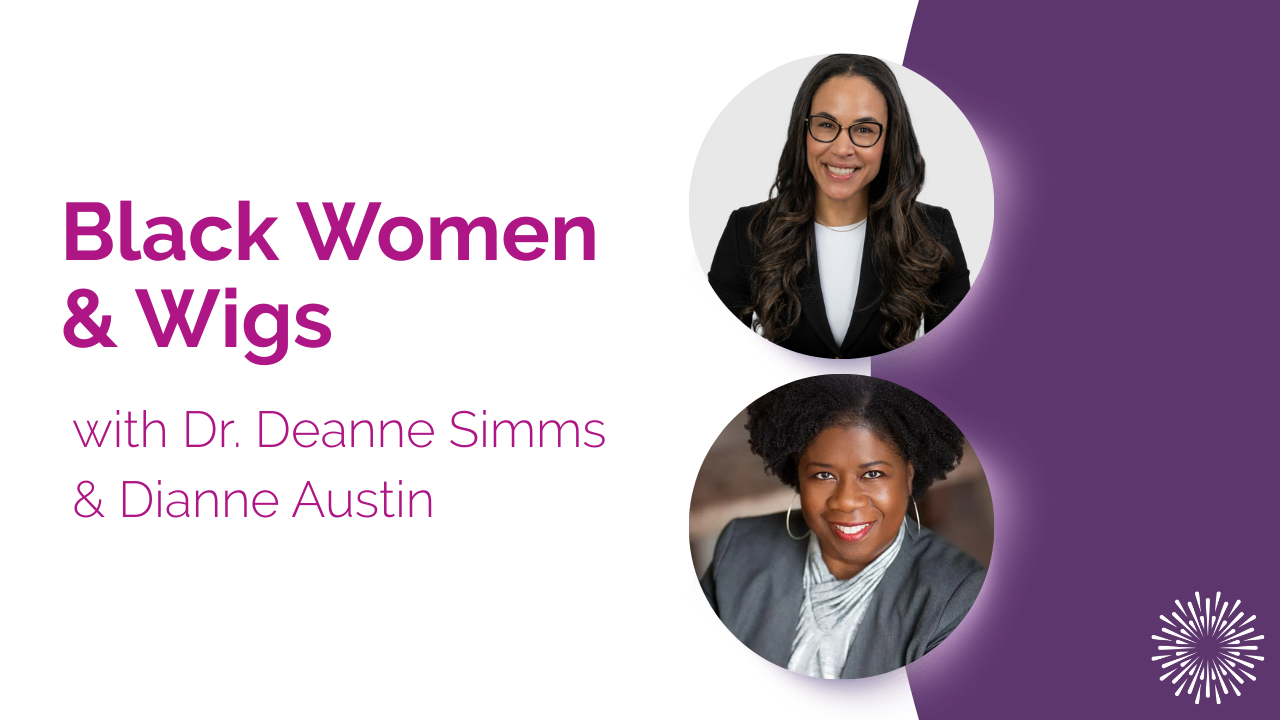
Dr. Deanne Simms, Clinical Psychologist will speak to the mental health benefits of managing appearance during cancer, the impact of the loss of control and the connection between hair and identity, specifically for BIPOC women.
Dianne Austin, Cancer Survivor and Entrepreneur, will then share her story of how her personal experience has led her to create a social enterprise to meet gaps in supporting Black women facing hair loss.
Discussions with Dr. Deanne Simms & Dianne Austin
Our Speakers
Dr. Deanne Simms
President and CEO, ThriveSpace Health and Wellness
Dr. Simms is a senior Clinical Health Psychologist who has a well-established career providing specialized care for children, adolescents and adults with complex mental and physical health challenges or conditions. In her work, Dr. Simms works collaboratively with her clients while utilizing evidence-based, cognitive behavioral interventions within a measurement-based care framework. In her work ranging from primary to tertiary care settings across 4 Canadian provinces, Dr. Simms has worked to build and evaluate evidence-based practices and programs. Dr. Simms strives to support the health and well-being of the individuals she works with, while enhancing and improving service delivery in both the private and public health sectors.
Dr. Simms is a passionate leader whose responsibilities have extended to provincial and national health leadership. Dr. Simms is an innovator who drives change, and is a sought-after consultant for system-level projects. Using her scientific background, combined with her dedication to enhancing and extending health service delivery, Dr. Simms contributes meaningfully to boards, steering committees, working groups and initiatives aimed at transforming the health care landscape through disruptive, data-driven innovation. Dr. Simms is the President and CEO of ThriveSpace Health and Wellness, a company which focuses on delivering and enhancing digital health services. In this space, Dr. Simms consults with individuals, clinicians, organizations and health systems to augment and enhance service delivery. Dr. Simms is passionate about ensuring individuals everywhere can access the right care, at the right time, in the way that most suits their needs.
Dianne Austin
Co-founder and CEO of Coils to Locs
Dianne Austin, B.S. is the co-founder and CEO of the startup, Coils to Locs, a direct to hospital distributor of high-quality coily, curly hair prosthesis (wigs) for Black women or any woman with highly textured hair. Coils to Locs is at the forefront of addressing an unrecognized health care disparity that impacts Black women experiencing chemotherapy-related hair loss: The lack of coily, curly wigs that are available at cancer centers in the U.S. that can be purchased with health insurance reimbursement.
A five-year breast cancer survivor and thriver, Dianne is passionate about healthcare equity issues given her personal experiences and that of family and friends within the healthcare system.
Let’s navigate this together
Join a community that understands. Receive expert advice, useful resources, and compassionate tips throughout your cancer journey in the LGFB newsletter
Newsletter Form
Picking Out a Wig That Feels Like You
Finding the right wig might take a little time, but it’s totally worth it to get one that makes you feel comfortable and confident. Whether you want something that looks just like your usual hair or you’re ready to try something totally new, here’s what to know:
Wig Shopping Tips:
Book an appointment – Trying on wigs usually takes around 45 minutes to an hour, so it’s best to plan ahead
Ask about wig caps – Some salons offer thin nylon caps to wear while trying wigs (they help keep things clean and comfy)
Bring backup – Take a friend, sibling, or parent for support and honest opinions
Bring a pic of your hair – A photo of your favorite look helps the stylist find something similar in style and colour
Keep your own hair short – Experts say keeping it around ¼ inch or shorter makes wigs fit better and feel comfier
Try lots of styles and colors – You might be surprised by what you like. Exploring different looks can actually be fun and empowering!
Take your time – You don’t have to pick the perfect wig in one visit. It's okay to take a few trips before deciding on the one that feels right for you.
At the Salon:
Ask if they provide nylon wig caps (for hygiene + comfort).
Try on a few different styles – even ones you wouldn’t normally pick.
Try a range of colours – you might find a fun new look.
Ask about care instructions and how to style each wig type (real vs. synthetic).
Check how the wig feels – is it itchy? Too tight? Too loose?
Questions to ask at the Salon:
- Do you have wigs made for people going through cancer treatment?
- Can you help style or trim the wig once I pick one?
- How do I wash and take care of this wig?
- What’s the return/exchange policy if I change my mind?
- Can you recommend anything for keeping my scalp comfy under the wig?
You’re not alone in this.
Connect with others who get what you’re going through in our Teens Workshop.
Let’s navigate this together
Join a community that understands. Receive expert advice, useful resources, and compassionate tips throughout your cancer journey in the LGFB newsletter
Newsletter Form
How to Choose?
Choosing a wig takes some time and effort, but it will be worth it to find the wig that feels right.
A wig feels different than your natural hair and will take some getting used to. Commit to giving yourself time to adjust to this change. Over time, it can become as familiar as any other accessory in your wardrobe.
The first question that many women consider is what fibre or material to choose. Both can be cut and styled by a hairdresser with wig experience.
When Making the Decision:
Most people choose a wig that matches their colour, texture, and style as closely as possible
Both synthetic and human hair wigs can look natural—fit and placement are key
Consider maintenance and comfort—synthetic wigs are easier to care for, while human hair wigs offer more styling options
Let’s navigate this together
Join a community that understands. Receive expert advice, useful resources, and compassionate tips throughout your cancer journey in the LGFB newsletter
Newsletter Form
Buying Tips
Make an appointment – it can take 45 minutes to an hour to discuss options, choose the right wig, and get fitted
Ask if the salon provides clients with nylon caps to wear when trying on wigs, which is important for hygienic reasons
Take a friend or family member for support and second opinions
Bring a photo of yourself with your favourite hairstyle and colour for reference
Keep hair short to ensure the best wig fit. Experts suggest that your own hair should only be ¼ inch or shorter
Try a variety of styles and colours – having choices is really empowering
Take your time making decisions
Let’s navigate this together
Join a community that understands. Receive expert advice, useful resources, and compassionate tips throughout your cancer journey in the LGFB newsletter
Newsletter Form
Wig Care: What do you need?
A wire stand that allows air to circulate through the wig
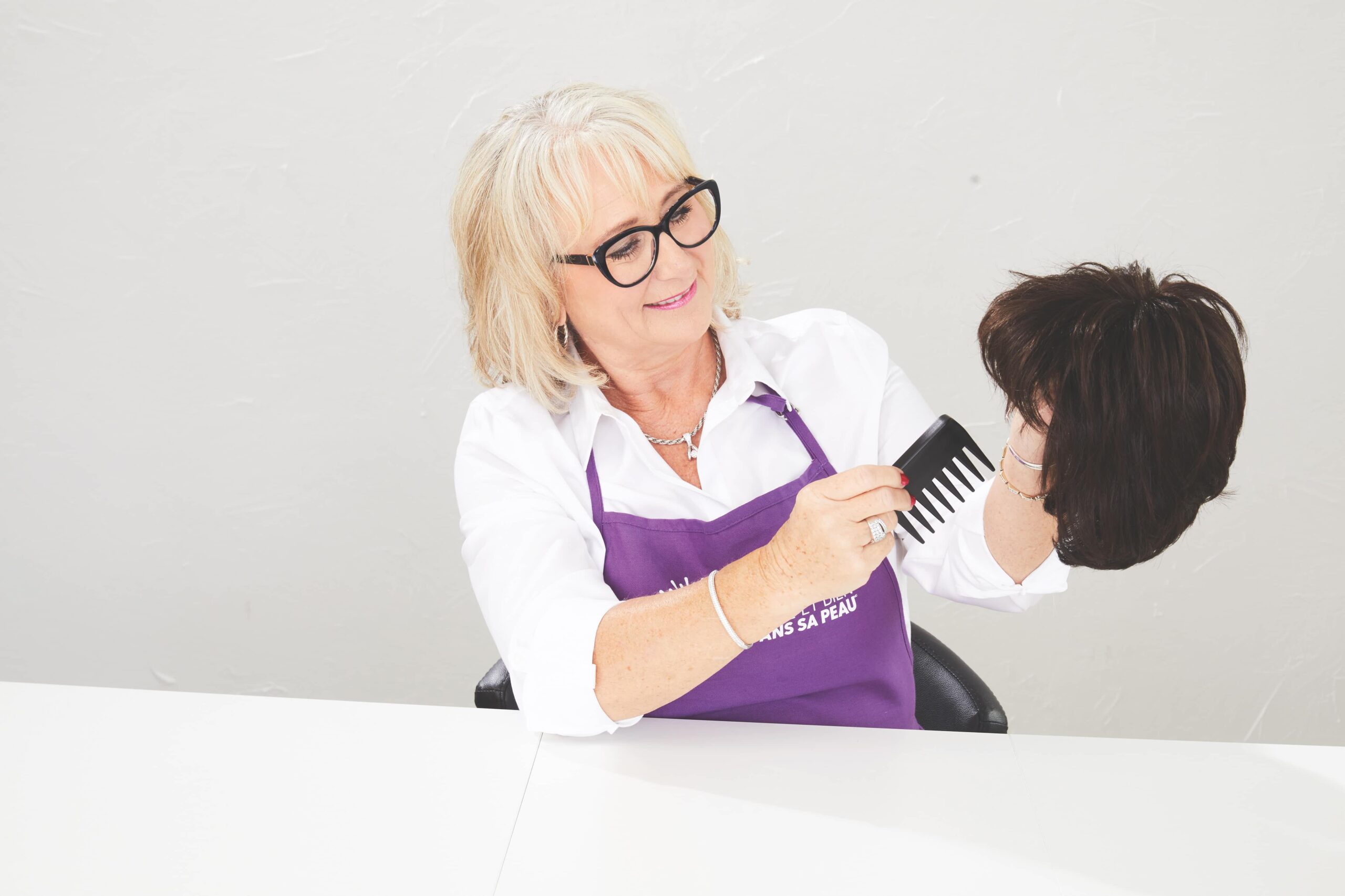
If your wig is synthetic, special cleansers and leave-in conditioners (available at all wig salons), and a wide-tooth comb
If your wig is human hair, salon-quality shampoo and conditioner for chemically treated hair
About an hour for your first wig-cleaning experience
It will eventually take less time as you practice and gain experience caring for your wig
Cleaning Your Wig
Synthetic-Hair Wig:
- With a wide-tooth comb, gently but thoroughly brush or comb your wig before washing.
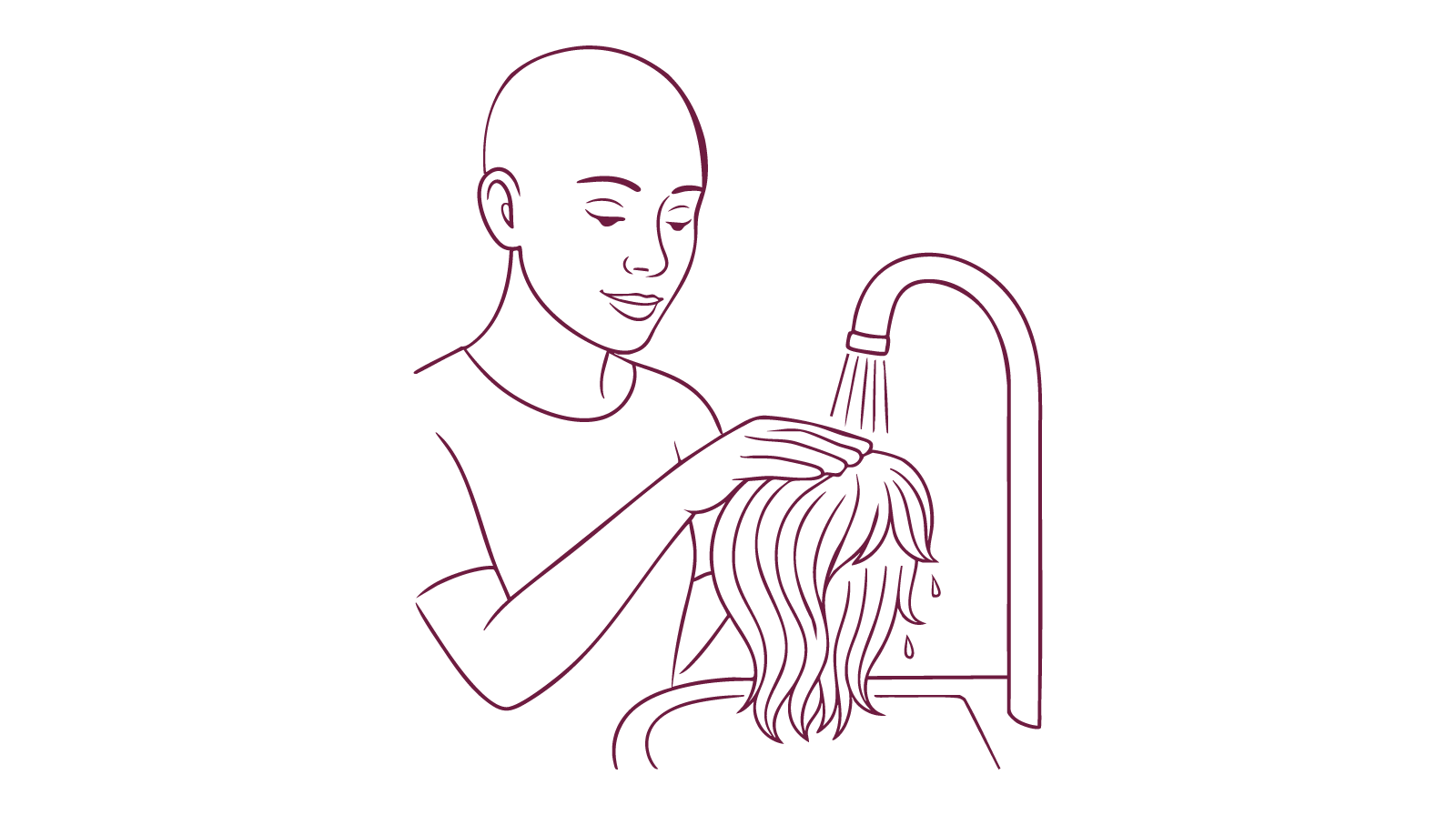
- Fill sink with cold water and thoroughly mix in 1 to 2 tbsp. (15–30 ml) of appropriate shampoo.
- Turn wig inside out, swish through water, and submerge a few times.
- Drain sink and refill with fresh cold water, then immerse wig a few times to rinse.
- Gently shake water from wig over the sink – do not squeeze or twist.
- Place on wire stand to dry – about eight to 12 hours.
- Never comb or brush a wig when it’s wet; wait until it’s completely dry.

Human-Hair Wig:
- Run wig under warm water.
- Place a small amount of shampoo on fingers and gently work into the hair, stroking downward from the weft (base) to the ends.
- Rinse thoroughly under warm running water until water runs clear.
- Place a small amount of conditioner in your hand; gently work into hair and let sit for three to five minutes.
- Rinse thoroughly in warm water.
- Gently comb wet hair with a wide-tooth comb from weft to ends.
- Place on wire stand to dry.
Let’s navigate this together
Join a community that understands. Receive expert advice, useful resources, and compassionate tips throughout your cancer journey in the LGFB newsletter
Newsletter Form
Styling Tips
Taking the extra time and effort to style your wig will make you feel more confident.
Use your fingers to create a slightly tousled style which looks more natural
Avoid brushing your wig flat
Try a wig cap and a grip to help protect your natural hair and keep the wig in place
Be creative when styling your hair
If you have a long-hair wig, try a head band or put the hair in a ponytail
Synthetic wig fibers units can melt under too-hot temps, so use heatless styling options like pins, combs, or braids
Human-hair wigs can withstand heat styling, though applying a heat-protectant spray beforehand is a good rule
Putting on your Wig

-
Determine the front and back of the wig; there should be a label at the back
-
Once your hair has fallen out, you need to know where your hairline was and where the wig should sit
-
Use the four-finger rule: place your pinky at your brow bone and your index finger will indicate where the wig should sit
-
Put your wig on your head and find the side tabs on either side and align the tabs with your temples
-
Expose your ears
Fitting your Wig
These are a few tips to help your wig fit and feel its best.
Have your wig fitted by a wig consultant once your hair has fallen out
If you bought a wig before hair loss, an adjustment may be needed later
Use the adjustment tabs to secure the wig for a snug fit
Grip bands or wig liners can provide added security and comfort
Some wig consultants have the expertise to make alterations for a better fit
You’re not alone in this.
Get styling advice and support in our Wigs & Scarves Workshop.
Let’s navigate this together
Join a community that understands. Receive expert advice, useful resources, and compassionate tips throughout your cancer journey in the LGFB newsletter
Newsletter Form
Wigs & Scarves Workshop

Losing your hair during cancer treatment can be emotional and overwhelming. Learn about what to expect with hair loss, how to care for your scalp during and after treatment, all about wigs and other hair alternatives, including scarf-tying techniques.
About this Workshop
What you will learn:
Caring for your scalp during and after cancer treatment
What to expect with hair regrowth
Discover all types of head coverings and hair alternatives, including wigs
What to consider if selecting a wig, including how to take care of and style them
Pros and cons between synthetic and human hair wigs
Easy scarf-tying techniques and more
The information and dialogues are designed to help you:
Manage the physical side effects of cancer treatment (including hair loss) with simple, practical guidance
Connect with others who may understand what you are going through
Know what to expect during treatment
Prepare for treatment to help minimize potential side effects
Feel more like yourself
This workshop is available ONLINE and IN-PERSON
Online Workshop
- The ONLINE workshop is ONE HOUR long and is delivered via Zoom.
- Relax and join us from the comfort of your home.

In-person Workshop
- The IN-PERSON workshop is 2 HOURS long and is called Skincare, Makeup & Hair.
- It combines our Wigs & Scarves and our Skincare & Makeup Workshops into a single 2-hour session.
- The in-person workshop is only available in select locations around Canada.
Who should attend this workshop?
This workshop is available to anyone who is about to start cancer treatment, is currently in treatment or has completed treatment in the last 12 months and would like information about or support around hair loss, wigs, and other hair alternatives.
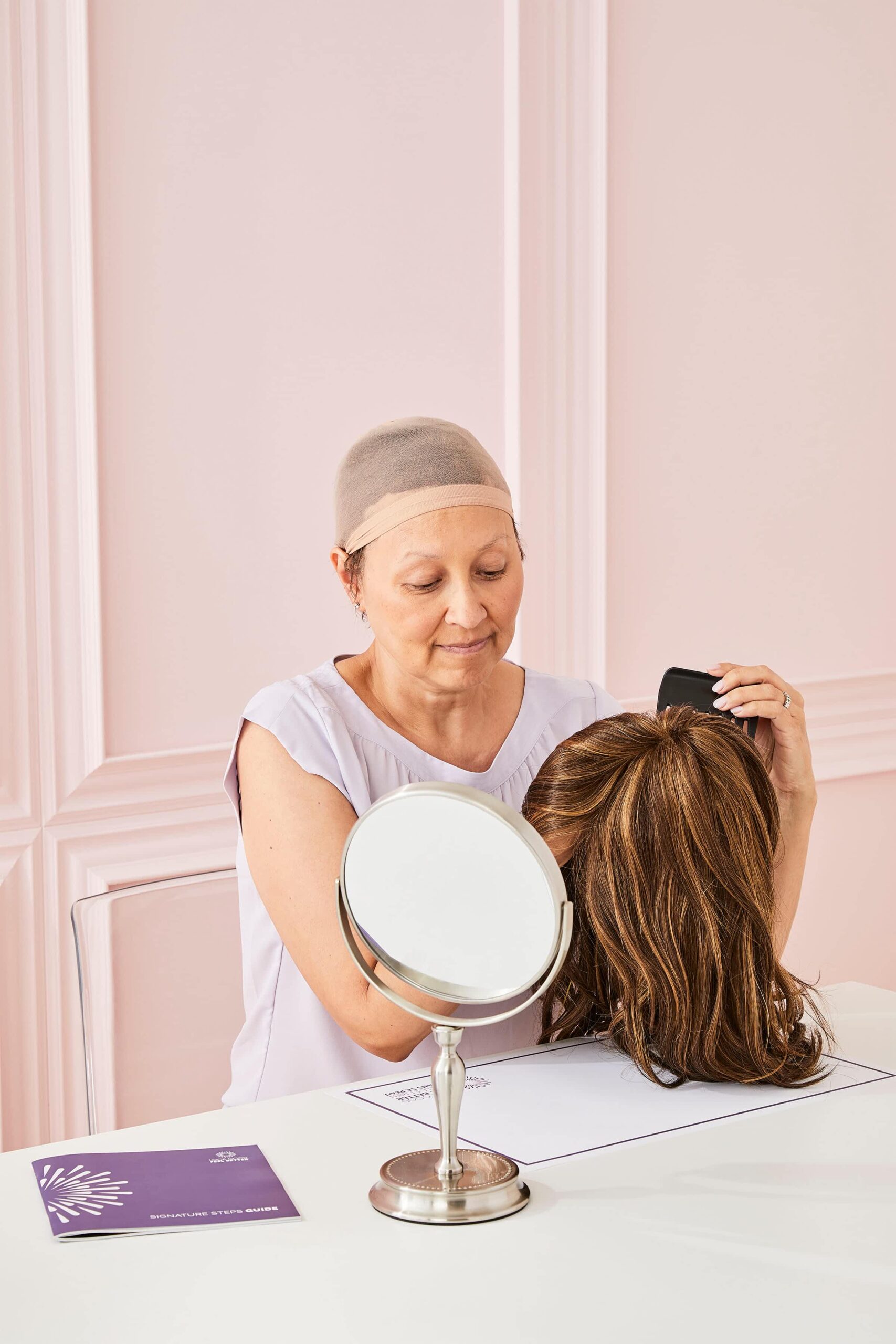
What are participants have to say
“The volunteers were excellent and so caring. It’s the first time I’ve laughed in awhile.”
- Workshop Participant
“This workshop exceeded my expectations. It helps to talk to an expert who is positive, fashionable and gives all the tips. One example – I had no idea how a chemo/sleep cap is such an important base layer!”
- Workshop Participant
Ready to Register for the Wigs & Scarves workshop?
Find the right one for you!
Let’s navigate this together
Join a community that understands. Receive expert advice, useful resources, and compassionate tips throughout your cancer journey in the LGFB newsletter
Newsletter Form
By JC Chessell
It’s funny – as I sit here about to blog on my ‘expertise’ with hats and scarves, I find myself wearing a knitted toque aptly placed on my head. I do not know which came first: my love affair with hats or the loss of hair, which led me to my love affair of hats. Whichever it is, I still find myself wearing hats and head coverings A LOT. And I love it!
Today, I wear them out of personal freedom and choice but wearing hats during my treatment is forever a memory etched on my heart. Having cancer made it less of an option and more of a necessity for me to wear hats, but I enjoyed the look and the way they warmly protected my head.
I’d like to share my personal guide to “Covering Your Head During Cancer Treatment”.
Let’s say you’ve just been diagnosed and are thinking of covering your head with SOMETHING. You will discover there are various options for your head covering: hats, scarves and wigs (natural and synthetic).
Having so many choices gives us each more control as we move through our personal journeys. You will find that having a head covering, such as a scarf or hat, gives such a nice, quick pick-me-up and you may feel better about yourself and your outward appearance.
I mainly wore hats through my chemotherapy and radiation sessions. I kept my natural-hair wig for special occasions, like weddings and events.
Since I was diagnosed at the end of summer going into fall and cold winter weather followed, practically speaking, hats were my favourite and most sensible option. As you decide which head covering to go with, try to think about what look you want to present.
Hats give us SO many options, from fun and sassy to a more laid-back, practical type of look. You will see how your face changes as you wear different shapes, from the wide-rimmed to the smaller fisherman cap. And it only takes a second to put on a hat. Again, the choice is yours.
Scarves, I find, are a better option for spring/summer weather. Your scalp has breathing space due to the softer fabrics and overall, scarves have a lighter feel on the head. If you allow your imagination to run really wild, you can create a gorgeous scarf ‘up-do’ with layers of different scarves, thus allowing for height and dimension to frame your face—think Eryka Badu.
If you are deciding on a scarf option, my only advice would be to stay away from silk since the fabric slides off easily on bald or short hair scalp and will become more of an annoyance rather than anything else. The rest is up to you. And this is really where you get to play up different looks
Thankfully, new companies pop up offering us so many options with fabrics, colours and texture. And here’s a little do-it yourself tidbit: go to Fabricland, pick out a pattern that catches your eye—one that speaks to you. Ask the sales associate to cut off a specific amount of it (enough to wrap around your head at least twice) and make into a headscarf yourself. You may need to practice the wrapping a few times but soon enough, you’ll be an expert.
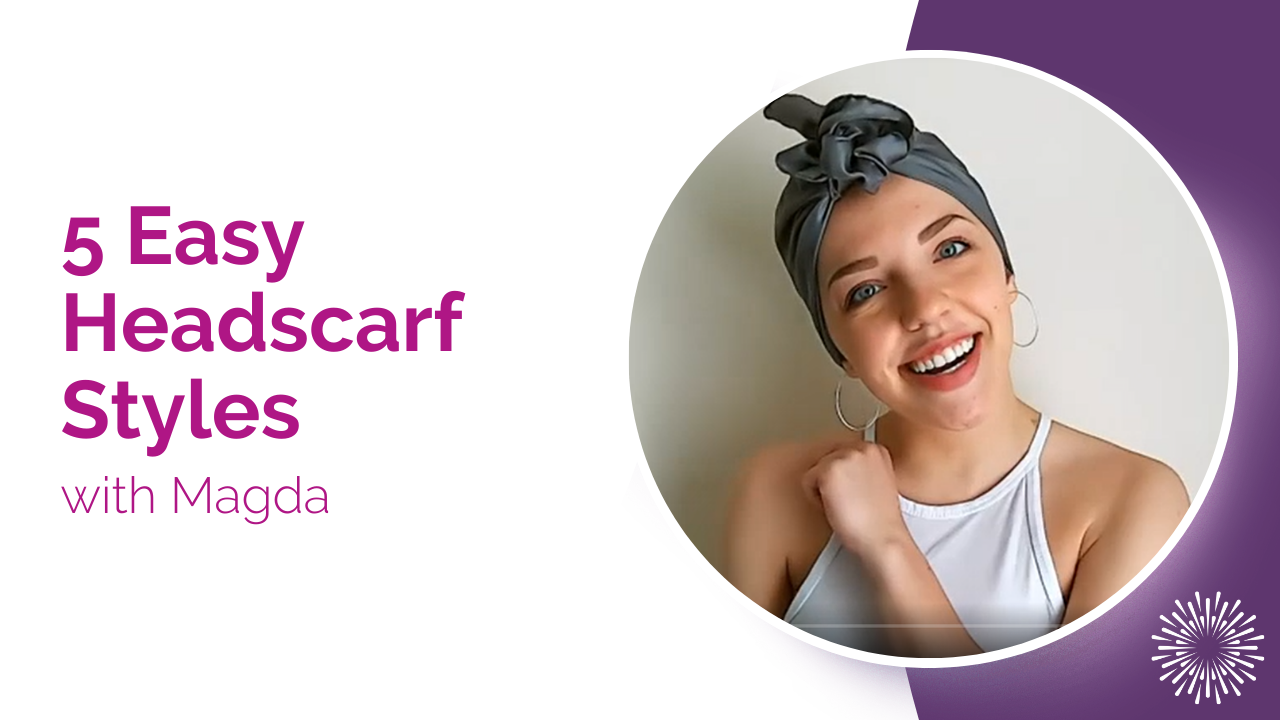
You should know that Look Good Feel Better workshops offer head/scarf wrapping info catering specifically to you and me, so that we can become more comfortable with how to wear our scarves in different ways. There are also lots of scarf-tying tutorials on YouTube, to give you even more ideas. You can start with this from Look Good Feel Better.