
Living through breast cancer and attending a Look Good Feel Better (LGFB) workshop didn’t just impact me – they completely changed the course of my life.
I’ve always wanted to have a job that was in service of people, and to be able to be the bright spot in someone’s day. Last year, in my 50s, as a grandmother of four, I finally did it — nearly a decade after my initial breast cancer diagnosis. I reinvented myself. I quit my job, graduated from an aesthetics program, and started my own business.
Through my business, I offer facials and non-invasive treatments. I always include a facial massage, too. I want to give every single client a deeply relaxing, restorative experience.
The skincare and spa parts of my business were directly inspired by my journey with cancer and LGFB. When I was going through cancer, my skin was a mess. I didn’t feel beautiful or like myself. And I was starved for touch.
There were days I was in the hospital for my treatment and surgery when there was no personal touch – just doctors in and out, surgeons, and stitches. But there was nobody there to wash my back or clean my face. That impacted me quite a bit and left a mark. I was deeply inspired by my own unmet need for gentle, healing touch during treatment.
Now, through my facials, I can offer that same healing touch to others. Touch offers real connection and emotional healing. Just yesterday, a woman told me, “That was better than therapy!” I love that part of my work. I just want to be the best part of someone’s day. And I truly believe that touch is transformative – especially for women and moms. We’re always giving, always putting other people first. We need to receive, too. Seniors, single women, people experiencing illness – there’s a lot of loneliness out there, and caring touch can make all the difference.
Alongside starting my business, I’ve also begun to volunteer. I remember watching hospital volunteers during my treatment and seeing the positive impact they had. I felt the same attending an LGFB workshop. I always thought, “Wouldn’t it be nice to have the time to be able to volunteer?” But I was a single mother of five, and at that point in my life, there just wasn’t time.
Now that my youngest is off to university, I can finally give back. I’ve been volunteering at LGFB’s workshops in Kitchener-Waterloo, and I love it. It feels like such a full-circle moment. I was once sitting in that LGFB chair, and now I’m guiding others through the same transformation. It’s essentially a makeover in an hour. People arrive with slumped shoulders, feeling uncertain and tired. By the end of the workshop, they’re transformed. They’re happy, they’re refreshed. They’re making plans together. They feel like their old selves again. It’s so rewarding to see that. And I love teaching because these lessons are invaluable. I still use the eyebrow technique I learned 10 years ago at my LGFB session!
Through volunteering and running my business, I feel that I’m helping to redefine beauty and aging. After treatment, my hair grew back completely grey – and although it felt too soon to be grey, I embraced it. In fact, I got more compliments on my grey hair than I ever got on my brown hair. My greys, my scars – I embrace it all. I’m in the second act of my life, and it’s pretty amazing. I want to uplift other women going through similar changes.
During National Volunteer Week, we celebrate the people whose hard work, generosity, and dedication make our programs possible.
Last year, more than 800 volunteers contributed 7,292 hours facilitating LGFB workshops in person at 80 locations across Canada and online—creating spaces where participants can reconnect with themselves, learn practical skills, and share meaningful moments with others who truly understand what they’re going through.
In the face of cancer, we help people feel more like themselves again by EDUCATING and EMPOWERING them to help manage the appearance-related impact of the disease and its treatment. By building and delivering our programs with EMPATHY and EQUITY, we reflect and respect the unique experiences of all.
Nobody embodies the mission of LGFB—or the four E’s—more than our network of passionate volunteers.
Education
LGFB volunteers bring professional expertise in skincare, makeup, hair and scalp care, and breast care—knowledge that many people undergoing treatment might not otherwise have access to. These highly skilled community leaders help participants manage the visible effects of cancer treatment with dignity and confidence.
Participants often share how these skills make a meaningful difference during a challenging time:
“It’s a lot to think about, but now I am starting to use some recommended products and strategies and gaining more confidence as a result.”
“The explanation of every step was excellent. There was no rush. I had lots of opportunities to ask questions and received many tips and suggestions on how and why to get particular items.”
“Excellent facilitators making everyone feel comfortable and amazing teachers for someone who wasn’t that comfortable with things such as eyeliner.”
Empowerment
Beyond practical skills, volunteers remind people going through cancer that self-care isn’t selfish and help them reconnect with their identity—something that can feel difficult during treatment.
“For the first time since I started this journey, I was able to relax and nurture my feminine self. This felt very healing.”
“This is a very low part of one’s life, so to have a few minutes to feel embraced, accepted, and build one’s confidence is so very important.”
“The organization name LGFB is so apt! It really makes you feel so good and special. I highly appreciate the kind of environment which was created. I loved everything about the session. Kudos to the whole team!”
Empathy
LGFB volunteers are trained to support people facing cancer and are experienced in communicating with compassion and understanding. Whether participants need a moment of laughter, a safe space to cry, or simply to feel heard, volunteers meet them exactly where they are.
“The workshop is what I needed to bring me out of the little rock I was hiding under. I feel much better about myself.”
“Sometimes you just need to forget about the cancer for a couple of hours.”
“I found the biggest benefit of the session was to be among others going through the same experience and have a bit of levity and fun during a difficult time.”
Equity
Whether workshops are offered in-person or online, LGFB volunteers work hard to cultivate welcoming spaces where everyone feels seen, heard, and respected. Their commitment to inclusion ensures that participants from diverse backgrounds and experiences can access the information and support they need.
“I really appreciated the presenter’s information on wig alternatives for those of us who don’t wish to go the wig route.”
“I’m so happy for the things provided. I got makeup/foundation that matches my complexion—that was a big plus for me!”
“The ladies who conducted the workshop were very positive and reassuring. It really helped me to feel that I can get through this blip in my life.”
Look Good Feel Better workshops would simply not be possible without our incredible network of passionate, community-based volunteers. And there’s no better way to illustrate their impact than through the voices of LGFB participants themselves.
They are our leaders, connectors, and advocates across the country, bringing valuable expertise, warmth, and encouragement that make each workshop a place of learning, connection, and belonging.
This National Volunteer Week, we extend our deepest thanks and gratitude to every LGFB volunteer.
Your dedication gives people living with cancer a space to learn, reflect, and reclaim a sense of self.
Volunteer Training
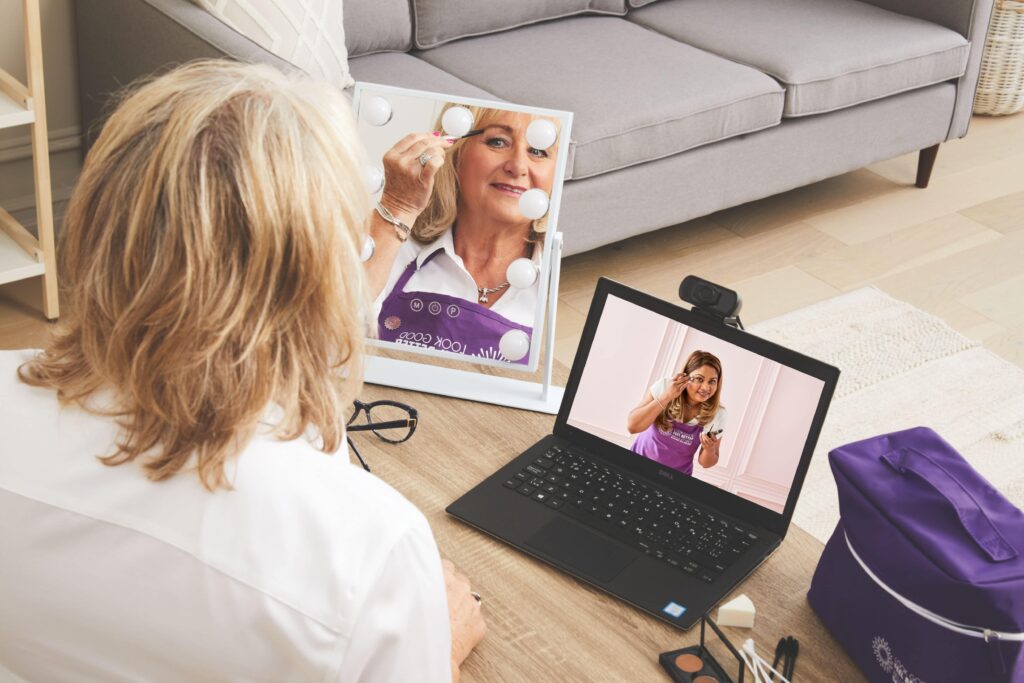
Becoming a LGFB Volunteer
You’ve submitted a volunteer application. What comes next?
One of our Program team members will review your application to see if your skills, preferred workshop delivery type (In-person or online) and preferred location(s) match our current needs.
If your skills and interests align with our current needs, a team member will be in touch to schedule a phone conversation. During this call, we’ll discuss your background in more detail and share information about the specific volunteer roles we’re looking to fill.
What’s Involved in Volunteer Training?
You don’t need to be an expert in cancer care—just bring your passion for helping others! LGFB provides comprehensive, role-specific training with our experienced program staff and an online platform. Each volunteer role has dedicated training modules, featuring audio clips, expert tips, and step-by-step video tutorials to help you feel confident in delivering support.
Training Includes:
- Introduction to LGFB – Learn about our mission, guiding principles, and the impact of our workshops.
- Understanding Cancer – Gain insight into the treatment process and its physical and emotional effects.
- Diversity, Inclusion & Compassionate Care – Learn how to support participants with empathy and respect, honouring all backgrounds and experiences.
- Workshop Standards & Volunteer Best Practices – Understand your role, responsibilities, and how to create a welcoming, supportive environment.
- Role-Specific Modules – Whether you’re leading a skincare workshop, demonstrating wigs and hair alternatives, or moderating online sessions, you’ll receive detailed training tailored to your position.
Let’s navigate this together
Join a community that understands. Receive expert advice, useful resources, and compassionate tips throughout your cancer journey in the LGFB newsletter.
Newsletter Form
Volunteer Role Descriptions
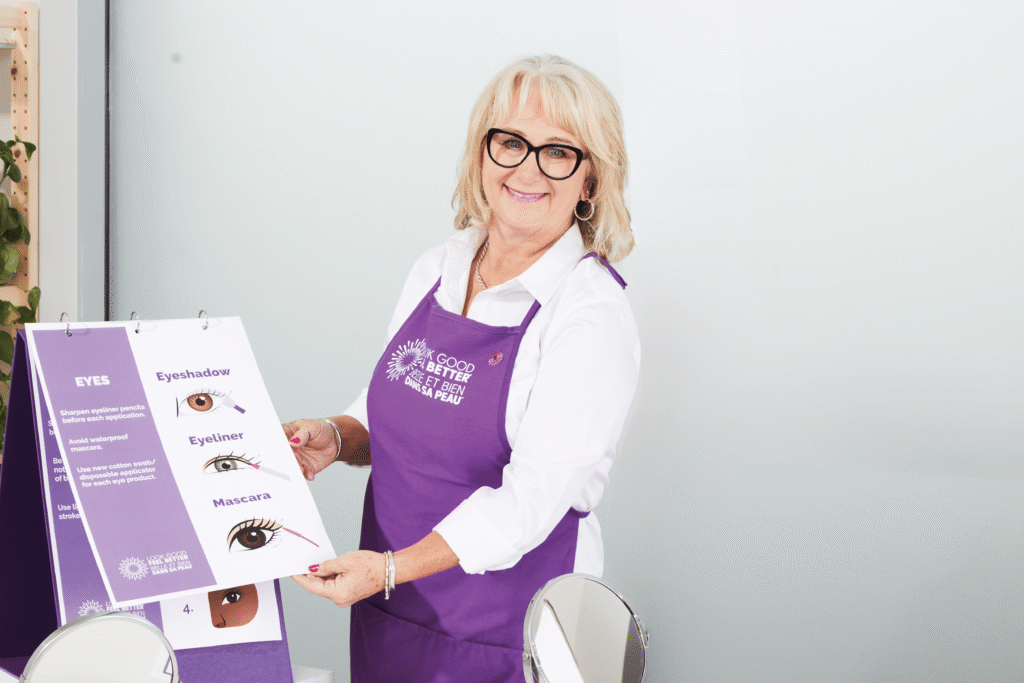
Join a dedicated community of volunteers committed to empowering people facing cancer, making a meaningful difference, and growing personally and professionally.
What Role is Right for Me?
Each LGFB volunteer role requires specific skills and experience to best support workshop participants. Whether your expertise is in skincare, makeup application, breast forms, medical-grade wigs, communications, or events, there’s a role for you.
Cosmetic Advisor (Skincare & Makeup Volunteer)
For this role, we seek professional beauty experts—makeup artists, estheticians, and skincare specialists—who bring skill, empathy, and clear, gentle communication to support people navigating cancer treatment.
Requirements:
Trained as a makeup artist (MUA), esthetician, or beauty expert, or have experience in a dermatology office or skincare clinic
Able to teach application techniques in a simple, step-by-step manner
Comfortable demonstrating on yourself and coaching participants to apply their own makeup
Warm, empathetic, and inclusive approach
Committed to attending regular workshops and collaborating with the local volunteer team
Wigs & Hair Alternatives Specialist
To help participants navigate hair loss during cancer treatment, volunteers in this role bring extensive knowledge in wigs and hair alternatives, plus clear, supportive communication.
Requirements:
Experience with wigs, hairpieces, and scarf styling techniques
Knowledge of wig construction, care, and maintenance
Strong communication skills to explain and demonstrate techniques clearly
Ability to express empathy, foster confidence, and encourage personal choice
Bra & Prostheses Specialist
To help participants feel comfortable and supported after breast surgery, volunteers in this role educate participants on post-mastectomy options, fittings, and financial reimbursement.
Requirements:
Industry experience or formal training in post-mastectomy bras, other post-op garments and breast prostheses
Understanding of different types of prostheses, bra fitting techniques, and financial reimbursement options
Ability to educate and provide guidance in a clear, compassionate way
Online Workshop Moderator
Volunteers in this role provide technical support, manage questions, and create a welcoming, interactive environment in our virtual workshops.
Requirements:
Strong interpersonal skills and ability to create an inclusive, welcoming atmosphere
Comfortable facilitating group discussions and encouraging participation
Organized and attentive to manage time, questions, and content flow
Tech-savvy enough to start, manage and end a zoom call, support online workshop logistics, and trouble shoot basic questions (specific training provided)
Reminder Call Volunteer
Volunteers in this role work remotely from home to remind participants about their workshops and answer questions in a friendly manner.
Requirements:
Friendly, patient, and clear communicator
Comfortable making phone calls and explaining workshop details
Ability to navigate online registration systems to check participant details and reschedule as needed
Access to a phone plan with free long-distance calling within Canada
Community Outreach Coordinator
Volunteers in this role help spread the word about LGFB workshops throughout the community, from hospitals and clinics to local businesses and community spaces, both in-person and online.
Requirements:
Access to a reliable vehicle and a valid driver’s licence, with the ability and comfort to travel within your local community and surrounding areas
Comfortable connecting with patients, healthcare providers, and local businesses to share information about LGFB and the difference we make
Experience in outreach, sales, customer service, community engagement, or a similar role where you’ve built relationships and started conversations with others
Self-motivated and organized, with the ability to plan, track, and adjust your outreach efforts while working with LGFB staff, regional volunteers, and partners
Ready to become a volunteer?
Let’s navigate this together
Join a community that understands. Receive expert advice, useful resources, and compassionate tips throughout your cancer journey in the LGFB newsletter.
Newsletter Form
Current Volunteer Opportunities
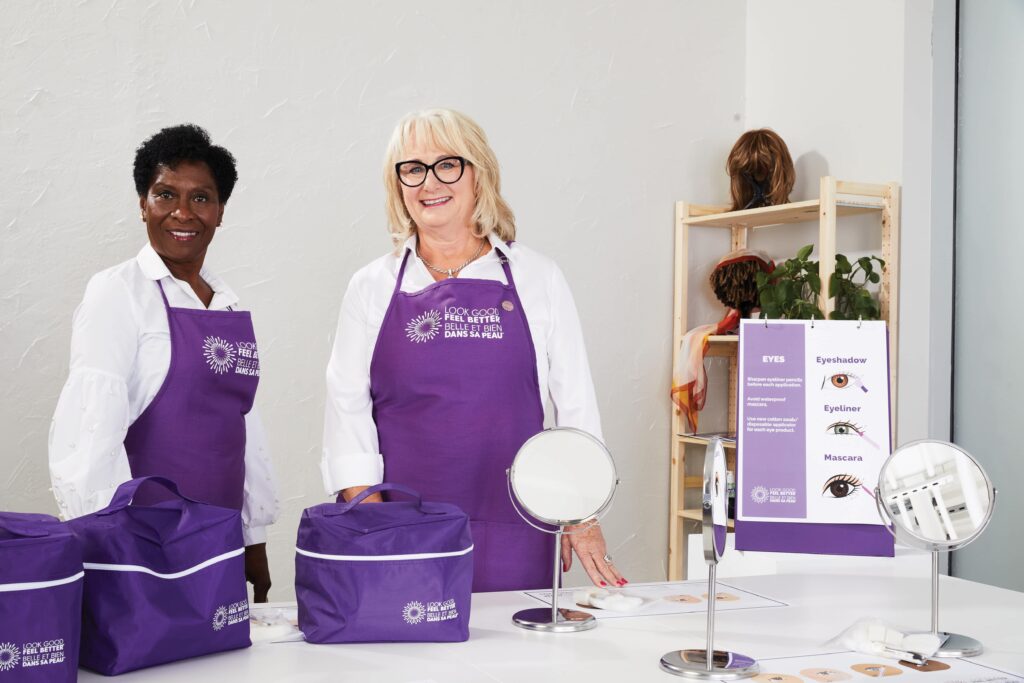
Because our programs are led by local volunteers, our needs are always evolving. If you don’t see a suitable opportunity available in your region right now, we encourage you to check back again soon!
In-Person Volunteer Opportunities
Please see the information below to learn more about the locations, dates & times of LGFB workshops that are in need of volunteers. If this opportunity feels right for you, apply today!
Atlantic Canada
| Location | City | Time | Day | Language | Role(s) Available |
|---|---|---|---|---|---|
| Chalmers Foundation Cancer Support Community Centre | Fredericton | 1:30 – 3:30 pm | 2nd Tuesday of every month | English |
Cosmetic Advisor Wig & Hair Alternatives Specialist |
| Canadian Cancer Society – Halifax | Halifax | 6:30- 8:30 pm | 2nd Thursday of every month | English | Cosmetic Advisor |
| Various Locations | Halifax | Flexible | Flexible | English | Community Outreach Coordinator |
| Wellspring Bannon House | Moncton | 1:00 – 3:00 pm | 1st Wednesday of every month | English | Cosmetic Advisor |
| Various Locations | Moncton | Flexible | Flexible | English | Community Outreach Coordinator |
| Saint John-Cancer Support Program Centre | Saint John | 1:30 – 3:30 pm | 3rd Monday of every month | English | Cosmetic Advisor |
| Colchester East Hants Health Authority | Truro | 1:00 – 3:00 pm | 2nd Wednesday of every month | English | Cosmetic Advisor |
British Columbia
| Location | City | Time | Day | Language | Role(s) Available |
|---|---|---|---|---|---|
| Kamloops UC – Community Hall | Kamloops | 2:00- 4:00 pm | 4th Tuesday of every month | English |
Cosmetic Advisor Wig & Hair Alternatives Specialist |
| KeloCCSL Southern Interior Rotary Lodge | Kelowna | 6:30- 8:30 pm | 2nd Tuesday of every month | English |
Cosmetic Advisor Wig & Hair Alternatives Specialist |
| Canadian Cancer Society – Jean C. Barber Lodge | Vancouver | 6:30 – 8:30 pm | 4th Tuesday of every month | English |
Cosmetic Advisor Wig & Hair Alternatives Specialist |
| Canadian Cancer Society – Jean C. Barber Lodge | Vancouver | 1:00 – 3:00pm | 1st Thurday of every month | English |
Cosmetic Advisor Wig & Hair Alternatives Specialist |
| Various Locations | Vancouver | Flexible | Flexible | English | Community Outreach Coordinator |
Ontario
| Location | City | Time | Day | Language | Role(s) Available |
|---|---|---|---|---|---|
| Quinte Health Centre | Belleville | Daytime | Once a month | English |
Cosmetic Advisor Wig & Hair Alternatives Specialist |
| Various Locations | Hamilton | Flexible | Flexible | English | Community Outreach Coordinator |
| WRHN Cancer Centre | Kitchener-Waterloo | 1:00 pm – 3:00 pm | 3rd Tuesday, every month | English | Cosmetic Advisor |
| Various Locations | Kitchener-Waterloo | Flexible | Flexible | English | Community Outreach Coordinator |
| Verspeeten Family Cancer Centre | London | 1:00 pm- 3:00pm | 1st Thursday, every month | English | Cosmetic Advisor |
| Various Locations | Mississauga | Flexible | Flexible | English | Community Outreach Coordinator |
| Various Locations | Niagara Falls | Flexible | Flexible | English | Community Outreach Coordinator |
| Sault Area Hospital | Sault Ste. Marie | 6:30 pm – 8:30 pm | 1st Tuesday, every other month | English | Cosmetic Advisor |
| Princess Margaret Hospital | Toronto | 10:00 am – 12:00 pm | 1st Thursday, every month | English | Cosmetic Advisor |
| Scarborough Health Network – Centenary Hospital | Toronto | 6:30 pm – 8:30 pm | 3rd Wednesday, every month | English | Cosmetic Advisor |
| Winchester Memorial Hospital | Winchester | Daytime | Once a month | English |
Cosmetic Advisor Wig & Hair Alternatives Specialist |
| Various Locations | Windsor | Flexible | Flexible | English | Community Outreach Coordinator |
Quebec
| Location | City | Time | Day | Language | Role(s) Available |
|---|---|---|---|---|---|
| Cedars Cancer Centre | Montreal | 12:30 – 2:30 pm | 4th Monday of every month | Bilingual |
Cosmetic Advisor Wig & Hair Alternatives Specialist |
| JGH Hope and Cope Wellness Centre | Montreal | 1:00 – 3:00 pm | 3rd Tuesday of every month | Bilingual |
Cosmetic Advisor Wig & Hair Alternatives Specialist |
Western Canada
| Location | City | Time | Day | Language | Role(s) Available |
|---|---|---|---|---|---|
| Wellspring Alberta – Calgary -Randy O’Dell House | Calgary | 1:00 – 3:00 pm | 3rd Monday of every month | English | Cosmetic Advisor |
| Wellspring Alberta – Carma | Calgary | 1:00 – 3:00 pm | 1st Wednesday of every month | English | Cosmetic Advisor |
| Cross Cancer Institute | Edmonton | 9:30 – 11:30 am | 3rd Thurday of every month | English | Cosmetic Advisor |
| Wellspring Alberta- Edmonton House | Edmonton | 10:00 – 12:00 pm | 1st Wednesday of every month | English | Cosmetic Advisor |
| Various Locations | Edmonton | Flexible | Flexible | English | Community Outreach Coordinator |
| Jack Ady Cancer Centre-Chinook Regional Hospital | Lethbridge | 1:15 – 3:15 pm | 2nd Wednesday of every month | English |
Cosmetic Advisor Wig & Hair Alternatives Specialist |
| Saskatchewan Cancer Agency – Regina | Regina | 1:30 – 3:30 pm | 2nd Thursday of every month | English | Cosmetic Advisor |
| Saskatchewan Cancer Agency – Saskatoon | Saskatoon | 10:00- 12:00 pm | 2nd Thursday of every month | English |
Cosmetic Advisor Wig & Hair Alternatives Specialist |
Online Volunteer Opportunities
| Volunteer Role | Language | Workplace | Requirements |
|---|---|---|---|
| Online Workshop Moderator | English | Zoom |
2 hours per month, 8pm EST (5pm PST) Dates TBD |
| Reminder Call Volunteer | English | Any location | Flexible hours on an assigned date |
Let’s navigate this together
Join a community that understands. Receive expert advice, useful resources, and compassionate tips throughout your cancer journey in the LGFB newsletter.
Newsletter Form
Volunteer with Look Good Feel Better
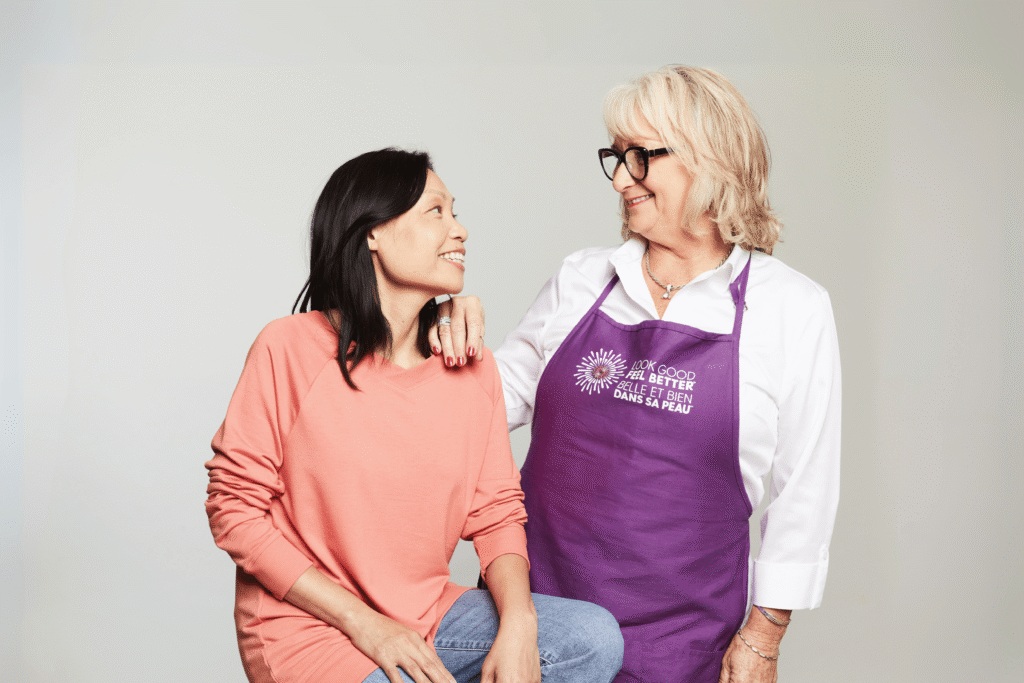
Every year, thousands of Canadians face the physical and emotional challenges of cancer treatment. By volunteering with Look Good Feel Better, you can help them regain confidence, connection, and a sense of self.
LGFB Workshops are 100% Volunteer-Driven
Do you have expertise in skincare, makeup/cosmetics, medical-grade wigs, hair alternatives, or breast forms and prostheses?
LGFB workshops are offered in person and online across the country and are powered by a network of more than 800 community-based volunteers.
We are always looking to welcome passionate, dedicated individuals to join our volunteer community and help make a meaningful impact.
Why Volunteer with LGFB?
Improve well-being for individuals experiencing cancer – Research shows that attending a workshop like Look Good Feel Better can reduce feelings of depression and anxiety.
Build Community – Meet like-minded volunteers and form meaningful connections.
Enhance Your Skills – Gain valuable experience in coaching, presenting, teambuilding, and communications.
Make a Lasting Impact – Help someone smile, regain confidence, and feel supported during a challenging time.
What Would I Do as an LGFB Volunteer?
We welcome volunteers in many capacities. Here are the opportunities we rely on most:
- Cosmetic Advisor – Guide participants through skincare and makeup techniques to help manage theeffects of cancer treatment, boosting confidence and self-esteem.
- Wigs & Hair Alternatives Specialist – Assist with wig selection, care, and styling, demonstrate headscarf tying, and answer questions about hair loss, regrowth, and scalp care.
- Bras & Prostheses Specialist – Educate participants on post-mastectomy options, fittings, and financial reimbursement, helping them feel comfortable and supported.
- Online Workshop Moderator – Provide technical support, manage questions, and create a welcoming, interactive environment in our virtual workshops.
“I remember how crucial it was for me to be around positive people when hope was so low. Now, as a volunteer, I have a chance to offer a positive energy, attitude, and knowledge about how to empower yourself with makeup and hair; for a woman facing cancer it is so helpful and truly mind-strengthening.”
Agnes, Cancer Survivor & LGFB Volunteer
Apply to volunteer today!
Let’s navigate this together
Join a community that understands. Receive expert advice, useful resources, and compassionate tips throughout your cancer journey in the LGFB newsletter.
Newsletter Form
I’d already survived a life-changing event when I was just 16 years old. It was the first day of summer. I was fresh out of grade 10 and excited to be doing my very first parachute jump. But the parachute didn’t open, and I plummeted 3,000 feet to the ground. The impact left me with a spinal cord injury, and I’ve used a wheelchair ever since.
I was able to move on with my life I went back to school and got a university education. I got married and had a daughter, who’s in her 30s now. I had a fulfilling career as a French immersion teacher. I also got very involved in wheelchair sports, from curling to hand cycling. My life was moving forward in a positive, productive way.
I thought that surely my spinal cord injury was the biggest challenge that life would throw my way. Cancer had never been on my radar. I was feeling great. When I discovered the lump, I didn’t panic. I’d been getting regular mammograms with nothing showing up. But when the nurse called and said, “There’s a 97.5% chance it’s malignant,” everything changed. It felt like the world had shifted beneath me once again, just like that day in 1981 when my parachute failed.
My breast cancer diagnosis was shocking. It was an aggressive cancer with all these names I’d never heard before: ER-positive, PR-positive, and HER2-negative. I had no idea there were so many forms of breast cancer. And it felt extremely unfair. I had already been dealing with a spinal cord injury for most of my life – wasn’t that enough? Hadn’t I experienced enough traumatic moments? I was also initially very concerned that I was not going to survive, as I’d watched my mother die of cancer. I was devastated.
My spinal cord injury changed my life, but cancer was even worse. It wasn’t just physically brutal – it caused an immense emotional toll, invading all aspects of my life and leaving me constantly on edge, with the steady fear of recurrence looming over me. And navigating the complexities of cancer care treatment was especially challenging because of my spinal cord injury. For example, the chemo table was too high for me to get up onto on my own. I had to lobby the hospital for better accessibility.
In the past year, I’ve gone through a lumpectomy, what felt like endless chemotherapy, radiation, and ongoing hormone therapy. I’ve gone from having long blond hair to short grey hair with chemo curls. I still don’t recognize myself when I look in the mirror. It’s like I’m a different person now, in many ways.
Amid the whirlwind of treatments and fear, finding support became essential. Having an organization like Look Good Feel Better (LFGB) was so helpful. Peer support is one of the big methodologies used to help people with spinal cord injuries. You can have a doctor explain about the injury and physiotherapy and occupational therapy, but peer support – meeting someone else living with the same condition – is often far more valuable. It was the same with having cancer. When I got my cancer diagnosis, I didn’t have any friends or colleagues who were going through it. I didn’t feel like there was much of a community or people I could speak with. No one in my family had had this diagnosis or any type of cancer treatment. I found that sense of peer support from LGFB’s workshops – peers getting together, and volunteers who are well-versed in cancer treatment. For me, the more I can meet others going through similar circumstances, the easier it is to go through the experience. I’m not alone. I’m part of a shockingly large community of women dealing with the same thing. This is an additional piece to the recovery process.
Other things that have helped in my recovery and my holistic approach to treatment are taking care of my appearance, staying active in my communities, and travelling. I’m aware of my mortality in a new way now. I no longer put things off. Cancer has taught me to live each day with intention and gratitude, embracing each moment to the fullest.