
Step 1 – Cleanse
The benefit of cleaning: Removes makeup, impurities, and dry flaky skin and helps stimulate circulation resulting in skin that is clean and feels pampered.
Eyes:
Remove eye makeup with a non- irritating makeup remover and a cotton pad
Hold the pad on the eyelid for a few seconds and then wipe downwards over the lashes, gently moving the pad from the inner corner of the eye towards the outer corner
Use a fresh cotton pad for each eye
Lips:
The same eye makeup remover can be used to gently wipe the lips until all colour has been removed
Face and Throat:
Apply dots of cleanser (either a lotion or cream) to your forehead, nose, chin, cheeks and throat
Gently massage in small outward circles to help stimulate circulation; on the neck, use an upward motion
Gently tissue off the cleanser or rinse thoroughly with lukewarm water and pat dry
Step 2 – Tone (optional)
The benefit of toner: Removes any lingering traces of cleanser or makeup and prepares the skin for moisturizer while restoring the skin’s pH balance.
Using a cotton pad and a gentle downward motion, apply a non- stimulating, alcohol-free toner being careful to avoid the eyes and mouth
Only use toners for sensitive skin that are alcohol and fragrance-free
Avoid any toners that exfoliate or contain “actives” like AHA or other acids
Step 3 – Moisturizer
The benefit of moisturizer: Helps your skin maintain its optimum moisture balance and alleviates dryness.
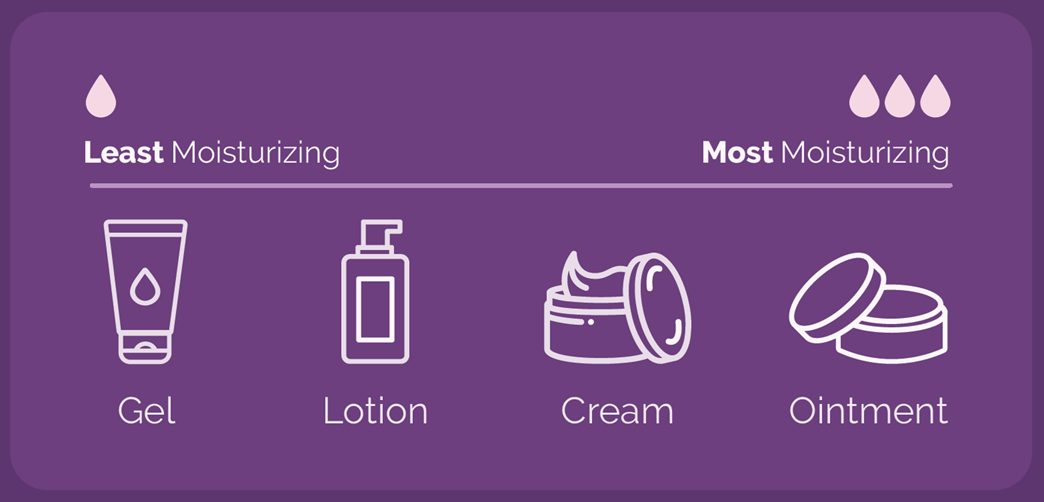
If you find that your skin is unusually dry, use the guide below to find the most moisturizing options available.
Eyes:
Using your ring finger (your weakest – and therefore gentlest), lightly tap eye cream on the orbital bone, above and below the eye – less is more
Don’t go too close to the eye
Lips:
Apply a hydrating lip balm several times a day and before bed
If your lips are very dry and cracked, try a thick ointment lip product (ointments seal in moisture longer than other products)
Face and Throat:
Apply dots of moisturizer to your forehead, nose, chin, cheeks, and throat
Gently smooth over your face and throat, using upward motions
Want to know more about moisturizers?
Least Moisturizing to Most:
- Gels (the lightest / least moisturizing)
- Lotions
- Creams
- Balms
- Ointments (the most moisturizing)
Oils can be used as an added step after moisturizing to seal in moisture. If you choose to use an oil, perform test to make sure it’s not causing irritation and look for an oil that doesn’t clog pores (one option is rosehip seed extract).
Step 4 – Sunscreen
After your morning moisturizer, apply sunscreen. Radiation and chemotherapy treatments (and some medications) can increase your susceptibility to sunburn and skin damage.
As a general rule, avoid sun exposure as much as possible when in treatment
Use sunscreen specifically for your face that delivers both UVA and UVB protection in a broad spectrum SPF 30 or higher
Skin and Scalp Recommendations
Let’s navigate this together
Join a community that understands. Receive expert advice, useful resources, and compassionate tips throughout your cancer journey in the LGFB newsletter
Newsletter Form
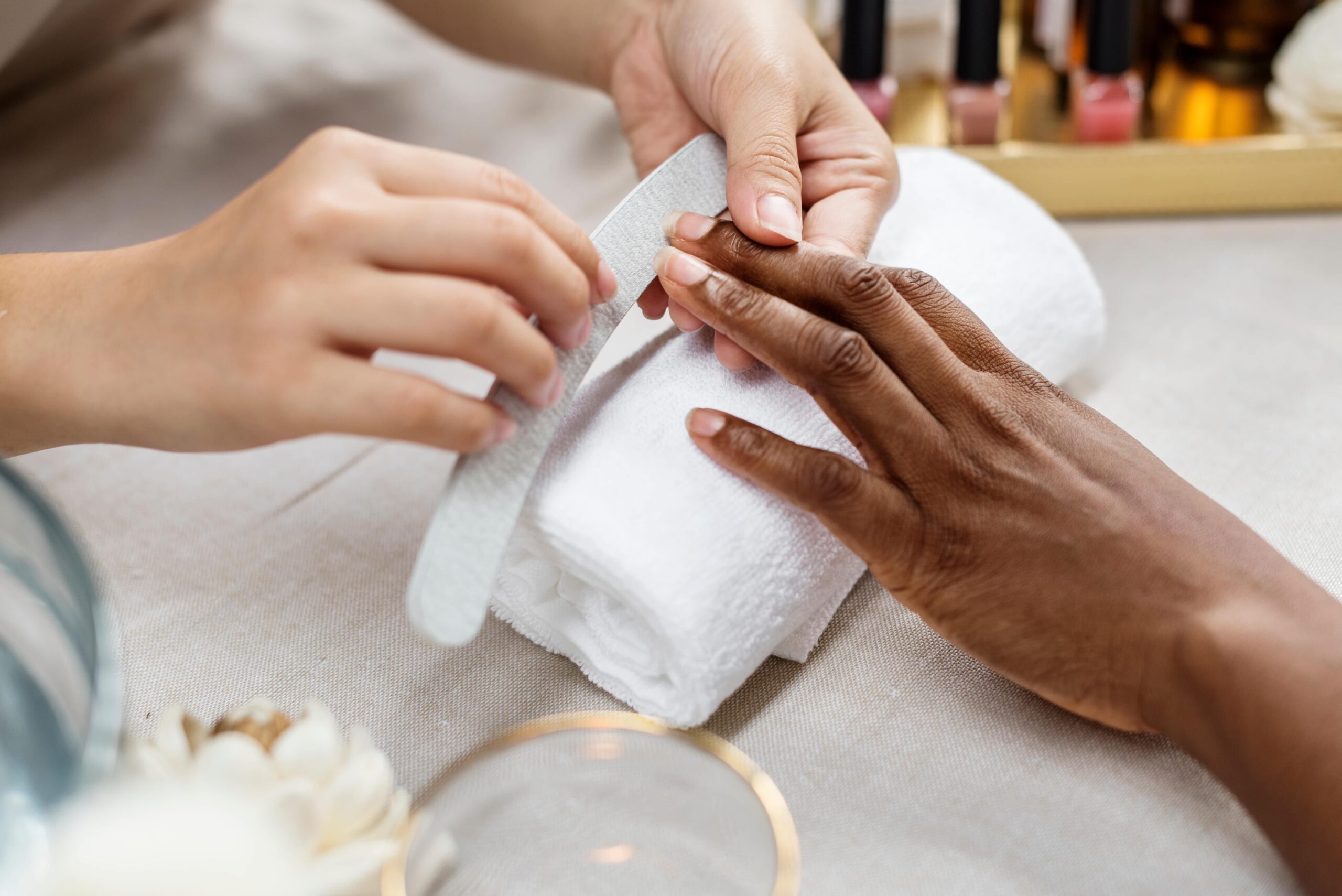
Tips to keep your hands and feet healthy:
-
Avoid cutting your cuticles. Instead, use cuticle cream to help combat dryness, splitting and hangnails.
-
Moisturize with a rich hand cream.
-
Keep nails short.
-
Wear rubber gloves while doing chores as excessive exposure to water can lead to fungal infection of the nail bed.
Nail Polish and Nail Salons
If you’d like to use polish, soft, neutral shades of pink will lend a healthy- looking finish
Use an oily acetone-free polish remover. Acetone is very drying and can make nail problem worse during treatment
When visiting a salon, make sure the staff has worked with clients undergoing cancer treatment (or at least knows how to take extra precautions to keep you safe and healthy)
Let’s navigate this together
Join a community that understands. Receive expert advice, useful resources, and compassionate tips throughout your cancer journey in the LGFB newsletter