A dermatologist isn’t one of the specialists you necessarily think you’ll need during and after cancer treatment. However, advances in treatments have made skin-related conditions very common.
We’ve asked one of Canada’s top Onco-Dermatologists, Dr. Maxwell Sauder, for the latest supportive information to help patients reduce and relieve the side effects they are experiencing.
Here are his recommendations for caring for your skin, scalp and nails during treatment and beyond.
Dr. Sauder is a board-certified dermatologist in Canada (FRCPC) and the United States (DABD) with additional fellowship training in cutaneous oncology. He is a former faculty member of Harvard Medical School where he focused on skin toxicities of anti-cancer treatments (STATs). He is currently an onco-dermatologist at Princess Margaret Cancer Centre where he assists in the management of complex cutaneous malignancies and STATs. He also practices at Toronto Dermatology Centre where he is the director of the Pigmented Lesion Clinic that uses cutting edge artificial intelligence technology to identify and manage skin cancers or precancerous lesions at the earliest possible stage.
As a general rule, keep your skincare routine as simple as possible – no serums, acids, toners, etc.
Historically, the point of toners was that cleansers would strip the essential oil off of the skin, because they were quite strong, and the point of toners is to replenish. If you use a neutral based cleanser followed by a moisturizer, you do not really need that toner.
Serums are very nice, but they tend to have a lot of added ingredients, like retinol. However, some of the ingredients can be helpful like niacinamide, which is an anti-inflammatory.
Simple rule: Gentle cleanser. Good moisturizer. Great sunscreen.
The type of base (or “vehicle”) you a product is in—ointment, gel, lotion, or cream—affects how well it works. These terms describe different chemistries, but they can be compared by their viscosity, or thickness. In terms of eczema, the strongest vehicle, from a moisturization standpoint, is an ointment. The issue with an ointment is that it might not be cosmetically pleasing as it can be quite greasy and sticky.
The next best thing is a cream. They are rich, thick, and have a bit of weight to them when you actually scoop them up or put them in your hand. However, they might not rub in quite as nicely as a lotion, which people tend to gravitate to because pump dispensers make application easier and quicker. Lotions contain lots of water and very little oil. Because the amount of oil drops as you move from an ointment to a cream, then to a lotion, oil, or gel, these later products can actually be dehydrating rather than hydrating.
Yes! People going through cancer have skin that is equivalent to eczema. People with eczema have a higher propensity to developing allergies to a product they are using. Even outside of cancer, people come to my clinic experiencing allergies, and I say to them: “I think you are reacting to xxx product” … and they say: “That product? I’ve been using it for the last 20 years.”.
That is exactly right. No one is born with allergies in their skin. We all need to be sensitized to products first and certain treatments can make your skin more sensitive, and therefore make your skin have a greater ability to be sensitized to an allergen. You can use something a million times, and the million and one time, you become allergic to it.
Key signs you are allergic to something:
- If things are getting worse rather than better, when using a product
- If things are red, itchy, scaly, especially in the areas where you are applying the product
I also recommend the website www.producteliminationdiet.com . It’s a wonderful resource and Dr. Skotnicki is fantastic dermatologist. I learn so much from her all the time.
I feel that way too, and I know these products inside and out. Every time I go, I discover new products that I was not aware of.
In general, you want to treat your skin like a person who has eczema – but you don’t necessarily need to get products for “eczema”.
Key words to look for are:
- hypo-allergenic
- fragrance-free – not scent-free (there is actually a difference)
- PH balanced or PH neutral product
There are lots to avoid in the pharmacy or drugstore – especially the acne aisle. Over the counter and prescription treatments tend to be quite irritating . And, acne – or something that looks like acne – is the single biggest side effect that I need to manage as a dermatologist for people that have cancer.
So, you might see an acne-like rash on your skin, but it’s not a great idea to get a strong acne cleanser. Most of these cleansers have acids in them (salicylic acid, lactic acid, alpha/beta hydroxyl acids), which can be irritating to the skin and disrupt the skin’s PH and/or moisture barrier.
The same caution applies to retinol products. The prescription‑strength form is a retinoic acid (the active acid version of vitamin A) that can cause significant dryness, redness, and irritation. Over‑the‑counter retinol is a milder, non‑metabolically active form, but it still tends to dry the skin, which is exactly what we want to avoid.
Cancer treatments can cause skin reactions that are worsened by sun exposure, regardless of skin pigmentation. Using sunscreen helps protect against harmful UV radiation and prevents these reactions.
To protect your skin from the sun, it is recommended to apply sunscreen every day, all year round, regardless of the weather. This is because UVA rays are present throughout the year and throughout the day, and they can even penetrate windows.
If you go outside and engage in physical activities, it’s important to re-apply sunscreen frequently and generously – at least once every 2 hours, and immediately after heavy sweating or swimming.
When choosing a sunscreen, select one with SPF 30 or higher to protect against UVB, and make sure it is labeled “Broad Spectrum” or shows the UVA symbol to ensure UVA protection as well.
Apply sunscreen about 20 minutes before sun exposure for maximum effectiveness, and if using a moisturizer first, let it fully absorb to avoid diluting the sunscreen.
It’s crucial to remember that UVA rays are present year-round and can penetrate windows, while UVB rays are more intense and primarily cause sunburn. For this reason, sunscreen should be applied daily, even when indoors near windows, to protect skin that may be more vulnerable due to cancer treatments.
If a product is labeled “mineral”, it almost always contains zinc, titanium, or both. Some brands also include chemical filters in mineral formulas, but these filters aren’t inherently bad. In fact, many are safe and well-tolerated. Mineral sunscreens offer excellent protection, though they can be harder to blend in, especially over larger areas of skin.
UV-protective clothing is very effective for sun protection and is strongly recommended for anyone spending long periods outdoors or swimming, since water can wash off or reduce the effectiveness of sunscreen. A wide-brimmed hat offers better coverage for the face and neck than a baseball-style cap. Keep in mind that UPF fabrics can thin and lose effectiveness over time, so they will eventually need to be replaced.
For cancers other than skin cancer, the skin is not the intended target of radiation; it is more of an “innocent bystander” as the radiation passes through to reach deeper tissues. When the skin itself is not the target, regular moisturizing before, during, and after treatment is often encouraged to help support the skin barrier. Some cancer centres also follow protocols that include a topical steroid to reduce inflammation, and this does not interfere with the effectiveness of the radiation.
Certain targeted therapies can cause severe acne-like eruptions, known as acneiform eruptions. In these cases, over-the-counter products are usually not effective, and medical intervention is required.
For adults not on these specific medications, acne can still flare due to underlying tendencies, particularly when the body is under stress. If you notice acne while on treatment, it is important to discuss it with your physician or oncologist first to determine whether it is a treatment-related side effect.
If it is not linked to your therapy and is a flare of pre-existing acne, your family doctor or dermatologist can provide targeted care. There are many effective interventions for adult acne, including prescription medications and specialized topical treatments, tailored to the type and severity of acne.
Skin changes are common during cancer treatment and can significantly impact quality of life. About two-thirds of patients say the effects are worse than expected, and around half will experience a treatment interruption or discontinuation because of skin issues.
If your skin reaction is affecting your cancer therapy and quality of life, see a dermatologist familiar with treatment-related reactions. Often, these skin conditions are a sign the therapy is working, so stopping treatment unnecessarily can be harmful. Proper management can help you stay on therapy while protecting your skin.
Whether or not you are experiencing hair loss, it’s recommended to use an anti-dandruff shampoo twice a week. Massage it into the scalp and let it sit for 2–5 minutes. These shampoos are anti-inflammatory and soothing.
If you still have hair and experience redness or itchiness despite using the shampoo, a prescription anti-inflammatory lotion (usually a topical steroid) can be used. Apply nightly until symptoms improve, then gradually reduce frequency.
For a hairless but itchy scalp, continue the anti-dandruff shampoo and follow with a rich moisturizer, cream, or balm to soothe the skin.
Tea tree oil has anti-inflammatory and anti-microbial properties, so it can help with scalp irritation. However, some people may develop an allergy to tea tree oil, and many tea tree shampoos contain fragrances that can also cause reactions, so it’s advised to monitor your scalp for any worsening symptoms.
For chemotherapies that cause anagen effluvium (hair loss), using an anti-dandruff shampoo twice a week can help keep the scalp healthy. Minoxidil (5% foam, brand name Rogaine) may also be useful—applied twice daily for men and once daily for women. Vitamin supplements can be beneficial as well. For certain chemotherapy regimens, a scalp cooling cap can help reduce hair loss, and there is data supporting its effectiveness.
Nail changes during treatment can range from general issues like brittleness, cracking, or Beau’s lines—often related to stress—to more specific reactions from certain medications, such as painful inflammation of the nail bed. These problems can be distressing and significantly impact quality of life.
To care for your nails, stick to the basics: use a gentle soap (bring your own to public restrooms if possible), moisturize regularly, and wear gloves to protect your nails from trauma.
For general issues like brittleness or breaking, over-the-counter nail-strengthening lacquers can help. High doses of biotin are best avoided during treatment, as they can interfere with some lab results.
It depends on the type of treatment. With hormonal therapies, the skin may experience lasting changes. For traditional chemotherapy, the skin usually returns to normal shortly after finishing treatment and once any reactions have subsided.
Watch Our Conversation with Dr. Sauder
<iframe width="560" height="315" src="https://www.youtube.com/embed/Mrzxn2D7ZSA?si=aczHvRCxvjvbp_Jn" title="YouTube video player" frameborder="0" allow="accelerometer; autoplay; clipboard-write; encrypted-media; gyroscope; picture-in-picture; web-share" referrerpolicy="strict-origin-when-cross-origin" allowfullscreen></iframe>
Yes. Remove with oily, acetone-free remover. Use petroleum jelly instead of cutting cuticles. Avoid acrylics (bacteria risk) and wear rubber gloves for chores.
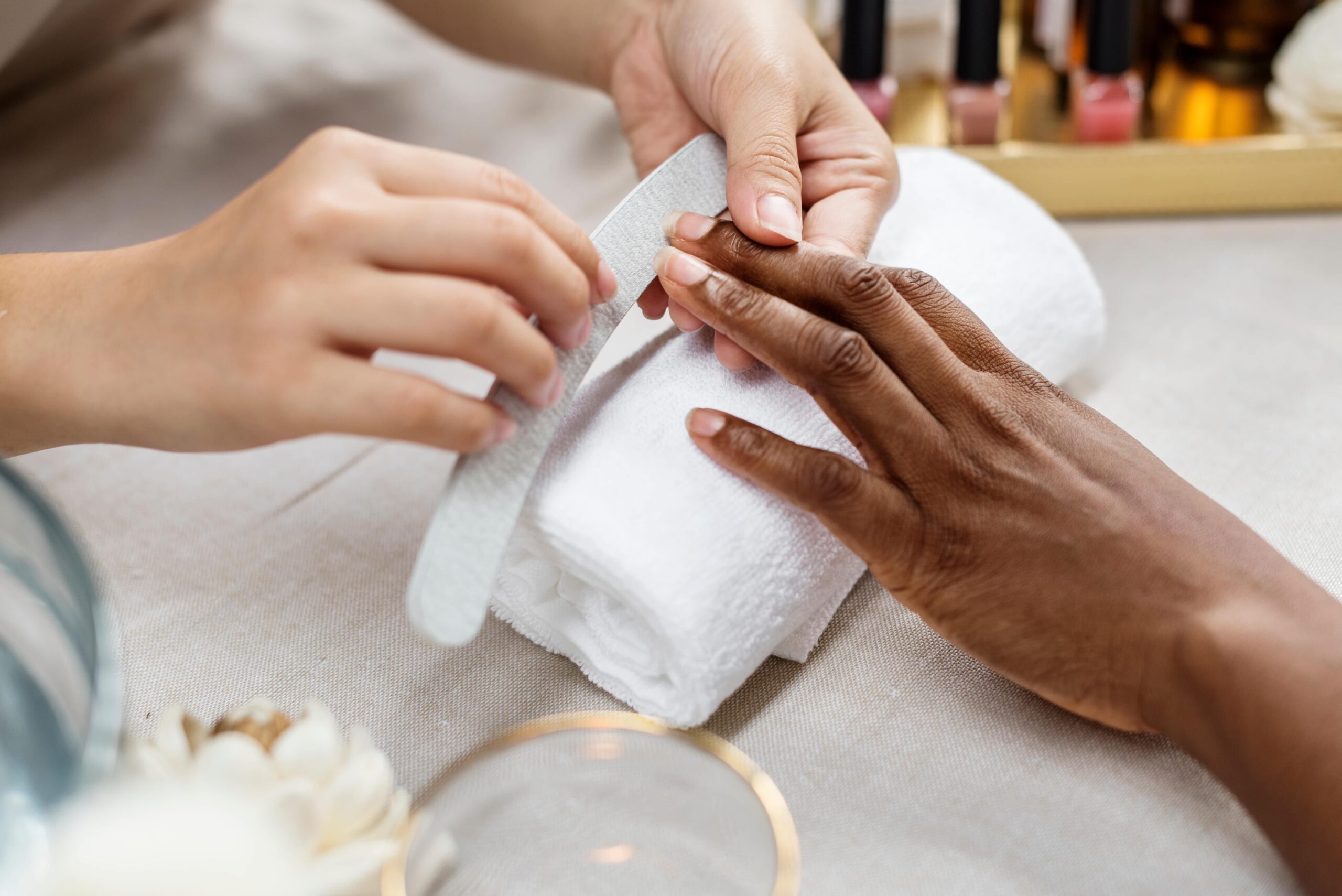
Ask if professionals are trained for cancer patients. Avoid anything causing breaks or bleeding. Skip acrylics due to infection risk. Do not push back, cut, or push down cuticles. Only basic nail polish application is recommended—avoid other specialty services.
Petroleum jelly can be applied to nails to moisturize and act as a barrier cream, helping protect them from everyday damage. You can also consider using a hydro-soluble nail strengthener. Ask your healthcare team or pharmacist for recommendations on products specifically designed to strengthen brittle nails during treatment.
Yes, as long as skin isn’t scratched or broken and you tolerate it.
Recovery timelines:
Fingernails: Nails grow one millimetre per month, so full recovery takes six to twelve months. Bumpy ridges are from treatment interrupting nail growth—they’ll grow out normally.
Toenails: Toenails grow half a millimetre per month, so full regrowth takes twelve to eighteen months, especially the big toe.
Is treatment impacting your nails?
Find help in our Nail Care Workshop.
Nail Care During Cancer Treatment
Cancer treatment doesn’t just affect your hair and skin—it can change your nails too. Your nails (and the skin around them) might get weaker, develop ridges, get thicker or discoloured, or even fall off. It might sound a little scary, but don’t worry—it’s only temporary and totally normal during treatment.
Tips to Keep Your Hands & Feet Healthy
Want to keep your nails and skin in good shape?
Try these easy tips:
Skip Cutting Your Cuticles – it can lead to cuts or infections (use cuticle cream to keep them soft and help avoid hangnails)
Moisturize Often – with a thick, rich hand cream (your hands will thank you!)
Keep Your Nails Short – so they're less likely to break or snag
Wear Rubber Gloves – when doing stuff like dishes or cleaning. Too much water exposure can cause nail infections
Nail Polish & Salons – What to know!
Still want to rock some nail polish?
Go for it and play it safe!
Stick with light or neutral pinks for a natural, healthy look
Use acetone-free nail polish remover – it's always less drying
If you go to the salon, let them know you're in treatment so they can be extra gentle and hygienic
Skip Acrylic Nails or Wraps!
They can trap bacteria underneath, which can lead to infections (not fun).
Not everything has to change during treatment.
Get tips about nails, skincare makeup and hair in our Teens Workshop.
Tips to keep your hands and feet healthy:
-
Avoid cutting your cuticles. Instead, use cuticle cream to help combat dryness, splitting and hangnails.
-
Moisturize with a rich hand cream.
-
Keep nails short.
-
Wear rubber gloves while doing chores as excessive exposure to water can lead to fungal infection of the nail bed.
Nail Polish and Nail Salons
If you’d like to use polish, soft, neutral shades of pink will lend a healthy- looking finish
Use an oily acetone-free polish remover. Acetone is very drying and can make nail problem worse during treatment
When visiting a salon, make sure the staff has worked with clients undergoing cancer treatment (or at least knows how to take extra precautions to keep you safe and healthy)
Avoid Acrylic Nails or Wraps
Bacteria can get trapped in the space behind the acrylic nail or wrap, leading to infection.
Is treatment impacting your nails?
Get expert advice in our Nail Care Workshop.
One question everyone may have as they begin their cancer treatment is ‘what are the side effects of my cancer treatment?’ The truth is, is that, while there are many common side effects from chemo, radiation, immunotherapy and drugs, your treatment experience will be different from anyone else. So, what’s ‘normal’? Your medical team may give you a booklet on what to expect, but the reality is, there is no ‘normal’.
Hair loss, fatigue, constipation, diarrhea, headache, nausea are all common side effects from cancer treatment. But you may also be dealing with loss of balance, strength and coordination. Others experience nerve tingling, “burning” or numbness. It’s also possible that you may not have any of these side effects. Your reaction to your treatment is as individual as your diagnosis itself.
In the past, a good patient was often described as someone who kept questions to a minimum, who followed all the advice that their healthcare professional provided, who didn’t complain or voice their concerns, and didn’t speak out about something they didn’t understand. Over the years, medical professionals have begun to realize that their patients are individuals, with minds of their own and ideas and questions about their own healthcare.
Enter, Dr. Margaret Fitch, a professor at the University of Toronto with a background in nursing and expertise in oncology and the psychosocial and emotional side of cancer. Dr. Fitch identifies the difference between ‘person-centered’ and ‘patient centered’ care. Your care is a partnership. Doctors, nurses and social workers bring knowledge and expertise, but you are the expert on you and your personal experience. Person-centered care calls on medical professionals to listen, work in partnership with you and to better understand what your life is like and to pay close attention to how any suggestions made may impact you.
Dr. Fitch offers some important take aways to help you in your efforts to ensure your care is ‘person-centered’.
Embrace Your Right to Ask Questions: It’s crucial to remember that you have the right to ask questions about your care and treatment. Even if it’s difficult to speak up, your health and well-being are paramount. Take time at home to write down your questions when you’re relaxed, and bring them to your appointments. Don’t hesitate to be firm and confident in asking for the information you need.
Utilize All Available Resources: While your time with your physician is limited, don’t hesitate to ask a nurse or another healthcare professional for additional support. Healthcare teams often work together, and they can help ensure that your concerns are addressed. It’s okay to use multiple strategies to get the information and support you need.
Understand That “Normal” Doesn’t Mean “Okay”: If you’re told that certain side effects or feelings are normal, it’s important to recognize that this doesn’t mean you have to accept them without support. There is help available, and you don’t have to navigate these challenges alone. Speak up about what you’re experiencing and ask about the resources and services that can provide relief.
Recognize the Uniqueness of Your Experience: Cancer is not just one disease, but many, each with its own treatments and side effects. What you go through may be completely different from someone else’s experience, even if the diagnosis sounds similar. Don’t feel pressured to compare your journey to others; instead, focus on what you need and seek out the right support for your specific situation.
Explore Your Options: The treatment and support options available to you are diverse. Whether it’s joining a group, seeking one-on-one counseling, or trying different therapies, it’s essential to find what works best for you. Don’t be afraid to explore different approaches until you find the one that feels right.
Stay Informed About New Treatments: Medical advancements, like targeted therapies, are constantly evolving. These treatments can be more precise and may reduce some of the more challenging side effects associated with traditional chemotherapy. Keep the conversation open with your healthcare team about new options that may be available to you.
Value Your Individuality: Remember, your journey is uniquely yours. While it’s helpful to hear others’ experiences, what works for someone else may not be the best fit for you. Trust in your instincts, ask for the information you need, and choose the path that feels most supportive to your individual needs and circumstances.
In Episode 2 of “Facing Cancer Together,” you will hear from several women undergoing treatment, each with their own unique version of ‘normal.’ Additionally, Dr. Fitch delves into the concept of ‘person-centered care,’ offering deeper insights into this compassionate approach to treatment. Tune in for a compelling discussion that highlights the diverse experiences of these women, the importance of personalized care and how you can advocate for yourself during your own cancer journey.