
Dealing With Hair Loss During Cancer Treatment
For some people, losing their hair can feel even harder than getting a cancer diagnosis. And that’s totally valid. Your hair might feel like a big part of who you are—it’s how you express yourself, feel confident, or just feel like you. Since hair loss is a visible sign of illness, it can mess with how you see yourself and how others see you. You might feel anxious, vulnerable, or just off.
But here’s the good news: Hair loss is temporary
And there are lots of things—like wigs, hats, or even totally new looks—that can help you feel more confident while your hair takes a break.
Whether you want to keep things feeling familiar or try something bold and new, we’ve got a few tips to help you through it.
Dealing With Thinning Hair
If your hair’s starting to thin, here are some ways to take care of it:
Don’t dye or bleach it—your hair is more fragile right now
Use a moisturizing shampoo and conditioner to help soften brittle strands
Try going shorter—it can make thinning hair less noticeable and puts less stress on the roots
Avoid heat styling tools (like blow dryers and curling irons), hairsprays, and products with alcohol
Sleep on a satin or silk pillowcase—it’s way gentler on your hair and scalp
Not everything has to change during treatment.
Get tips about nails, skincare makeup and hair in our Teens Workshop.
Let’s navigate this together
Join a community that understands. Receive expert advice, useful resources, and compassionate tips throughout your cancer journey in the LGFB newsletter.
Newsletter Form
Picking Out a Wig That Feels Like You
Finding the right wig might take a little time, but it’s totally worth it to get one that makes you feel comfortable and confident. Whether you want something that looks just like your usual hair or you’re ready to try something totally new, here’s what to know:
Wig Shopping Tips:
Book an appointment – Trying on wigs usually takes around 45 minutes to an hour, so it’s best to plan ahead
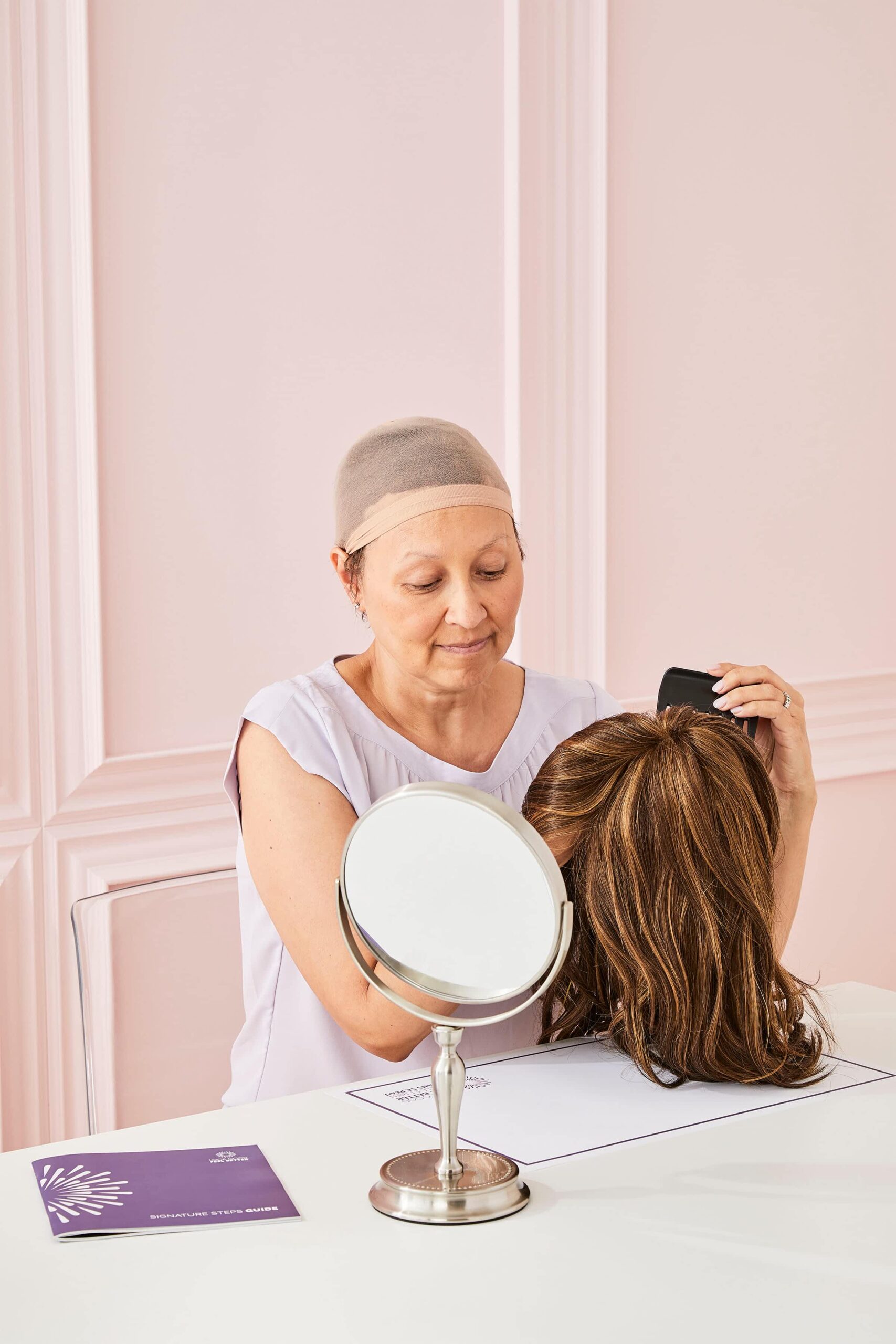
Ask about wig caps – Some salons offer thin nylon caps to wear while trying wigs (they help keep things clean and comfy)
Bring backup – Take a friend, sibling, or parent for support and honest opinions
Bring a pic of your hair – A photo of your favorite look helps the stylist find something similar in style and colour
Keep your own hair short – Experts say keeping it around ¼ inch or shorter makes wigs fit better and feel comfier
Try lots of styles and colors – You might be surprised by what you like. Exploring different looks can actually be fun and empowering!
Take your time – You don’t have to pick the perfect wig in one visit. It's okay to take a few trips before deciding on the one that feels right for you.
At the Salon:
Ask if they provide nylon wig caps (for hygiene + comfort).
Try on a few different styles – even ones you wouldn’t normally pick.
Try a range of colours – you might find a fun new look.
Ask about care instructions and how to style each wig type (real vs. synthetic).
Check how the wig feels – is it itchy? Too tight? Too loose?
Questions to ask at the Salon:
- Do you have wigs made for people going through cancer treatment?
- Can you help style or trim the wig once I pick one?
- How do I wash and take care of this wig?
- What’s the return/exchange policy if I change my mind?
- Can you recommend anything for keeping my scalp comfy under the wig?
You’re not alone in this.
Connect with others who get what you’re going through in our Teens Workshop.
Let’s navigate this together
Join a community that understands. Receive expert advice, useful resources, and compassionate tips throughout your cancer journey in the LGFB newsletter.
Newsletter Form
How to Choose?
Choosing a wig takes some time and effort, but it will be worth it to find the wig that feels right.
A wig feels different than your natural hair and will take some getting used to. Commit to giving yourself time to adjust to this change. Over time, it can become as familiar as any other accessory in your wardrobe.
The first question that many women consider is what fibre or material to choose. Both can be cut and styled by a hairdresser with wig experience.
When Making the Decision:
Most people choose a wig that matches their colour, texture, and style as closely as possible
Both synthetic and human hair wigs can look natural—fit and placement are key
Consider maintenance and comfort—synthetic wigs are easier to care for, while human hair wigs offer more styling options
Let’s navigate this together
Join a community that understands. Receive expert advice, useful resources, and compassionate tips throughout your cancer journey in the LGFB newsletter.
Newsletter Form
Buying Tips
Make an appointment – it can take 45 minutes to an hour to discuss options, choose the right wig, and get fitted
Ask if the salon provides clients with nylon caps to wear when trying on wigs, which is important for hygienic reasons
Take a friend or family member for support and second opinions
Bring a photo of yourself with your favourite hairstyle and colour for reference
Keep hair short to ensure the best wig fit. Experts suggest that your own hair should only be ¼ inch or shorter
Try a variety of styles and colours – having choices is really empowering
Take your time making decisions
Let’s navigate this together
Join a community that understands. Receive expert advice, useful resources, and compassionate tips throughout your cancer journey in the LGFB newsletter.
Newsletter Form
Skincare, Makeup, & Hair Workshop
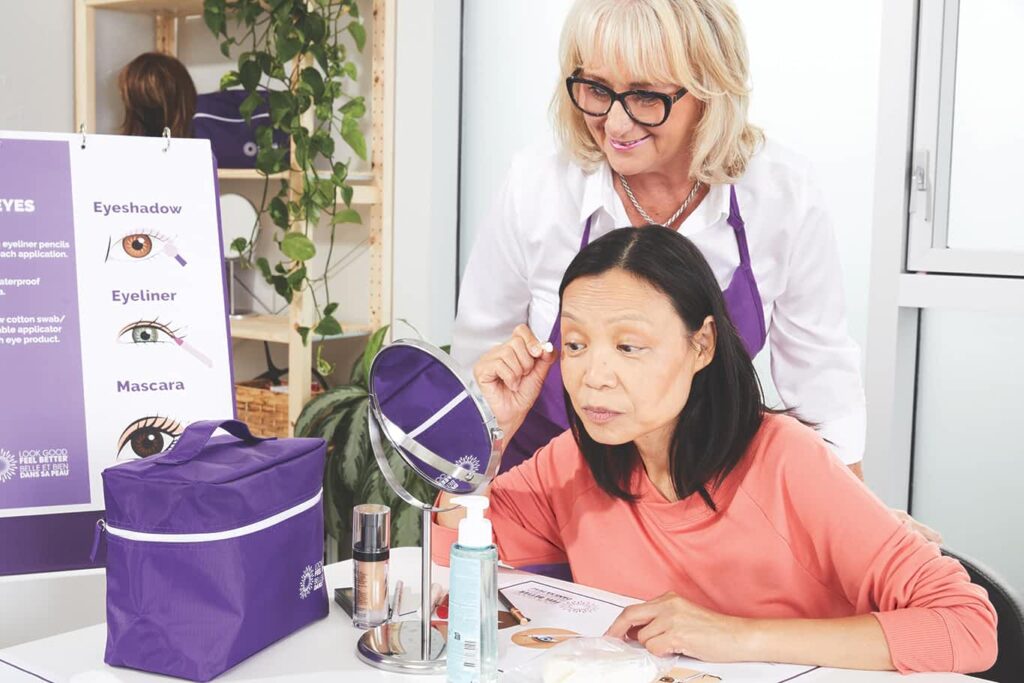
Discover practical ways to manage the physical side effects of cancer treatment on your skin, hair, and face, including skincare, makeup, hair loss, wigs and other head coverings. Connect with a community who gets it.
About this workshop
What you will learn:
Counteract side effects such as discolouration and dry skin
Practice simple makeup steps to add colour back to your face
Makeup hygiene and sun safety
Find tips and techniques for managing the loss of brows and lashes
Caring for your scalp during and after treatment
What to consider if selecting a wig
All types of head coverings including wigs
Pros and cons between synthetic and human hair wigs
The information and dialogues are designed to help you:
Manage the physical side effects of cancer treatment with clear, practical guidance
Connect with others who may understand what you are going through
Understand what to expect during treatment
Prepare for treatment to help minimize potential side effects
Feel more like yourself again
This workshop is available IN-PERSON.
IN-PERSON
- The IN-PERSON workshop is 2 hours long.
- Called Skincare, Makeup & Hair, it combines both our Skincare & Makeup and our Wigs & Hair Alternatives workshops.
- In-person workshops are only available in select locations around Canada.
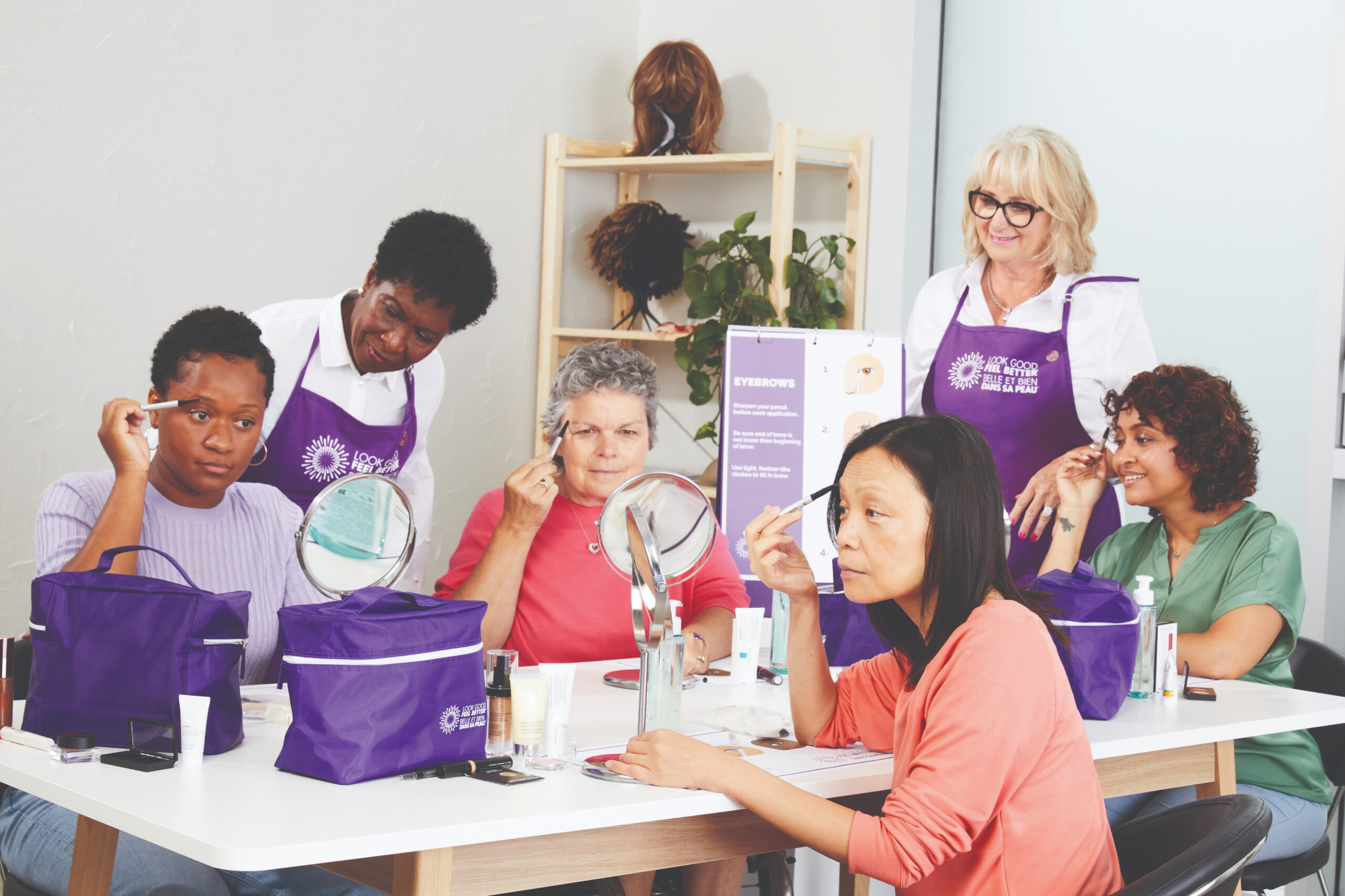
Who should attend this workshop?
This workshop is available to anyone who is about to start cancer treatment, is currently in treatment, or has completed treatment in the last 12 months and would like information about or support around this topic.
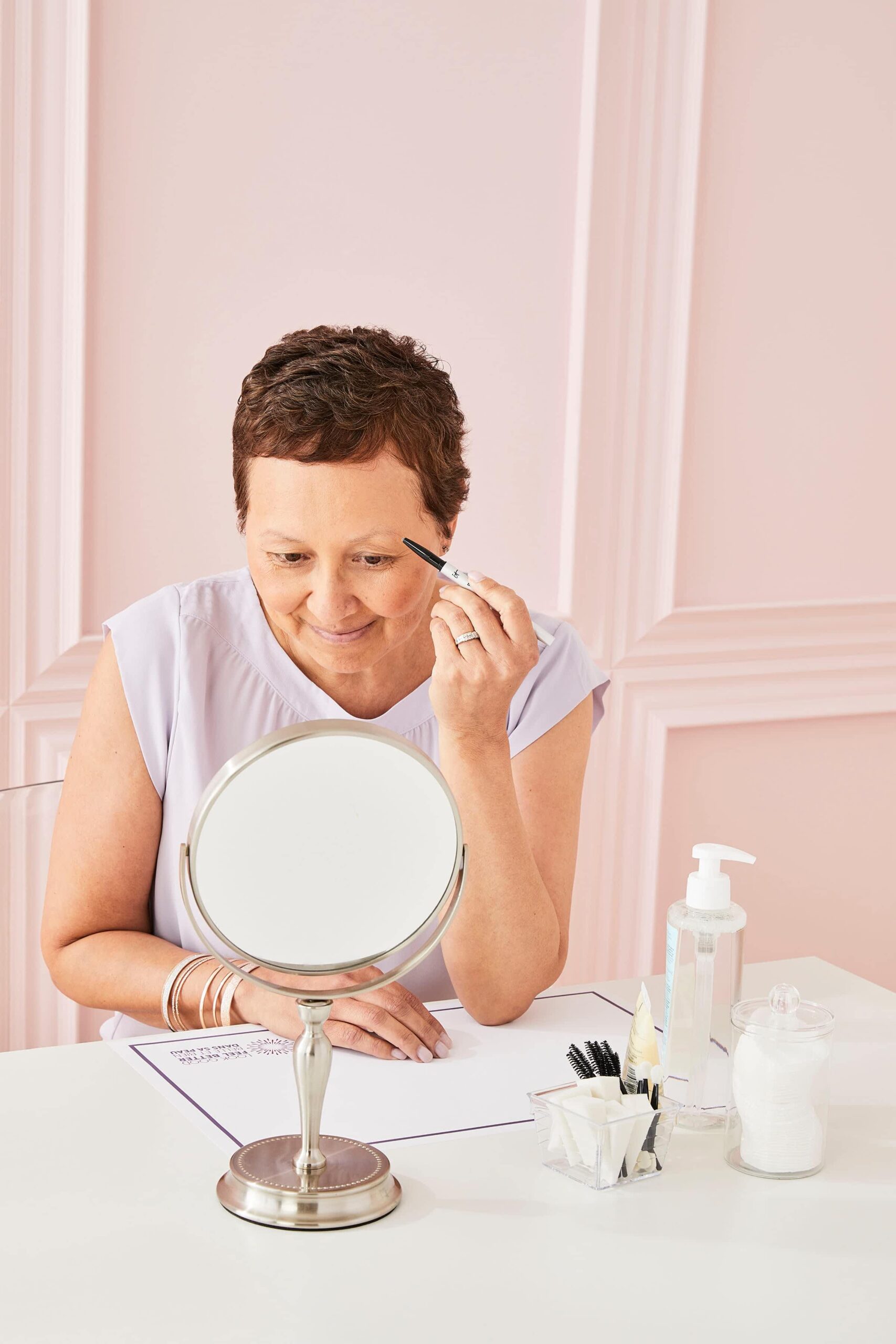
The Confidence Kit
Participants in the Skincare & Cosmetics workshop receive a free kit of skincare and makeup products.
These products are generously donated to Look Good Feel Better and meet the regulations set forth by Health Canada.
These products are for educational purposes, so you may practice the techniques explained in the workshop.
- You will receive the kit in the workshop.

What Our Participants Have to Say
“This workshop was so useful because it wasn’t just information. It ‘normalized’ the techniques to cope with cancer & treatment related challenges to appearance. Yes, wear makeup and take care of your skin not just in spite of cancer and treatments but here is how to do it well and safely!”
- Joan L., Workshop Participant
“The volunteers were excellent and so caring. It’s the first time I’ve laughed in awhile.”
- Joan M., Workshop Participant
Participating in our workshops
97%
of Workshop Participants
would recommend our workshops to another person facing cancer.
32%
of Our Participants
feel somewhat confident BEFORE our workshops.
89.1%
of Our Participants
reported feeling somewhat confident or confident about their appearance AFTER our workshops.
Let’s navigate this together
Join a community that understands. Receive expert advice, useful resources, and compassionate tips throughout your cancer journey in the LGFB newsletter.
Newsletter Form
Wigs & Scarves Workshop
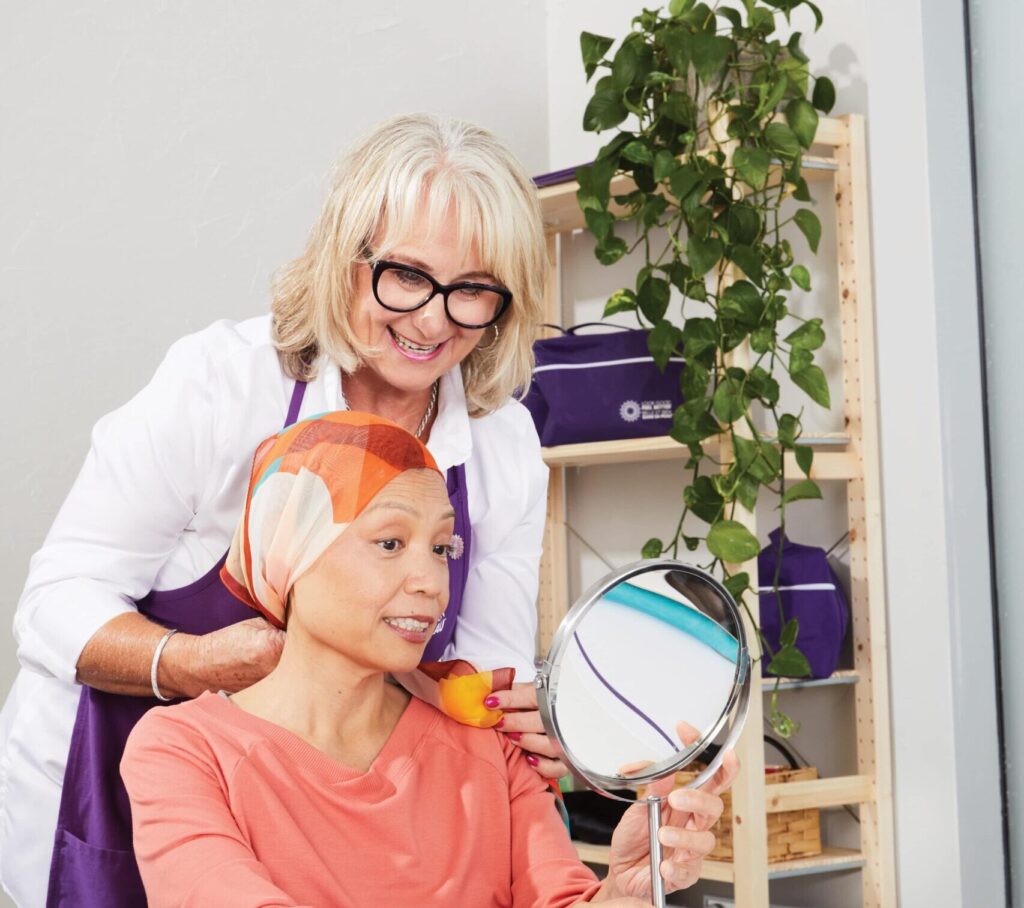
Losing your hair during cancer treatment can be emotional and overwhelming. Learn about what to expect with hair loss, how to care for your scalp during and after treatment, all about wigs and other hair alternatives, including scarf-tying techniques.
About this Workshop
What you will learn:
Caring for your scalp during and after cancer treatment
What to expect with hair regrowth
Discover all types of head coverings and hair alternatives, including wigs
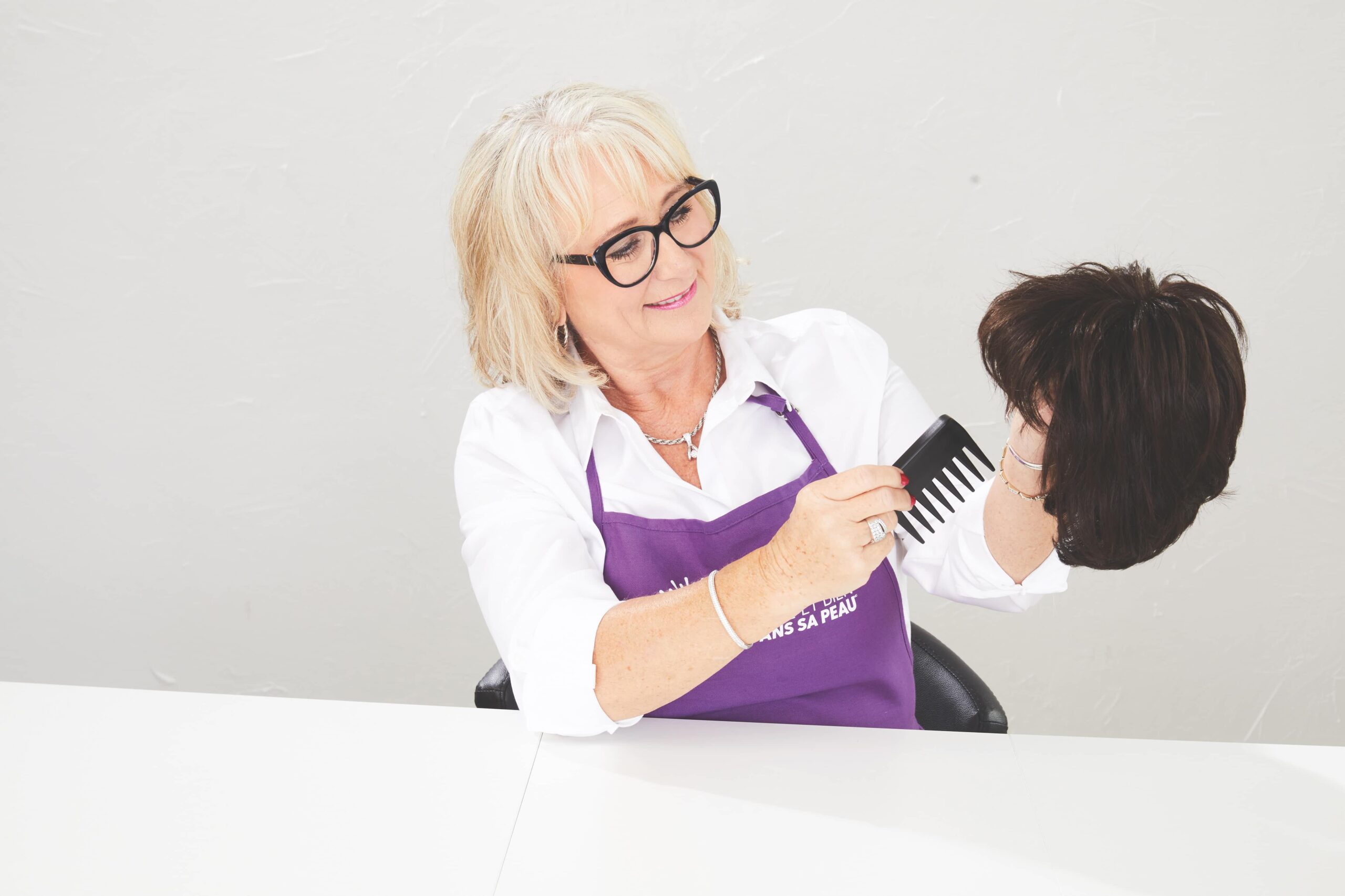
What to consider if selecting a wig, including how to take care of and style them
Pros and cons between synthetic and human hair wigs
Easy scarf-tying techniques and more
The information and dialogues are designed to help you:
Manage the physical side effects of cancer treatment (including hair loss) with simple, practical guidance
Connect with others who may understand what you are going through
Know what to expect during treatment
Prepare for treatment to help minimize potential side effects
Feel more like yourself
This workshop is available ONLINE and IN-PERSON
Online Workshop
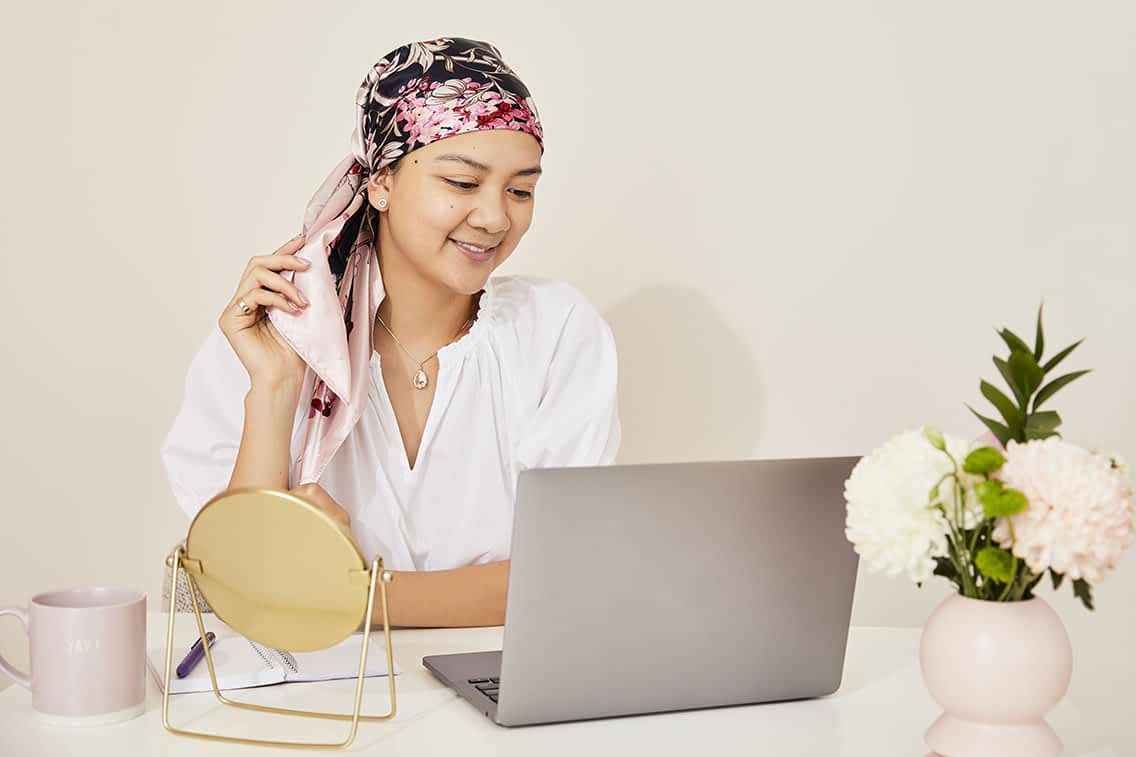
- The ONLINE workshop is ONE HOUR long and is delivered via Zoom.
- Relax and join us from the comfort of your home.
In-person Workshop
- The IN-PERSON workshop is 2 HOURS long and is called Skincare, Makeup & Hair.
- It combines our Wigs & Scarves and our Skincare & Makeup Workshops into a single 2-hour session.
- The in-person workshop is only available in select locations around Canada.
Who should attend this workshop?
This workshop is available to anyone who is about to start cancer treatment, is currently in treatment or has completed treatment in the last 12 months and would like information about or support around hair loss, wigs, and other hair alternatives.
What are participants have to say
“The volunteers were excellent and so caring. It’s the first time I’ve laughed in awhile.”
- Workshop Participant
“This workshop exceeded my expectations. It helps to talk to an expert who is positive, fashionable and gives all the tips. One example – I had no idea how a chemo/sleep cap is such an important base layer!”
- Workshop Participant
Ready to Register for the Wigs & Scarves workshop?
Find the right one for you!
Let’s navigate this together
Join a community that understands. Receive expert advice, useful resources, and compassionate tips throughout your cancer journey in the LGFB newsletter.
Newsletter Form
Some Women Say…
that the loss of their hair is more devastating than their cancer diagnosis. You may feel like your hair is essential to looking and feeling like yourself.
Hair loss is also a visible sign of illness and can impact self-image and self-esteem. You may feel vulnerable and anxious.
You’re not alone… support is here, every step of the way.
Prior to Hair Loss
- Depending on your specific treatment protocol, your hair could thin or fall out completely during treatment.
- Your oncology team will be able to inform you when to expect hair loss.
- If you want a wig to match your current hairstyle, colour and texture, consider looking for a wig before starting treatment.
- You can also take pictures of your current hair from all sides and bring those with you when choosing a wig.
Shaving your head
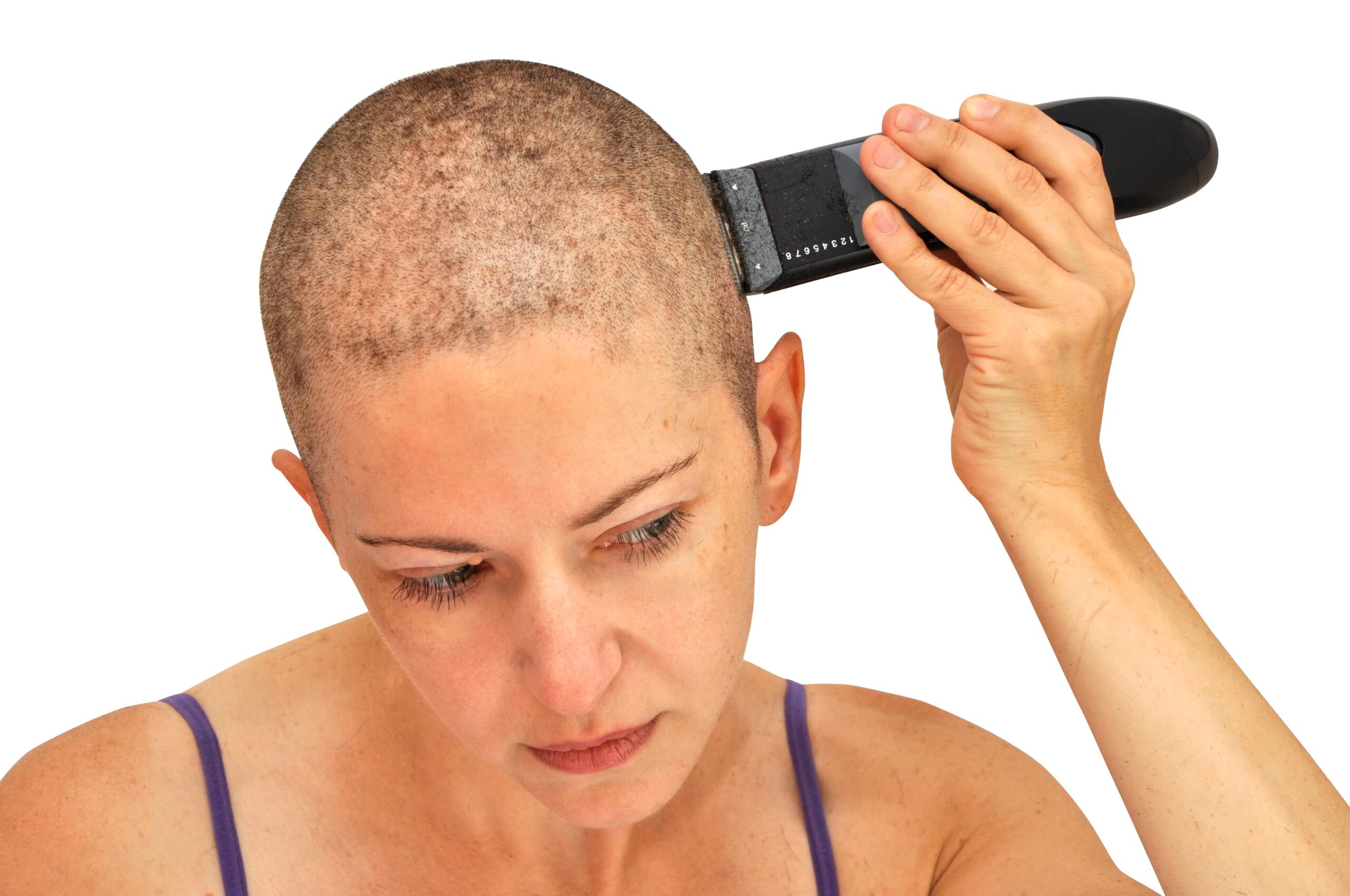
- Watching hair fall out in clumps can be emotionally distressing. Some people prefer to shave it off before too much hair falls out.
- A very short haircut (e.g. 1/8 of an inch) can help ease scalp sensitivity and ease the emotional distress of seeing hair fall out in clumps.
Thinning Hair
If you notice that your hair is thinning, consider these things:
Don’t colour your hair right now. It may break and make it thin more quickly.
As the texture of your hair may change and become brittle, using a a hydrating shampoo and conditioner will help your hair feel softer.
Consider cutting your hair shorter than you usually wear it. It can help your hair look thicker and make hair loss less noticeable. Also, short hair doesn’t put stress on already weak hair follicles.
If possible, avoid overusing blow dryers, curling irons, hot rollers, hair sprays and any products with an alcohol base.
When sleeping, use a satin-like pillowcase to minimize tugging your hair at the scalp.
Full Hair Loss
- When hair loss starts, your scalp will be very sensitive, and hair will fall out gradually
- This is when you might want to cut your hair to at least 1/8 of an inch
- You also may want to wear a sleep cap during the day and at night to catch your hair
- Consider having two sleep caps – one for day, the other for sleeping
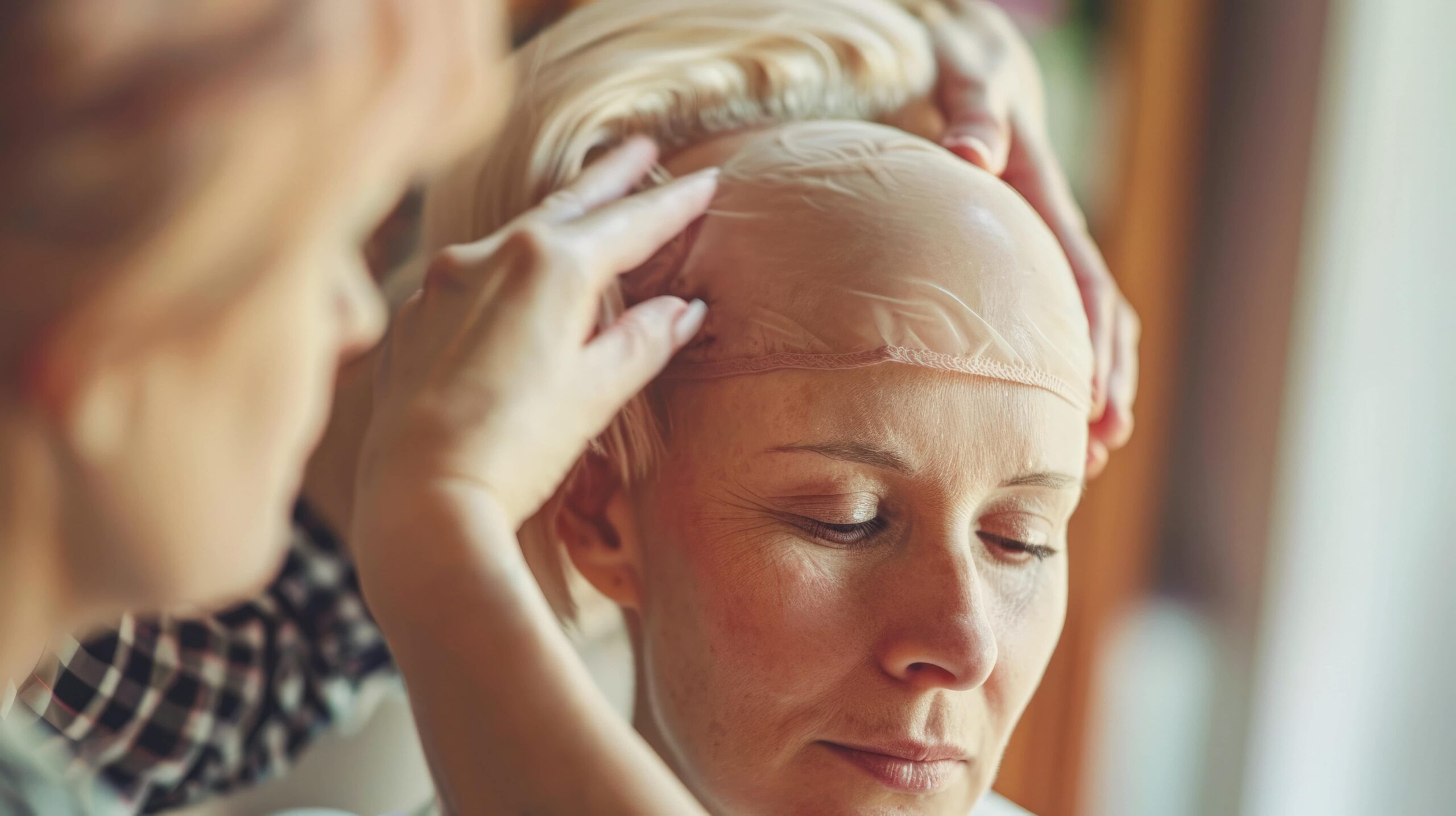
Caring for your Scalp
- When you’ve lost your hair, your scalp may become drier
- Gently massage your scalp with your facial moisturizer to make it feel more comfortable and increase circulation to your stressed hair follicles
- Caring for your scalp will greatly reduce sensitivity and itchiness, allowing you to wear a wig, scarf, or hat more comfortably

Let’s navigate this together
Join a community that understands. Receive expert advice, useful resources, and compassionate tips throughout your cancer journey in the LGFB newsletter.
Newsletter Form
It was on Christmas morning — while in the shower, thinking of my children and the celebrations and everything that needed to be done — that I first felt the lump. I wanted to believe it was nothing, just like the doctors had told me before, when I’d had clogged milk ducts while breastfeeding — but deep down, I knew something was different this time.
When I left Bangladesh and came to Canada five years ago with just my husband and two small children, I never dreamed that I’d soon be facing stage 3 breast cancer in a new land, thousands of kilometres away from my family. I felt so very alone. And I had a hard time accepting my diagnosis. I’ve always lived a healthy, disciplined lifestyle. In my family, everyone looked to me as the example of good health — I was the one who knew what foods to eat and how to live the right way. I did everything right, and yet still, I was the one who got cancer. It didn’t seem fair.
I struggled to accept what was happening to me, but one thing was clear: I had no choice but to face whatever was coming. I have kids, I have a family — I wanted to live.
My treatment involved eight rounds of chemotherapy, a lumpectomy, and 19 rounds of radiation. I hid my pain, sickness, and sadness from my husband and son and daughter as much as possible. I didn’t want my husband to lose strength — he had so much on his shoulders, taking care of me and the kids. I had no one to turn to, no one to talk to. I was desperately stressed out and frustrated. And I felt so helpless — I’m a very independent person who suddenly wasn’t able to do much on my own.
Fortunately, I realized that this wasn’t a permanent situation. I knew I would be alright after my treatment, and so I accepted the pain and the reality of what I was facing. I endured the vomiting, nausea, and painful burns from radiation. And little by little, things started to look up. I found support. I found strength. And through the big dark cloud that is cancer, I found small rays of hope.
Every cloud has a silver lining, or as we say in Bangladesh, “shesh bhalo jar, shob bhalo tar” – “all’s well that ends well,” basically. Despite the hardships, cancer brought me unexpected gifts. When my hair grew back after my treatment, for the first time ever it was curly — something I had always wanted. Post-chemo, my skin is so much better. And I got to model again, thanks to Look Good Feel Better (LGFB). In my home country, I had a modelling career, but that all stopped when I came to Canada. Participating in the LGFB photo shoot brought back so many good memories. The feeling of being in the spotlight again was incredible.
Cancer has also made me a better person. I’m much stronger mentally now and I have a deeper sense of gratitude for life. I’m prepared to be a good advisor for anyone else going through a cancer journey. And I really want to contribute, to give back. I want to share my story and my positivity, and to support other cancer patients — especially back in my home country, where cancer treatment resources are limited. In Canada, I got the best cancer treatment possible. But Bangladesh is a developing country, and those who have cancer there are suffering immensely. One day, I hope to return to share what I’ve learned and support those who need it most.
One question everyone may have as they begin their cancer treatment is ‘what are the side effects of my cancer treatment?’ The truth is, is that, while there are many common side effects from chemo, radiation, immunotherapy and drugs, your treatment experience will be different from anyone else. So, what’s ‘normal’? Your medical team may give you a booklet on what to expect, but the reality is, there is no ‘normal’.
Hair loss, fatigue, constipation, diarrhea, headache, nausea are all common side effects from cancer treatment. But you may also be dealing with loss of balance, strength and coordination. Others experience nerve tingling, “burning” or numbness. It’s also possible that you may not have any of these side effects. Your reaction to your treatment is as individual as your diagnosis itself.
In the past, a good patient was often described as someone who kept questions to a minimum, who followed all the advice that their healthcare professional provided, who didn’t complain or voice their concerns, and didn’t speak out about something they didn’t understand. Over the years, medical professionals have begun to realize that their patients are individuals, with minds of their own and ideas and questions about their own healthcare.
Enter, Dr. Margaret Fitch, a professor at the University of Toronto with a background in nursing and expertise in oncology and the psychosocial and emotional side of cancer. Dr. Fitch identifies the difference between ‘person-centered’ and ‘patient centered’ care. Your care is a partnership. Doctors, nurses and social workers bring knowledge and expertise, but you are the expert on you and your personal experience. Person-centered care calls on medical professionals to listen, work in partnership with you and to better understand what your life is like and to pay close attention to how any suggestions made may impact you.
Dr. Fitch offers some important take aways to help you in your efforts to ensure your care is ‘person-centered’.
Embrace Your Right to Ask Questions: It’s crucial to remember that you have the right to ask questions about your care and treatment. Even if it’s difficult to speak up, your health and well-being are paramount. Take time at home to write down your questions when you’re relaxed, and bring them to your appointments. Don’t hesitate to be firm and confident in asking for the information you need.
Utilize All Available Resources: While your time with your physician is limited, don’t hesitate to ask a nurse or another healthcare professional for additional support. Healthcare teams often work together, and they can help ensure that your concerns are addressed. It’s okay to use multiple strategies to get the information and support you need.
Understand That “Normal” Doesn’t Mean “Okay”: If you’re told that certain side effects or feelings are normal, it’s important to recognize that this doesn’t mean you have to accept them without support. There is help available, and you don’t have to navigate these challenges alone. Speak up about what you’re experiencing and ask about the resources and services that can provide relief.
Recognize the Uniqueness of Your Experience: Cancer is not just one disease, but many, each with its own treatments and side effects. What you go through may be completely different from someone else’s experience, even if the diagnosis sounds similar. Don’t feel pressured to compare your journey to others; instead, focus on what you need and seek out the right support for your specific situation.
Explore Your Options: The treatment and support options available to you are diverse. Whether it’s joining a group, seeking one-on-one counseling, or trying different therapies, it’s essential to find what works best for you. Don’t be afraid to explore different approaches until you find the one that feels right.
Stay Informed About New Treatments: Medical advancements, like targeted therapies, are constantly evolving. These treatments can be more precise and may reduce some of the more challenging side effects associated with traditional chemotherapy. Keep the conversation open with your healthcare team about new options that may be available to you.
Value Your Individuality: Remember, your journey is uniquely yours. While it’s helpful to hear others’ experiences, what works for someone else may not be the best fit for you. Trust in your instincts, ask for the information you need, and choose the path that feels most supportive to your individual needs and circumstances.
In Episode 2 of “Facing Cancer Together,” you will hear from several women undergoing treatment, each with their own unique version of ‘normal.’ Additionally, Dr. Fitch delves into the concept of ‘person-centered care,’ offering deeper insights into this compassionate approach to treatment. Tune in for a compelling discussion that highlights the diverse experiences of these women, the importance of personalized care and how you can advocate for yourself during your own cancer journey.
When I think back to having cancer and going through treatment, a lot of it is a blur. It was almost like a four-month-long out-of-body experience. I was 15 and in grade 10 when I was diagnosed. I was in the culinary arts program at my school in Toronto, which I had wanted to do forever. And so much was already going on in my life. It was a tough year. My dog had recently died, which was really hard for my family, and my grandmother had also had a cancer scare. And, things were hard at school. I’d met someone who turned out to not be a very nice friend, so I stopped hanging out with him and then I found out a few months later that he’d been writing mean stuff about me online. And then he started threatening me and following me around school. He was friends with a lot of my friends and it was hard to get away from him. And I had also just parted ways with my entire friend group, because they were just not nice friends. One of them even told me she had hated me from the moment she met me. That was hard. I’d dealt with a lot that year, and so getting cancer just kind of felt like an extra bonus. It was the cherry on top of some terrible sundae.
Suddenly I was spending pretty much every single day, hours and hours of the day, in doctors’ offices trying to figure everything out. I started failing most of my classes at school because cancer was suddenly taking up most of my time.
I got through it, though. My school supported me with my class work when they heard what was going on. I was able to make some great new friends who were kind and supportive. And I got through my treatment.
Chemo was hard but it wasn’t as bad as movies would make it seem. In some ways it’s true that chemo can be very intense, but it wasn’t as scary as I thought it was going to be. My surgery went really well. Heading into it, my parents were super nervous, but I was just like, “OK cool, I’ll see you guys later!”
My hair did fall out, which was not fun. I had really long curly hair, and I was sad to lose it. And I had a lot of skin problems – sore skin, chemo blisters that turned dark purple on my feet, a lot of sensitivity in my hands, and red marks on my shoulders. Doing a Look Good Feel Better workshop helped me feel a lot better. I loved not just playing with makeup – I love getting to express myself in that way – but also getting to meet other people who had cancer. They told me about their experiences, which was really helpful for me. It made me feel less alone.
That’s all behind me now, and I get to focus on being a teenager and doing what I love. I still enjoy being creative in the kitchen. Baking is my favourite. I’m really good at making chocolate cake – I think I’ve perfected it. I also like to crochet, embroider, sew, and do crafts. I’m glad that this is my life again, and that cancer is in my past.