
Post Treatment Nutrition Workshop

What you eat plays a vital role in how you feel after cancer treatment. But with so much nutrition advice out there, it’s easy to feel overwhelmed. What foods support healing? How do you improve energy levels? Can nutrition help prevent deficiencies and support immune function? Join us to answer many common questions about nutrition and cancer.
About this Workshop
Join us for an empowering discussion on:
Gut Health & Digestion – How the gut microbiome affects overall well-being
Key Nutrients – Supporting energy, mental clarity, and immune function
Food Absorption – Making sure your body gets what it needs
The 80/20 Rule – A mindful way to eat well while enjoying your favourite treats
Practical Strategies – Overcoming common post-treatment nutrition challenges
This workshop is available ONLINE
Post-Treatment Cancer support
Whether you are experiencing late effects from treatment, you are concerned about preventing recurrence or you’re managing the transition from intensive support and monitoring back to care by your family doctor or general practitioner, we are here for you.
Who should attend this workshop?
- Individuals who are post-treatment and interested in nutrition during and after cancer treatment.
- Anyone interested in nutrition relating to cancer wherever people are in their cancer continuum.

What our participants have to say
“I was struggling with what to eat to prevent recurrence—the 80/20 rule was so helpful in helping me be kinder to myself! A total mindset shift.”
- Emily R., Workshop Participant
Let’s navigate this together
Join a community that understands. Receive expert advice, useful resources, and compassionate tips throughout your cancer journey in the LGFB newsletter.
Newsletter Form
Shaving & Men’s Skincare Workshop
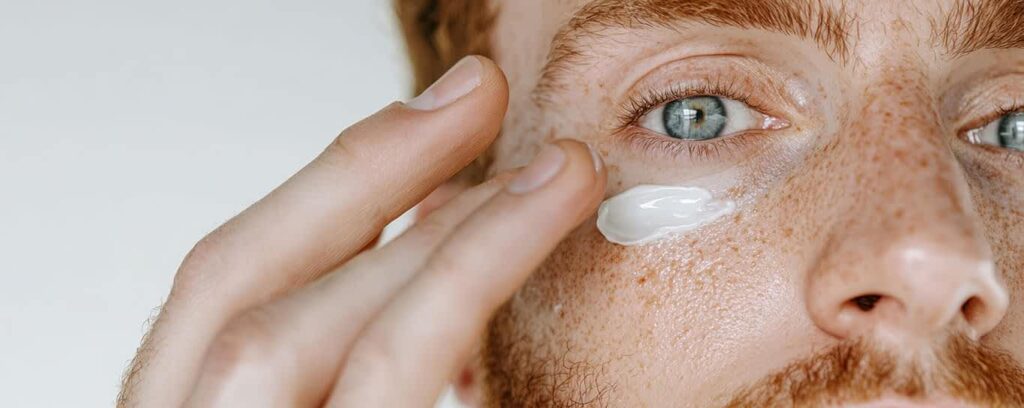
Physical side effects sometimes catch us by surprise. Cancer treatment can bring unexpected changes to your appearance—dry, discoloured skin, hair loss, irritation from shaving, nail changes — but that doesn’t mean you have to just put up with them.
Real advice in a supportive setting
Our Look Good Feel Better Shaving & Men’s Skincare Workshop is designed to help you take control of these changes with a simple, effective skincare regimen and shaving and grooming techniques tailored specifically for men facing cancer.
This free workshop is offered both online and in person at select locations and is held in a comfortable, supportive setting. You can listen, learn, and participate as much—or as little—as you’d like. Participants also receive a complimentary kit of men’s skincare and shaving products to try before and during treatment.
About the Shaving & Men's Skincare Workshop
Even if you’ve never paid much attention to your facial skin before, small changes can make a big difference in how you look and feel. In this session, we’ll cover:
Managing hair loss – What to expect, how to care for your scalp, and what happens when hair grows back
Caring for skin during treatment – Avoid dry, irritated or painful skin with a simple routine that take just a few minutes a day
Shaving with less irritation – Pros and cons of using a regular razor vs an electric razor during treatment and how to shave your face (or scalp) safely when your skin is more sensitive.
Protecting your skin from the sun – We’ll share simple ways to guard sensitive skin from the sun during and after treatment.
Who is the Shaving & Men’s Skincare workshop for?
This session is ideal for:
- Men who are currently undergoing cancer treatment or have completed treatment in the past year
- Anyone facing cancer who would like support around these specific appearance-related side effects
Maybe you didn’t sign up for this workshop…
and someone who cares about you did it on your behalf. You’re not alone. If you’re here because a loved one suggested it, take that as a sign of their support.
A no-pressure, practical approach
Prefer to stay in the background?
No problem! No matter if you’re attending online or in person, you can simply listen and absorb the tips at your own pace, and try them out whenever it suits you.
Whether you’re here for men’s skincare advice, scalp care, guidance on hair loss, or because someone you love suggested you might benefit from the workshop, we’re so glad you are here. This session is all about giving you the tools to move forward with confidence, in whatever way works best for you.
What our participants have to say
” Before treatment, I was worried about hair loss. I didn’t expect that issues with skin on my face and scalp would be the most challenging chemo side effect. The advice in this workshop helped.”
- Joseph S., Workshop Participant
“Actively taking care of myself helped me regain control – I didn’t want to be defined as sick.”
- Adam P., Workshop Participant
Join us for a workshop led by industry experts, tailored for men facing all cancers
Register for the Shaving & Men's Skincare workshop today!
Let’s navigate this together
Join a community that understands. Receive expert advice, useful resources, and compassionate tips throughout your cancer journey in the LGFB newsletter.
Newsletter Form
Bras & Prostheses Workshop
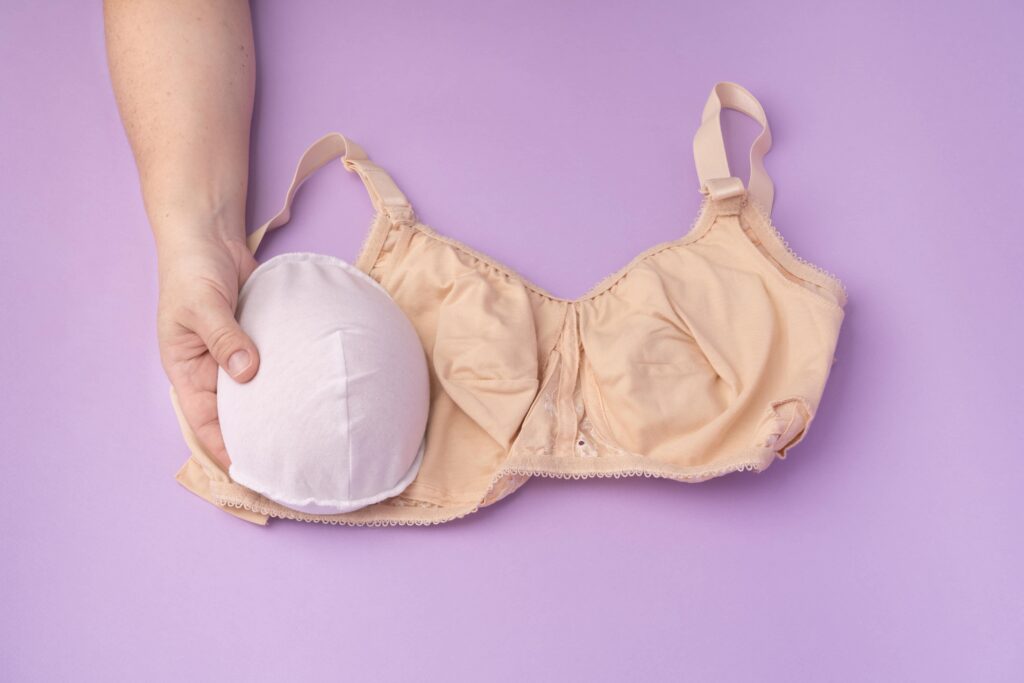
Whether you’ve recently had a mastectomy, lumpectomy, or breast reconstruction—or are still exploring your options—you may be wondering what comes next. How will your body change? What will feel comfortable? Join us to learn about breast prostheses, bras, post-surgical garments, swimsuits and more.
About this Workshop
What you will learn:
Questions to ask before breast cancer treatment and/or pre-surgery (e.g. lumpectomies, mastectomies, or breast reconstruction)
Supportive clothing to wear post-surgery and during treatment – Bras, camisoles, and breast forms designed for comfort and healing
How a fitting works – What to expect, when to go, and how to find the right size
Body changes during recovery – Possible impacts on sizing and when to introduce different types of apparel or breast forms
Breast prostheses and partial forms – Options that help restore balance and boost confidence
Financial coverage – Where to look for funding (both public and private), insurance options, and community support
The information and dialogues are designed to help you:
Navigate your choices with confidence
Walk you through your options in a supportive and welcoming space
Gain knowledge in post-surgical camisoles, breast prostheses, and mastectomy bras
Feel comfortable with every day solutions
The Bras & Prostheses workshop is available ONLINE
Who should attend this workshop?
Anyone affected by breast cancer who wants information about breast prostheses, breast forms, post-op garments and what to expect before, during or after breast cancer surgery and/or treatment.
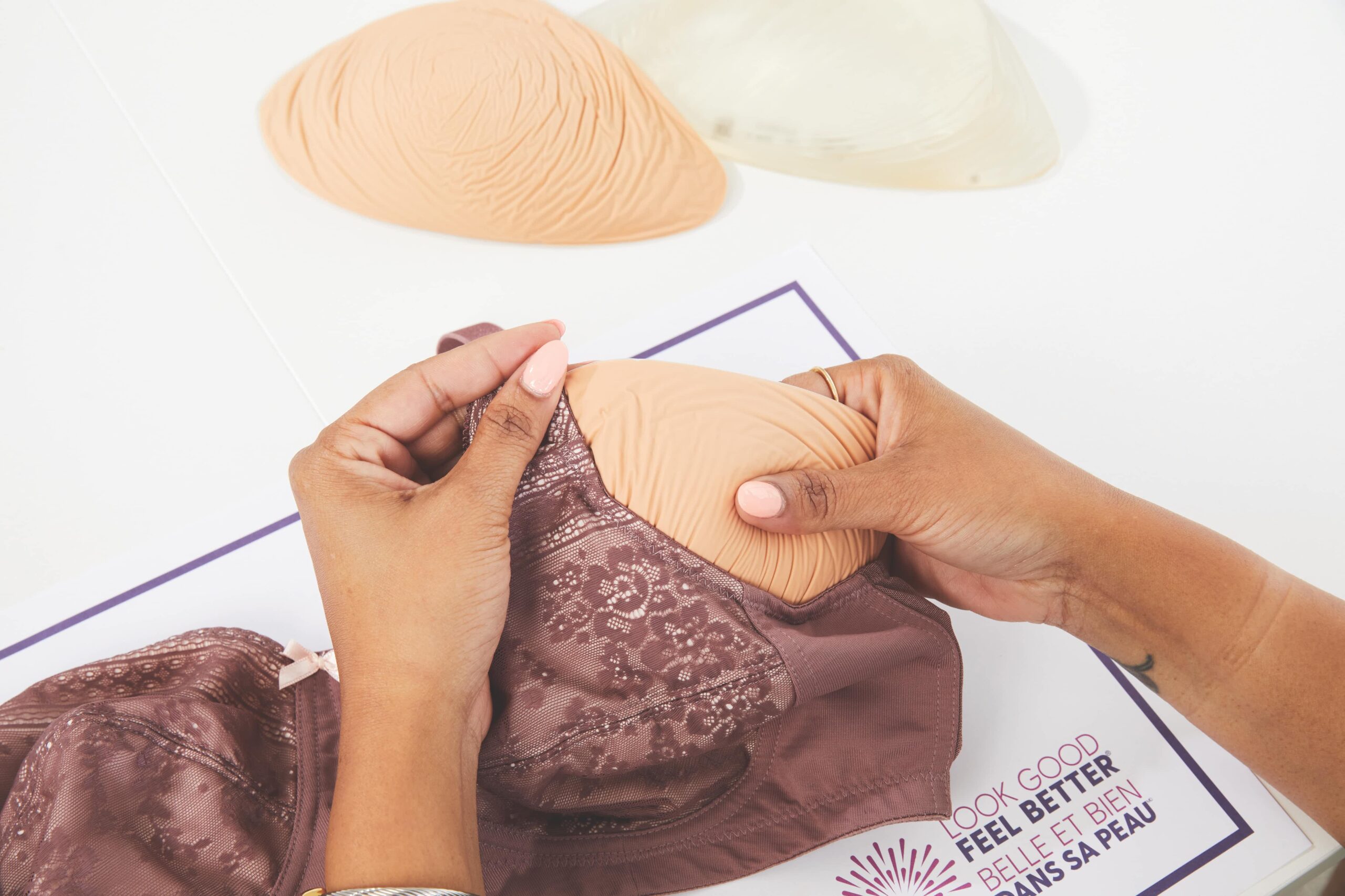
What our participants have to say about the Bras & Prostheses workshop
” It was great to learn about all the options I have…some of which I didn’t know about or hadn’t even thought of. Very helpful, empowering, supportive info at a time when some of us are feeling uncertain and self-conscious. “
- Audrey R., Workshop Participant
Want to Learn More About Post-Mastectomy Bras and Breast Forms?
Register for the Bras & Prostheses Workshop today!
Let’s navigate this together
Join a community that understands. Receive expert advice, useful resources, and compassionate tips throughout your cancer journey in the LGFB newsletter.
Newsletter Form
I’ll never forget my first interaction with Look Good Feel Better (LGFB). It was about 20 years ago, when I was first diagnosed with breast cancer. Going to the LGFB workshop was my best day at the cancer centre. Most of my time there wasn’t cheerful or enjoyable, but my experience with LGFB was just lovely. The people were so kind and helpful, and it was great fun. I look back on it fondly.
I got diagnosed with cancer again last year. This time it was what doctors called a “complex case”: three distinct cancers – endometrial, ovarian, and fallopian – in three different places.
One of the first things I did was to connect with LGFB again and sign up for a workshop. Getting to attend the workshop again, after all these years, was a shiny, happy moment in my cancer journey. Who knew that chemotherapy could include highlights? It was the same supportive experience with people who were genuinely interested in helping me feel my best. I loved how they now provide a helpful booklet with makeup tips, so I didn’t have to take notes during the workshop.
The workshop isn’t really about makeup or skincare for me, though. It’s about the opportunity to chat with other people going through the same experience. And to have a good time – for example, everyone had a good giggle with some of the ladies modelling their wigs and making wonderful faces in the mirror. Sometimes, we just need a day where we’re thinking about nothing other than having fun. There’s no other agenda. It was so helpful in terms of my spirit – just enhancing my mood and joy. It’s more beneficial than therapy or a self-help group for me. LGFB cultivates such a supportive, uplifting environment. It was a very restorative afternoon – such a gift, truly. Whoever came up with this idea deserves immense credit.
Cancer and its treatment affect us all so differently. They can tell you what to expect during chemotherapy, but you never really know what’s coming your way until it’s there. It’s the same way with how cancer treatment’s side effects impact our appearance and self-esteem – it’s so individual. We may respond with acknowledgement or disbelief or rejection or anger. There’s a plethora of possible responses.
In a way, I think it comes down to your willingness to accept your own reality. My personal attitude is one of total acceptance. “It is what it is” – that’s my mantra. I look at whatever’s happening in my life – cancer treatment, or a broken shoelace, or a scenario in one of my past careers in education and social work – and I assess what’s going on and how to deal with it. How best can I move forward? What’s my next step? What’s the most useful and functional response to a situation? Is there a possibility to enhance the situation, to make it better?
That approach has served me well in life, and it’s serving me well now. I change the things I can change, and accept the things I can’t. I like to be realistic about what’s possible.
These days, I’m looking forward to what’s next. I’ve finished my treatment and I’m enjoying being retired. I love to make art – I also teach watercolour classes – and to spend time with my grandchildren. I’m looking forward to getting back to travelling, and specifically to going on a cruise. I just want to be on a ship somewhere warm. I love cruising, it’s my favourite thing. No cooking, no cleaning, just art classes, ocean air, and leisurely afternoon naps. And if I can’t be on a ship just yet, I’ll take an afternoon like the one LGFB gave me any day – one with kindness, laughter, and light.
Body Image after Cancer Treatment and Surgery
For many people living with cancer or in remission, changes in appearance can be a major source of concern and anxiety. This is not vanity. Much of our identity is related to our physical appearance from how we wear our hair to what clothes we choose. Body shape and size, including breasts, are often tied to a sense of self, self-expression, sexuality, and self-esteem.
Appearance Related Side-effects
Appearance-related impacts of cancer can be temporary (like hair loss and skin changes) or more permanent (like surgery or scarring). They can all affect a person at a time when they may already feel vulnerable, which can negatively impact their mental and emotional health.
For anyone facing a cancer diagnosis, there’s enough to cope with emotionally without also feeling that there’s no space to speak about body image issues or that it is somehow selfish or vain to worry about them. For Dee-Jay Jodoin, a B.C. woman in remission, changes to her physical appearance like hair loss and weight gain were hard to accept.
The Physical and Emotional Connection
“People going through cancer treatment often experience a change in their body image and in their relationship with their body,” says Monique Voorn, a social worker at the Simcoe Muskoka Regional Cancer Centre in Barrie, Ontario. “They may be unhappy about how their appearance has changed, whether they’ve had breast surgery or scars they don’t like, or lymphedema. Sometimes, a woman may not have had significant visual changes to her body but feels like her body has failed her or that she can’t count on it.”
There can also be physical changes that a person may not expect. “With radiation, there are skin changes,” notes Larissa Dyck, an oncology nurse in Calgary, Alta. “The area that’s treated darken and may take a while to fade, and skin can get tighter and be uncomfortable for some patients, causing a loss of range of motion.”
Keloids – a type of raised scar that can arise after a surgery. These can be a particular concern for Black women specifically.
Weight can be an issue, too. Being on hormones can cause weight changes that can turn women’s body image completely upside down and they can get really down on themselves.
It takes time for women to recognize and appreciate the full impact of the changes they’ve undergone during their cancer journey. “It’s often near the end of treatment when it really hits women what they’ve been through and all the changes they’ve undergone – physical and otherwise,” says Dyck. “When patients are finished their treatment, they expect things to go back to normal — but they may still be on long-term hormones or medication, and that’s when it can be really hard. They expect their bodies to just bounce back, and they want to go back to work and exercise, but things aren’t the same as before.”
Empowerment is Different for Every Person
While physical symptoms can affect a person in a finite number of ways, the emotional experience is different for everyone.
“When some women lose their hair with chemo, they’ll proudly wear a head scarf. Other women have a complete loss of identity and want to wear a wig. They may fear that their partners won’t be attracted to them.”
Larissa Dyck
– Oncology nurse from Calgary, Alberta
“There’s a wave or rollercoaster ride of emotions in any type of cancer. There’s a lot of grief. We grieve all kinds of changes or losses in our lives that cancer brings — to your body, to your innocence, and to the carefree way that you may have used to experience life.”
Monique Voon
– Social Worker from Simcoe Muskoka Regional Cancer Centre
EVERY DAY WE HELP PEOPLE FEEL LIKE THEMSELVES AGAIN
Look Good Feel Better workshops help women, men and teens with cancer learn how to manage the physical, social and emotional impacts of cancer and its treatment in small and supportive groups.
Skincare & Makeup: Learn how to care for sensitive skin plus tips & techniques for managing the loss of brows and lashes, adding colour back to the face, makeup hygiene, and sun safety.
Bras & Prostheses: Learn about options available for post-surgery and beyond, what to expect at a breast form fitting, tips for where to find financial coverage, and more.
Wigs & Scarves: See a demonstration on various head coverings, what to consider when selecting a wig, easy scarf-tying techniques, plus caring for your scalp during and after treatment.
Teens: This special workshop just for teens includes skincare, on-trend make-up tips to feel your best and a demonstration of fun styles for caps, wraps, and hair alternatives.
Let’s navigate this together
Join a community that understands. Receive expert advice, useful resources, and compassionate tips throughout your cancer journey in the LGFB newsletter.
Newsletter Form
Advanced Skincare Workshop
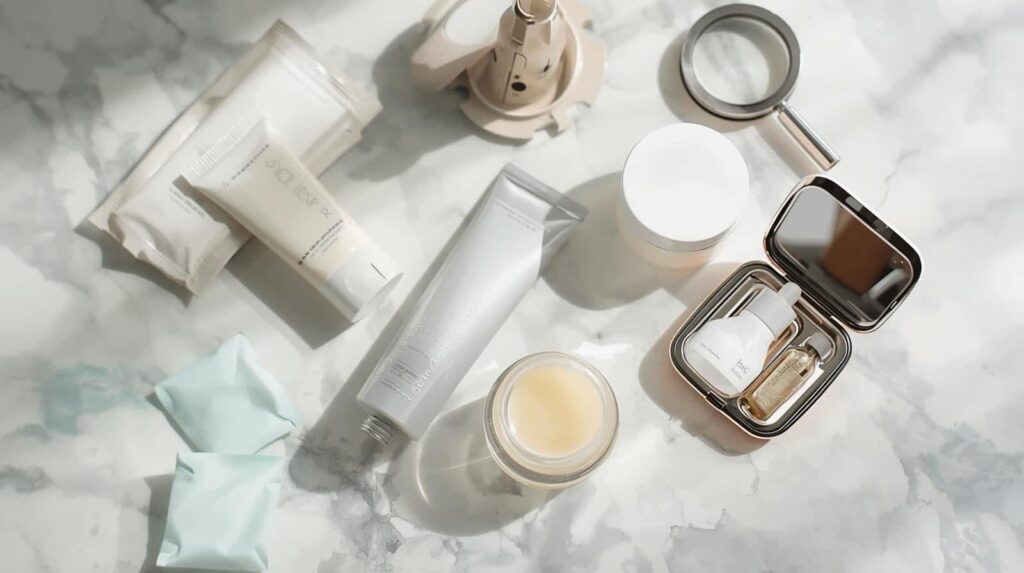
Advances in cancer treatment have led to more people experiencing skin-related side effects, both during and after treatment. In this workshop, expert Onco-Dermatologists share simple steps to help minimize and manage common skin and nail issues.
About this workshop
What you will learn:
How evolving cancer treatments can cause new and different side effects
Practical steps to help minimize and manage common skin, scalp, and nail concerns during and after treatment
Step-by-step guidance from an Onco-Dermatologist
Topics Covered in Advance Skincare include:
Simple skincare and suncare routines
Scalp care
Nail Health
Managing dry, itchy, and irritated skin
Acne and rashes
Skin recovery post-treatment
This workshop is available Online
Join us!
- This workshop delivered via a Q&A with our medical professional, and is offered approximately four times a year.
- It is roughly an hour and fifteen (1:15) minutes in length and is delivered over Zoom.
- Be sure to add your questions on the registration form!
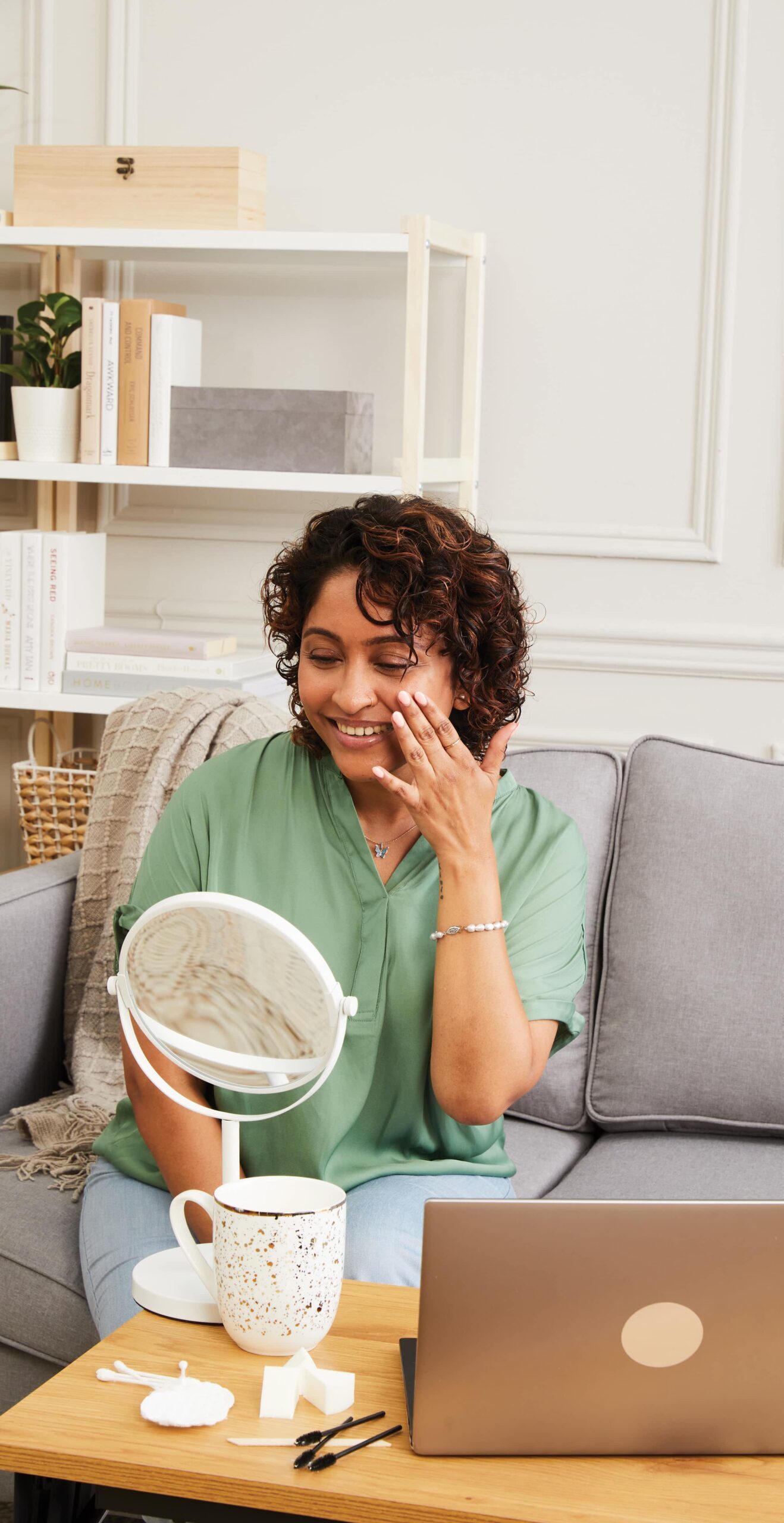
Who should attend this workshop?
This workshop is available for anyone who is…
- Currently in treatment
- Post-treatment but may still be experiencing side-effects impacting their skin, scalp, or nails
- This workshop is designed to address skin concerns wherever people are in their cancer continuum
What Our Participants Have to Say
“Just knowing others are going through the same symptoms gave me hope.”
- Workshop Participant
“This webinar was delivered beautifully. I liked how participants’ questions were answered and things were explained at length.”
- Workshop Participant
Let’s navigate this together
Join a community that understands. Receive expert advice, useful resources, and compassionate tips throughout your cancer journey in the LGFB newsletter.
Newsletter Form
Skincare, Makeup, & Hair Workshop
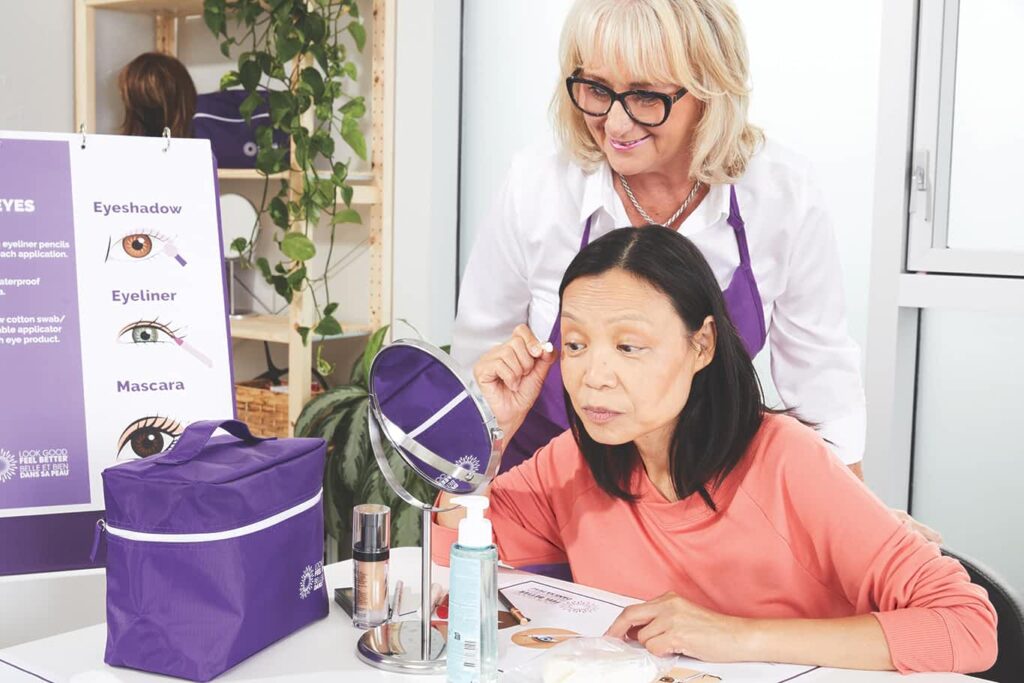
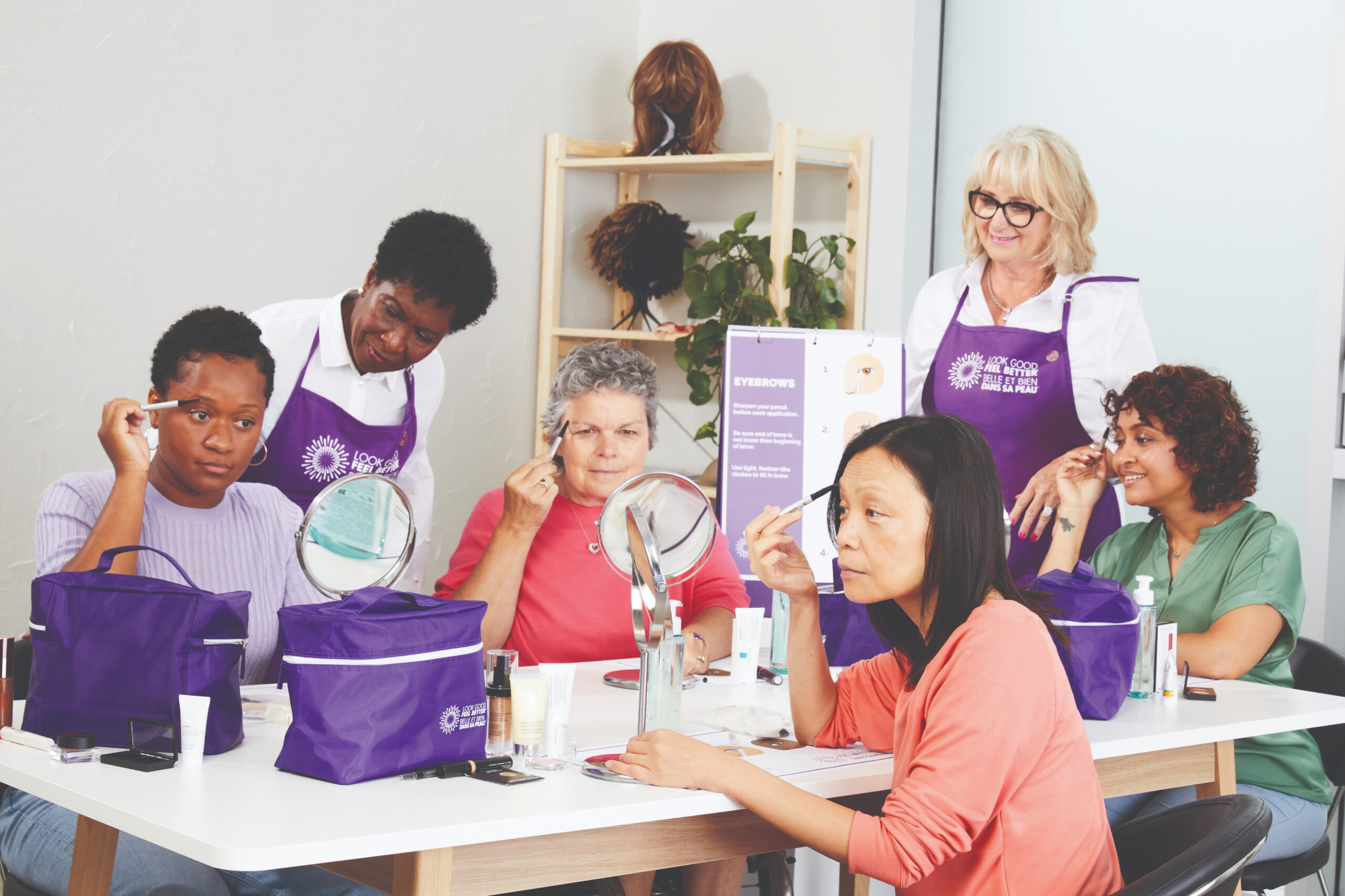
Discover practical ways to manage the physical side effects of cancer treatment on your skin, hair, and face, including skincare, makeup, hair loss, wigs and other head coverings. Connect with a community who gets it.
About this workshop
What you will learn:
Counteract side effects such as discolouration and dry skin
Practice simple makeup steps to add colour back to your face
Makeup hygiene and sun safety
Find tips and techniques for managing the loss of brows and lashes
Caring for your scalp during and after treatment
What to consider if selecting a wig
All types of head coverings including wigs
Pros and cons between synthetic and human hair wigs
The information and dialogues are designed to help you:
Manage the physical side effects of cancer treatment with clear, practical guidance
Connect with others who may understand what you are going through
Understand what to expect during treatment
Prepare for treatment to help minimize potential side effects
Feel more like yourself again
This workshop is available IN-PERSON.
IN-PERSON
- The IN-PERSON workshop is 2 hours long.
- Called Skincare, Makeup & Hair, it combines both our Skincare & Makeup and our Wigs & Hair Alternatives workshops.
- In-person workshops are only available in select locations around Canada.
Who should attend this workshop?
This workshop is available to anyone who is about to start cancer treatment, is currently in treatment, or has completed treatment in the last 12 months and would like information about or support around this topic.
The Confidence Kit
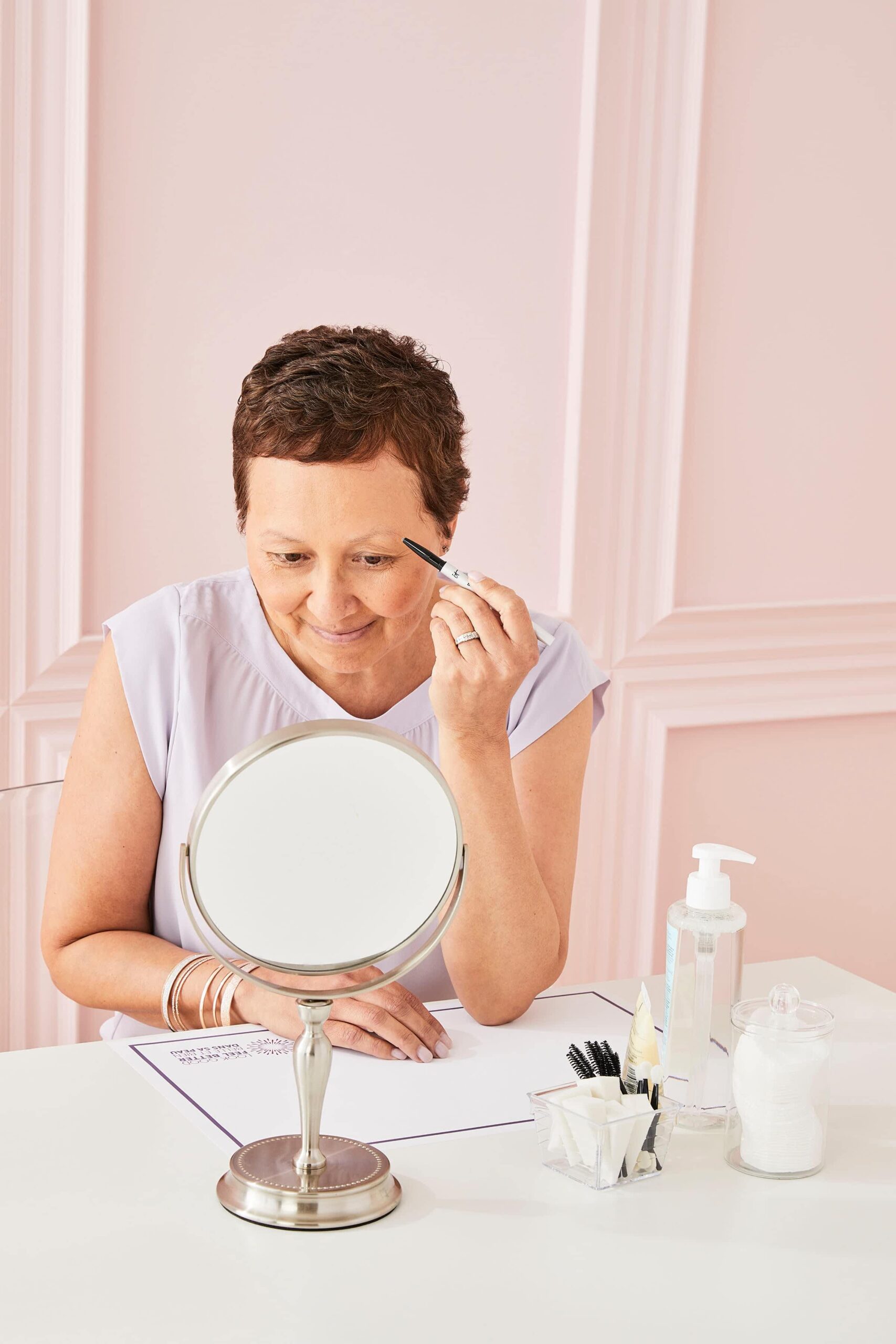
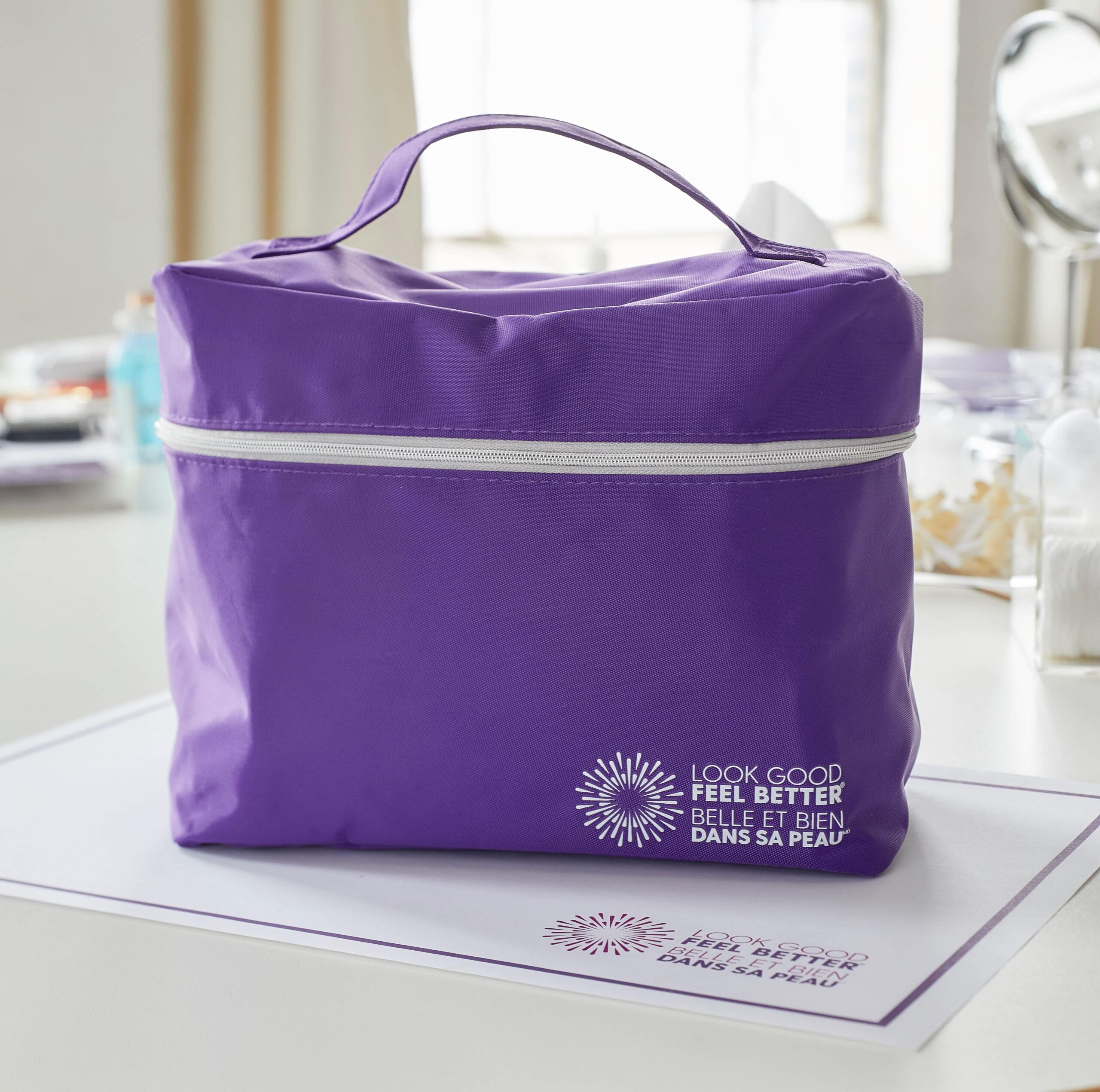
Participants in the Skincare & Cosmetics workshop receive a free kit of skincare and makeup products.
These products are generously donated to Look Good Feel Better and meet the regulations set forth by Health Canada.
These products are for educational purposes, so you may practice the techniques explained in the workshop.
- You will receive the kit in the workshop.
What Our Participants Have to Say
“This workshop was so useful because it wasn’t just information. It ‘normalized’ the techniques to cope with cancer & treatment related challenges to appearance. Yes, wear makeup and take care of your skin not just in spite of cancer and treatments but here is how to do it well and safely!”
- Joan L., Workshop Participant
“The volunteers were excellent and so caring. It’s the first time I’ve laughed in awhile.”
- Joan M., Workshop Participant
Participating in our workshops
97%
of Workshop Participants
would recommend our workshops to another person facing cancer.
32%
of Our Participants
feel somewhat confident BEFORE our workshops.
89.1%
of Our Participants
reported feeling somewhat confident or confident about their appearance AFTER our workshops.
Let’s navigate this together
Join a community that understands. Receive expert advice, useful resources, and compassionate tips throughout your cancer journey in the LGFB newsletter.
Newsletter Form
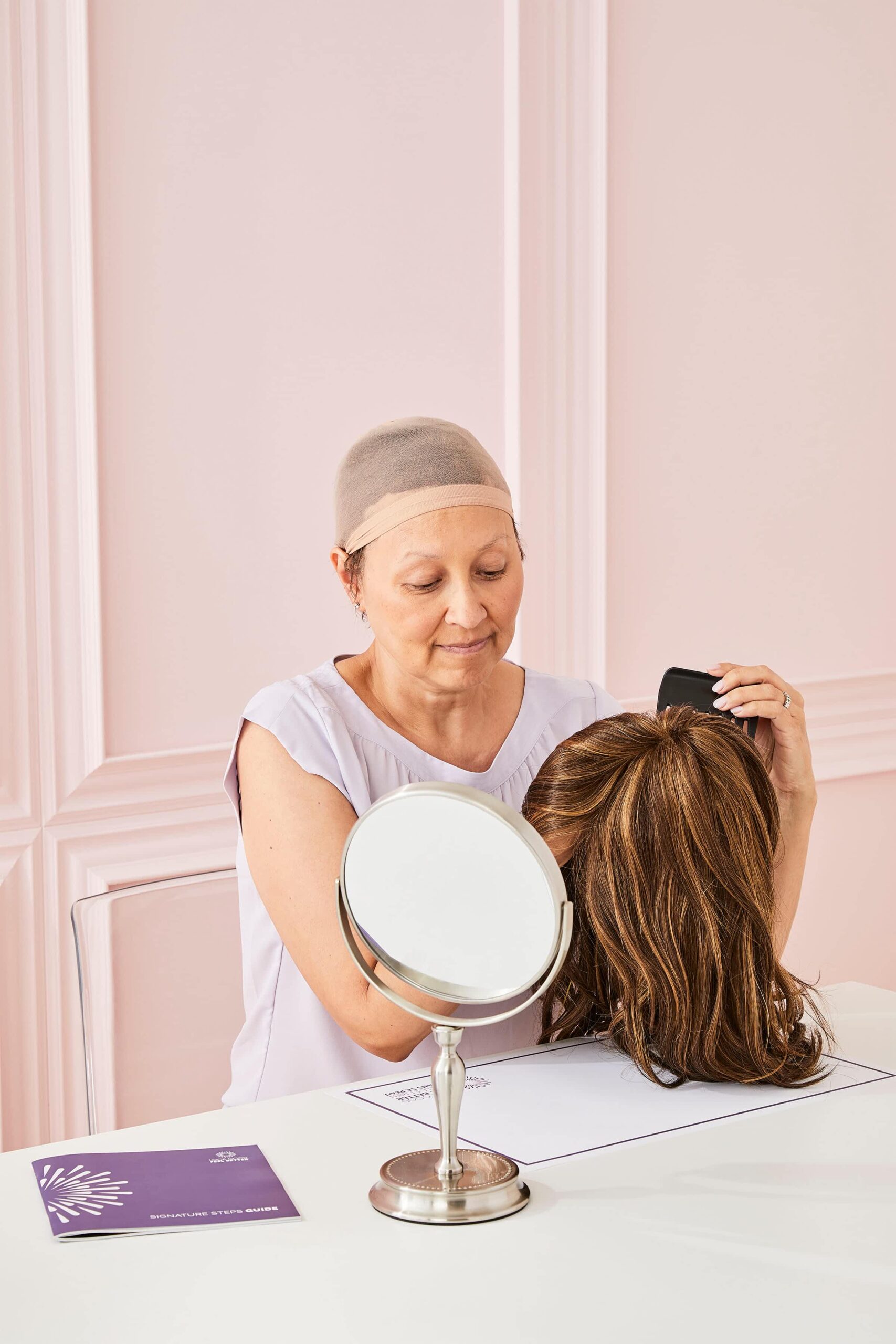
Wigs & Scarves Workshop
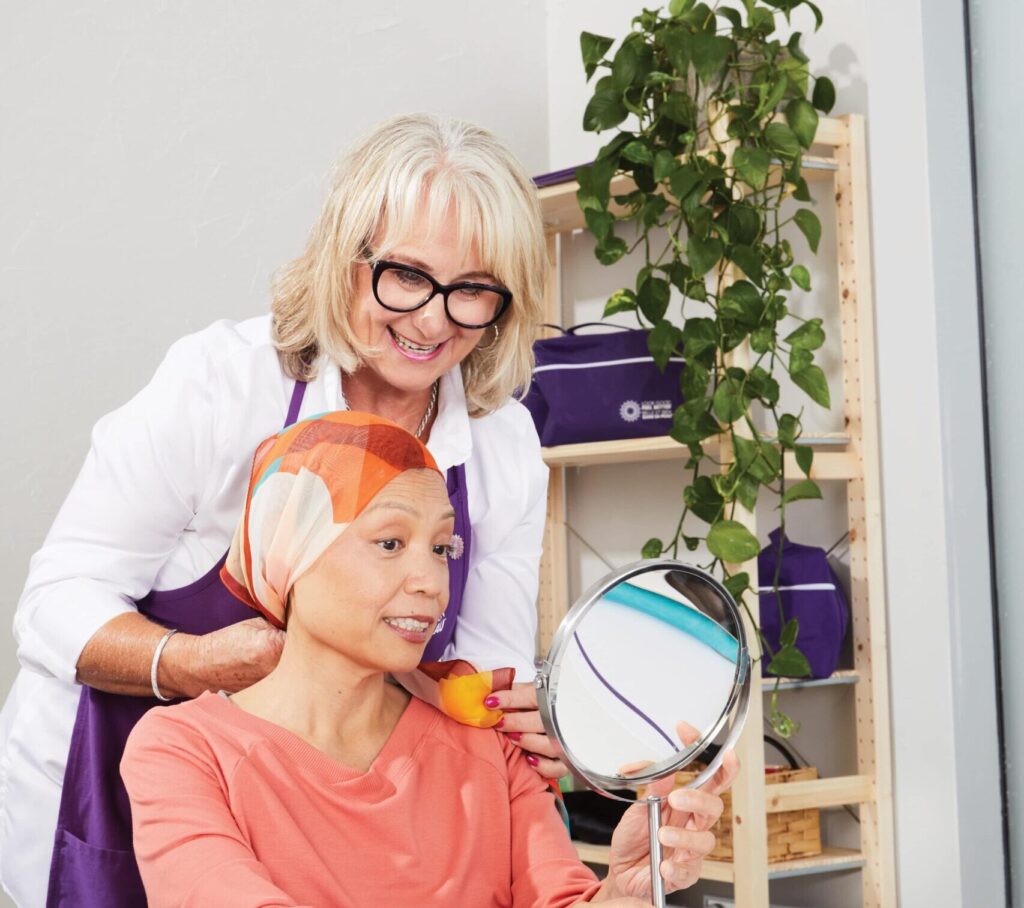
Losing your hair during cancer treatment can be emotional and overwhelming. Learn about what to expect with hair loss, how to care for your scalp during and after treatment, all about wigs and other hair alternatives, including scarf-tying techniques.
About this Workshop
What you will learn:
Caring for your scalp during and after cancer treatment
What to expect with hair regrowth
Discover all types of head coverings and hair alternatives, including wigs
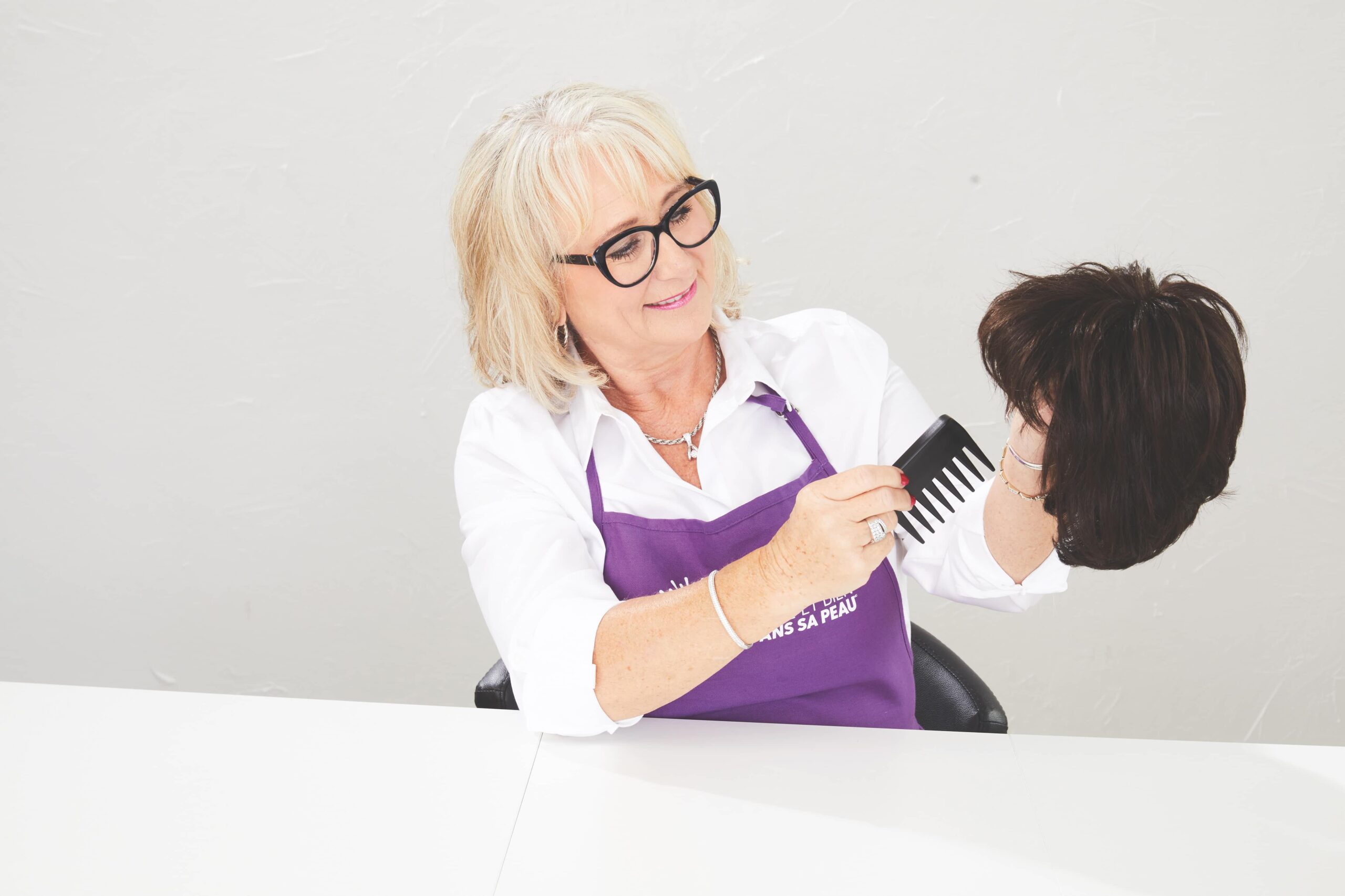
What to consider if selecting a wig, including how to take care of and style them
Pros and cons between synthetic and human hair wigs
Easy scarf-tying techniques and more
The information and dialogues are designed to help you:
Manage the physical side effects of cancer treatment (including hair loss) with simple, practical guidance
Connect with others who may understand what you are going through
Know what to expect during treatment
Prepare for treatment to help minimize potential side effects
Feel more like yourself
This workshop is available ONLINE and IN-PERSON
Online Workshop
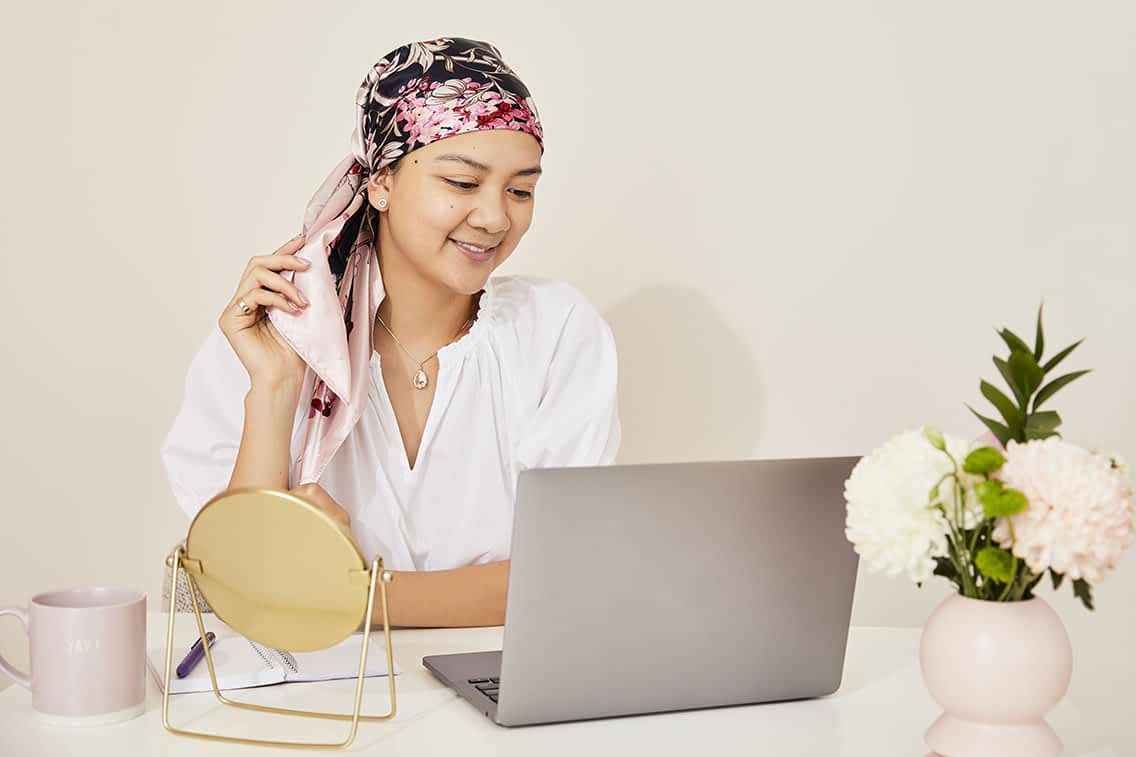
- The ONLINE workshop is ONE HOUR long and is delivered via Zoom.
- Relax and join us from the comfort of your home.
In-person Workshop
- The IN-PERSON workshop is 2 HOURS long and is called Skincare, Makeup & Hair.
- It combines our Wigs & Scarves and our Skincare & Makeup Workshops into a single 2-hour session.
- The in-person workshop is only available in select locations around Canada.
Who should attend this workshop?
This workshop is available to anyone who is about to start cancer treatment, is currently in treatment or has completed treatment in the last 12 months and would like information about or support around hair loss, wigs, and other hair alternatives.
What are participants have to say
“The volunteers were excellent and so caring. It’s the first time I’ve laughed in awhile.”
- Workshop Participant
“This workshop exceeded my expectations. It helps to talk to an expert who is positive, fashionable and gives all the tips. One example – I had no idea how a chemo/sleep cap is such an important base layer!”
- Workshop Participant
Ready to Register for the Wigs & Scarves workshop?
Find the right one for you!
Let’s navigate this together
Join a community that understands. Receive expert advice, useful resources, and compassionate tips throughout your cancer journey in the LGFB newsletter.
Newsletter Form
By Adriana Lombardo
Let me be blunt with you. These past few months have been crap – to put it politely.
Only now is it hitting me: Survivor’s Guilt.
Why did I survive a deadly disease while I had to bury people I’ve met along the way?
Why am I finding it so difficult to move forward with my life without feeling extremely guilty?
This sucks!
I knew this feeling may come. I’d heard of survivor’s guilt and was aware of the emotions I had yet to face, but to be honest with you, I had started living and actually enjoying life without having to worry about appointments, etc, that I didn’t think it was going to happen.
I thought I was one of the lucky ones who wouldn’t go through it – who am I kidding.
As sad as this may be, or as weird as it may come across, I miss having cancer.
Weird, huh?
Who would ever say such words?
Let me explain:
Life was easier when I was sick; at least it seemed to be.
I didn’t have much to worry about other than chemo, appointments, procedures, if the cancer was going to kill me or not, you know, the usual “cancer stuff.”
Now that I’m back “in the real world,” I find myself struggling to accept that chapter has now closed.
It was two-plus long years of fighting and not having any worries about anything other than me.
I’ve moved on, almost as if nothing ever happened, but I find myself holding onto anger and pain and all these other emotions that I have never accepted until now.
I smiled all throughout my treatment – a genuine smile – but now I find I’m faking one to show people that I’m still alright.
How do you explain to people that while going through cancer I was genuinely doing fine, but now I feel as if I’m not?
I know it’s not up to me to explain this to anyone but that’s the thing about society – once you’ve gone through any sort of heartache, they expect you to pick up and keep going without actually acknowledging what you’ve gone through.
But that’s just it: once you’re “healed” or “cured”, people stop asking how you are because they assume everything is alright. That you’re “back to normal”.
I’m still trying to figure out my new normal while juggling these emotions.
It saddens me to know I had to remove my rose-coloured glasses at such a young age and that the benefit of the doubt doesn’t really exist once you’ve gone through cancer.
You see things and people for what and who they really are.
Anger and frustration followed.
Like I mentioned earlier, there are a lot of emotions that I’m battling now with Survivor’s Guilt.
It’s a matter of finding a balance between not letting go and moving forward.
I’m going to challenge myself for the next month. My goal is not to have it all figured out, but to accept what I’m feeling and just let myself feel it.
No one will ever have it figured out, so why should I?
I’m not sure that I’ll figure out why I’m feeling the way that I do, but I do owe myself ways of figuring out how to deal with it.
It’s going to be challenging but I’m going to learn to love myself all over again for the sake of my mental health and wellbeing.
I was a new translator for Look Good Feel Better when I was offered the chance to attend a workshop to see for myself how a session was run.
I had already translated a number of testimonials from people who’d experienced a workshop, and what always stood out was the warm welcome from the volunteers, their expertise and their respect for the participants. Some mentioned how, once the workshop had begun, apprehensions disappeared and were replaced by joy—a feeling not always present during cancer. Others said that being surrounded by people going through the same experience as them gave them much-needed moral support, without realising it. For others still, the workshop was energising, as it broke the social isolation caused by the almost daily medical appointments, the omnipresent fear during the ordeal, the gruelling treatments, and the exhaustion that overtook them as time went by.
The testimonials echoed the scale of the challenges a person needs to overcome during cancer. However, when I attended a workshop, I was able to see another side of the story: the volunteers, like fairies, were busy preparing the room with care and rigour. Sure moves, no doubt performed a thousand times before, were carried out with enthusiasm and team spirit; we weren’t welcoming the Queen of England, but it just seemed the same! It was beautiful, it was real. Most of them had already done a full day’s work for their employer, but these specialists in make-up, skin care or hair prostheses had chosen to commit themselves to their community out of generosity and solidarity. The women who were about to come forward were in great need of the expertise of these volunteer specialists, and they understood this.
I took a seat at a table and, as soon as the first participants arrived, I saw the magic happen. The volunteers knew how to read the participants: the welcome was both friendly and respectful, never intrusive; everyone had their own space, depending on whether they were more reserved or more open.
These women who had come that evening to learn how to look ‘normal’ again, even though nothing in their lives was normal at the time, these women who had chosen to leave their homes in spite of great fatigue, unpredictable nausea or a morale that wasn’t always up to scratch, found themselves gathered in this room for (essentially) the same reasons: the desire to take back control of their lives, against all odds. They were going to discover make-up tips and tricks to redraw their lost eyebrows, to restore their complexion, to take care of their dull skin and their nails damaged by chemotherapy and radiotherapy. And perhaps they would be tempted to try on a wig to camouflage a now bald head, or a scarf that they’ll learn to wear in a variety of clever ways.
From that evening in February, I remember the spirit of sisterhood that springs naturally from a Look Good Feel Better workshop: women helping other women they don’t know, whom they may never see again. In time, some of them may forget the names of the others, these angels who were there for them for an evening; but the warmth of their exchanges will remain with them forever. As the American novelist and poet Maya Angelou put it so well: ‘People will forget what you said, they will forget what you did, but they will never forget how you made them feel’. For a few hours, the volunteers and participants will have been cosmic sisters, sisters of the heart. For a few hours, they will have shared a complicity and a friendship that normally takes years to develop between two people, through living side by side and sharing life experiences. That’s the power of a Look Good Feel Better workshop.
When I was offered the job of translating content for Look Good Feel Better, I hesitated at first. I felt uneasy. I wasn’t sure if I wanted to, or even if I could, write about such a difficult subject—women affected by a serious illness that often leads to harsh treatment. I’d had breast cancer a year earlier and, a few years later, would be overcoming a second one that would require even tougher treatments. I finally agreed, but gave myself the right to withdraw if the experience proved too harsh. Then I realised that this mission to look good and feel better was a regular (and happy) reminder that human nature is fundamentally good. In fact, during the second cancer, I only kept Look Good Feel Better as a client. I insisted on continuing this work, because the stories and testimonials had a calming effect on me. Look Good Feel Better reminded me every day that I wasn’t alone. And everything is so much sweeter when you don’t feel alone, isn’t it?