
Understanding Your Wig Options
Choosing & Purchasing a Wig
Wig Fitting and Comfort
Managing Wig Comfort Issues
Styling and Customization
Caring for a Wig
We’re here for you.
Find community and practical advice in our Wigs & Scarves workshop.
Let’s navigate this together
Join a community that understands. Receive expert advice, useful resources, and compassionate tips throughout your cancer journey in the LGFB newsletter.
Newsletter Form
Community Resources
Here is Look Good Feel Better's list of trusted non-profit organizations offering complementary resources for people affected by cancer.
Community Partners
Look Good Feel Better is a national charity supporting Canadians affected by cancer.
Cancer can affect many aspects of life beyond the disease itself, but there are many organizations across Canada that help individuals, families, and caregivers navigate these challenges.
For local or community-based support, the Canadian Cancer Society’s Community Services Locator (CSL) connects Canadians to more than 4,500 cancer-related services nationwide.
The organizations listed below are trusted national partners working alongside Look Good Feel Better to help people affected by cancer access the care and resources they need.
We’re here for you.
Find support, expertise, and practical tips in our workshops.
Let’s navigate this together
Join a community that understands. Receive expert advice, useful resources, and compassionate tips throughout your cancer journey in the LGFB newsletter.
Newsletter Form
Nutrition
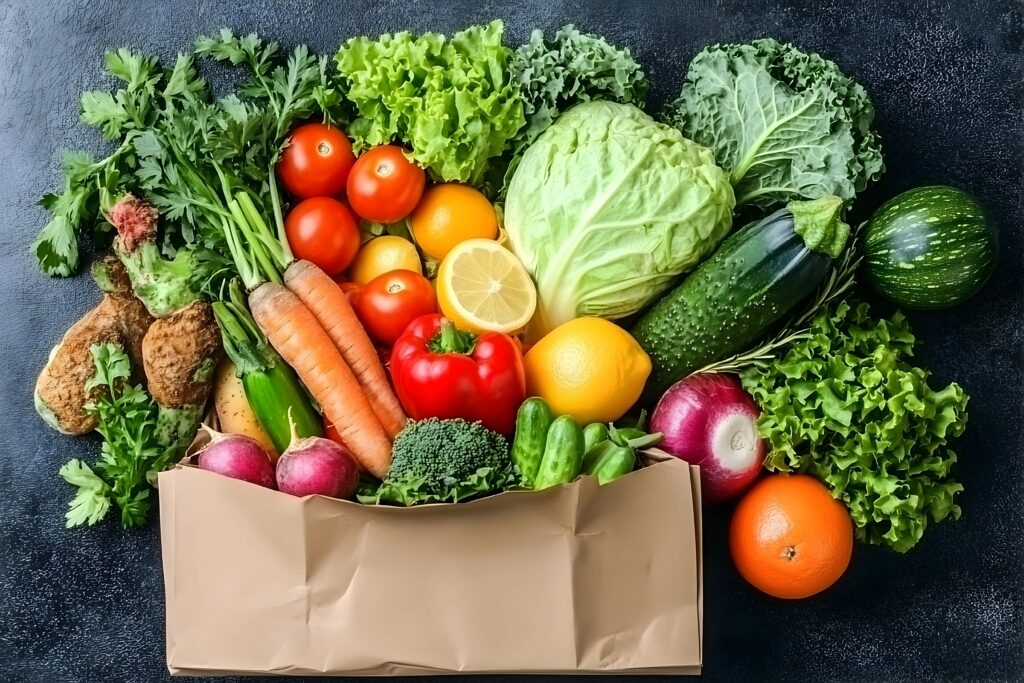
Good nutrition plays a vital role at every stage of the cancer journey, from easing treatment side effects to supporting recovery. Use these practical strategies suggested from an oncology nutritionist to help guide your approach.
Nutrition during and after treatment
While practicing healthy eating habits and staying active is important for every stage of life, they become increasingly important during cancer treatment. Maintaining your strength, decreasing the side effects of chemotherapy, and feeling good are all benefits of good nutrition and exercise. If you count a dietitian or nutritionist as part of your care team, it’s important to consult them prior to creating a schedule or grocery list—every body is unique!
Eating Well: A dietician and survivor shares her best nutrition tips
Focusing on nutrition gives cancer patients a greater sense of well-being and control. People who have been diagnosed with cancer, are in remission or are living with cancer have a lot on their minds – a nutrition may not be high on their list. Yet, nutrition can be a critical part of one’s cancer journey.
Jean LaMantia, a Toronto-based registered dietitian, and cancer survivor, recommends approaching nutrition in two phases:
- Phase 1: Nutrition that helps you get through your treatment
- Phase 2: Nutrition Post-treatment as a positive step to potentially prevent reoccurrence
Phase 1
“During my lymphoma treatment, I had severe nausea and vomiting, so I had to get strategic about what I could eat and what I could keep down.”
Jean LaMantia, Registered Dietitian and Cancer Survivor
Top Tips During Treatment
While you’re going through treatment, don’t worry about eating the PERFECT diet. LaMantia recommends taking this pressure off and simply eating in a way that helps you manage your side effects.
Eat cold and room temperature foods. They have less aroma and are less likely to trigger nausea
Plate food beautifully on a small plate to combat low appetite
Prioritize highly-nourishing foods, especially protein sources
Add extra calories to your meal with a drizzle of extra virgin olive oil
Phase 2
“After treatment, people who are in remission can experience a lot of anxiety, worrying about reoccurrence. Proactively doing your best to eat healthy foods that could lower your risk of recurrence can put your mind at ease. I find that it can be very empowering and can help you take back control.”
Jean LaMantia, Registered Dietitian and Cancer Survivor
Top Food Picks Post Treatment
Post-treatment, nutrition can play an important role in your recovery and healing.
According to LaMantia, the key is to focus on foods that are supportive of the immune system, anti-inflammatory, and proven to target cancer cells.
Mushrooms
Foods high in vitamin E (particularly wheat germ and almonds)
Garlic and onions
Spices including ginger and turmeric
Omega 3 fatty acids (found in fish like salmon, mackerel, rainbow trout, sardines, herring, and anchovies)
Cruciferous vegetables (broccoli, cabbage, brussels sprouts, cauliflower, and kale)
Berries
Whole grains (quinoa, wild rice, and whole grain pasta)
Protein foods (skinless poultry, yogurt, dried peas, beans, or lentils)
You have questions?
We have answers, practical advice, and support in our Post-Treatment Nutrition Workshop.
Let’s navigate this together
Join a community that understands. Receive expert advice, useful resources, and compassionate tips throughout your cancer journey in the LGFB newsletter.
Newsletter Form
Mindfuless During Cancer with Dr. Linda Carlson
Understand more about mindfulness and its importance in treatment and daily living.
We sat down to chat with Dr. Linda Carlson, professor in the Faculty of Medicine and co-author of The Art and Science of Mindfulness (full biography below). She defines mindfulness as “Paying attention on purpose in the present moment with an open and accepting attitude.” During the hour, Dr. Carlson helped break down what mindfulness is, provided research-based examples of how it can help reduce stress, support mental health during cancer and gave us practical mindfulness tips that can be beneficial in your everyday professional and personal lives.
Watch the full conversation
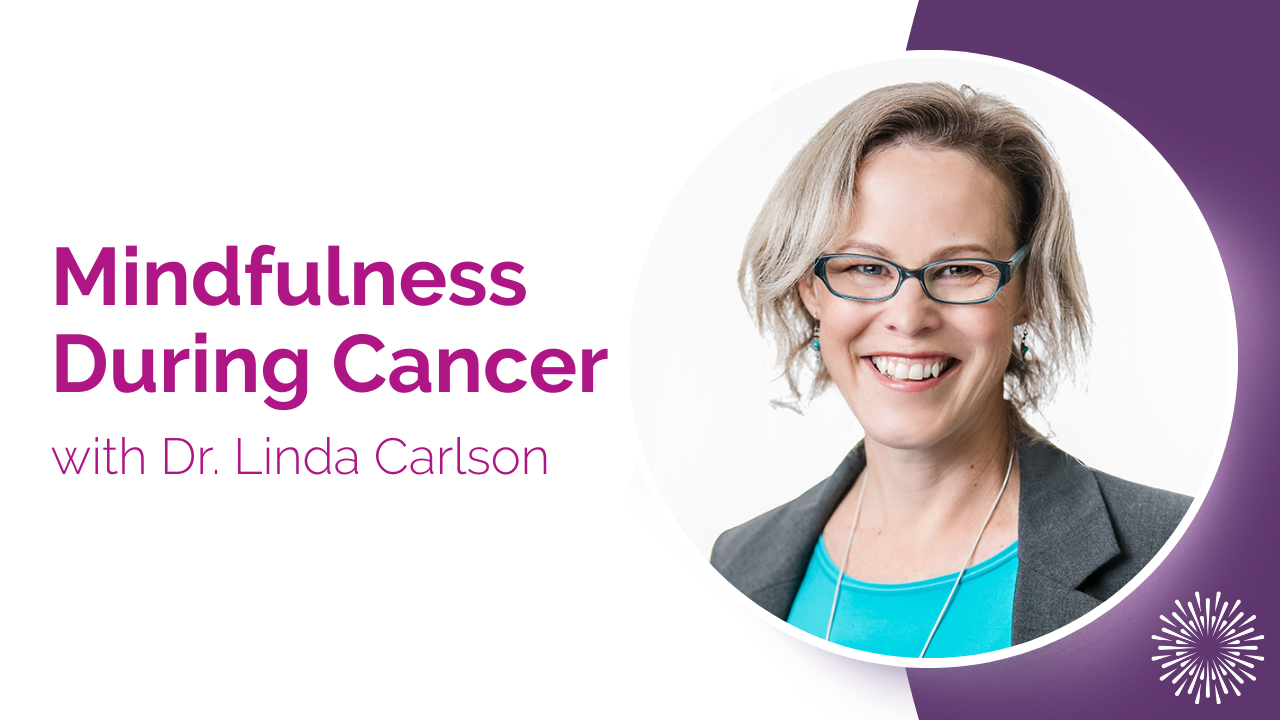
Q & A with Dr. Linda Carlson
Awareness of Breath Exercise
This exercise helps us notice where our attention wants to go; and so we will try to direct it on the breath. But you’ll notice as you’re doing it that your attention is jumping around, two parts:
Paying attention to the breath and the body
The other piece is noticing what your mind wants to do instead
Follow these steps:
Find a comfortable spot.
-
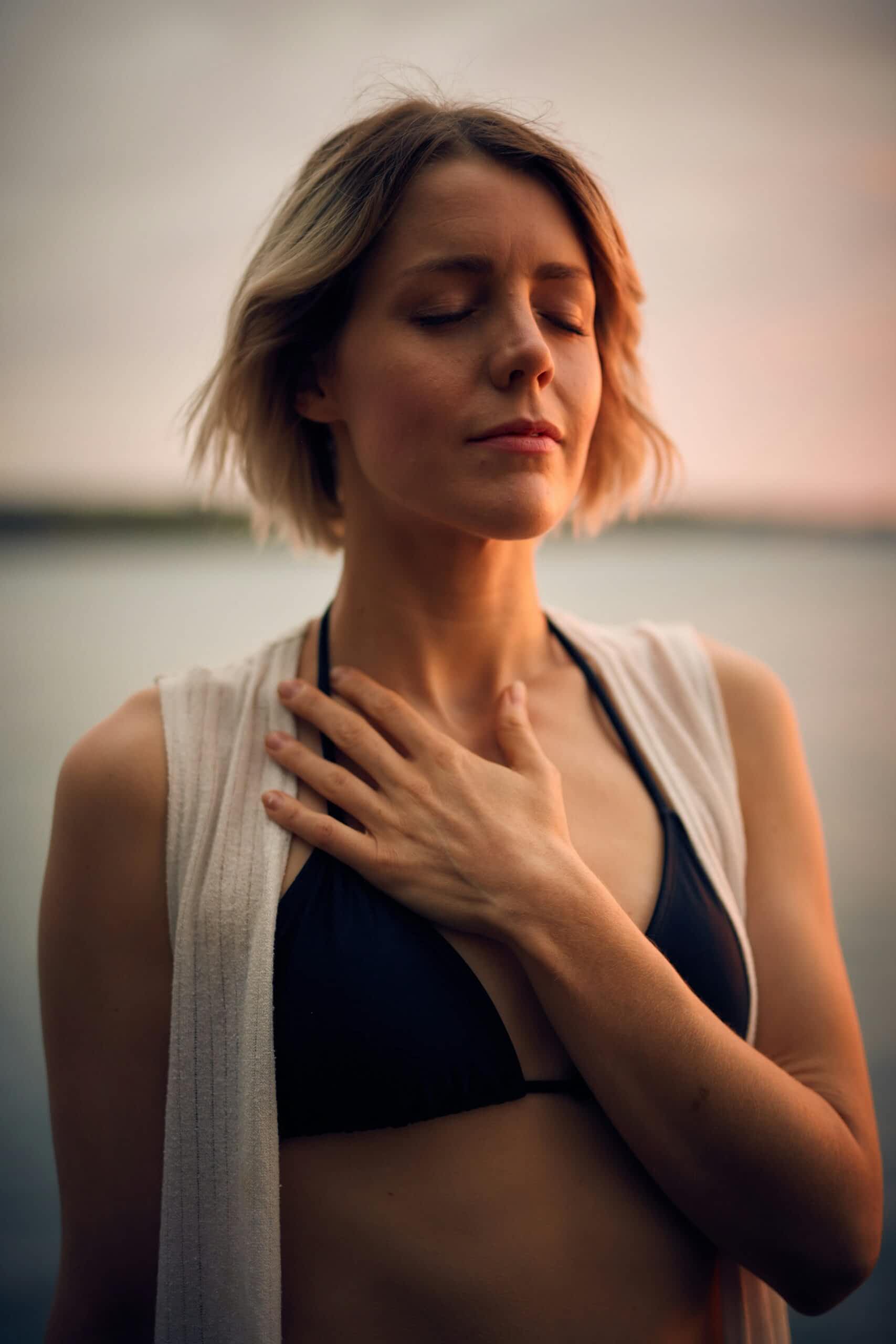
Place one hand on your chest and the other hand lower down on your belly.
-
Let go of any judgement.
-
Don’t analyze the way you’re breathing, just pay attention to how the breath is coming and going in your body.
-
Breath in.
-
You may want to sit up a bit so that you can feel the breath moving in your body.
-
As you breathe in you’ll notice movement. Just try noting if you feel that movement in the top hand or the bottom hand and the length of the breath. Then as you breathe out, try taking note again of the same thing—where’s the movement and how does it feel.
-
Is the ‘in’ breath a similar length to the out? Or is one shorter than the other?
-
What happens as you switch from in to out, is there a pause?
-
If your mind wanders, lead it back to your breath and approach it with a sense of curiosity and openness.
-
Does your breath change in anyway?
-
Take a few more breaths.
-
Lower your hands.
-
Open your eyes.
Biography
Dr. Linda Carlson holds the Enbridge Research Chair in Psychosocial Oncology, is Full Professor in Psychosocial Oncology in the Department of Oncology, Cumming School of Medicine at the University of Calgary, and Adjunct Professor in the Department of Psychology. She is the Director of Research and works as a Clinical Psychologist at the Department of Psychosocial Resources at the Tom Baker Cancer Centre (TBCC), where she has worked since 1997. She also holds a CIHR SPOR-funded mentorship chair in innovative clinical trials, which funds the TRACTION program (Training in Research And Clinical Trials in Integrative Oncology), supporting a multidisciplinary group of University of Calgary fellows studying Integrative Oncology.
Dr. Carlson received the Kawano New Investigator Award from the International Psycho-Oncology Society in 2006; the William E. Rawls Prize in cancer control from the National Cancer Institute of Canada/Canadian Cancer Society in 2007; a New Investigator Award from the Canadian Psychological Association Health Section in 2009, the inaugural Research Excellence award from the Canadian Association of Psychosocial Oncology in 2010, the Arete Award for Research Excellence from the Department of Oncology at the University of Calgary in 2012, the Bernard Fox Memorial Award from the International Psycho-Oncology Society in 2019, and was shortlisted for the Dr. Rogers Prize in Complementary and Alternative Medicine in 2013, 2015, 2017 and 2019. She is also a fellow of the Society for Behavioral Medicine and the Mind and Life Institute, is the President-Elect of the Society for Integrative Oncology, and is Co-Editor-in-Chief for the official International Psycho-Oncology Society journal: The Journal of Psychosocial Oncology Research and Practice.
Dr. Carlson’s research in Psychosocial Oncology, Integrative Oncology and Mindfulness-Based Cancer Recovery has been published in many high-impact journals and book chapters, and she published a patient manual in 2011 with Michael Speca entitled: Mindfulness-Based Cancer Recovery: A step-by-step MBSR approach to help you cope with treatment and reclaim your life, in addition to a professional training manual in 2009 (2nd Edition 2017) with Shauna Shapiro entitled The Art and Science of Mindfulness: Integrating mindfulness into psychology and the helping professions. She has published over 200 research papers and book chapters, holds several millions of dollars in grant funding and is regularly invited to present her work at international conferences, most recently in Netherlands, Switzerland, China, Australia, New Zealand, Africa, Israel and all across Canada and the USA. She presented a TEDx talk called Mindfulness for Personal and Collective Evolution in 2016, you can find the video here.
We’re here for you.
Find support, expertise, and practical tips in our workshops.
Let’s navigate this together
Join a community that understands. Receive expert advice, useful resources, and compassionate tips throughout your cancer journey in the LGFB newsletter.
Newsletter Form
LGFB Podcast: Facing Cancer Together
Support and insights for patients, loved ones, and care teams – all in one podcast. If your life is touched by cancer, the Facing Cancer Together podcast is for you.
Facing cancer doesn’t mean you are now only “the cancer patient”
So often, people in our workshops tell us that they need to feel seen, to feel understood and not feel alone. Please share the Facing Cancer Together podcast with anyone in your life facing a cancer diagnosis – or caring for someone who is.
Episode Guide
Sit Back, Relax, & Enjoy these informative episodes hosted by our very own Susan Larkin!
| Title | Description | |
|---|---|---|
| EP 0 | What is the Facing Together Podcast? | Introduction |
| EP 1 | You have cancer – Now What? | In our first episode, host Susan Larkin introduces some of the real voices you will hear throughout the series as they share the real deal about their own personal cancer experiences. Whether you are a patient, family, friends, or part of the health care team – we are – Facing Cancer Together. |
| EP 2 | This is Supposed to be Normal? | Hair loss. Brittle fingernails. Rashes. Stomach upset. Fatigue. Brain fog. Just a short list of the many side effects someone may have told you was “normal”. Dr. Margaret Fitch, Oncology Nurse professor and a leading researcher in psychosocial support in oncology explains how there is nothing normal about it. |
| EP 3 | Jules Whish on Living with Cancer | With advancement in treatments and greater understanding of the disease – there are people who are living with cancer. But what does that mean? Jules Whish joins us and shares how she is figuring it out as she goes – along with sharing on social media. Learn more about Jules Whish: https://www.heyjules.ca/ |
| EP 4 | Support Systems | What the heck is psychosocial support? It can be emotional support, spiritual, overall well-being, and even practical support. Dr. Margaret Fitch, Oncology Nurse, professor and a leading researcher in psychosocial support is back, talking about just how important these supports are. |
| EP 5 | Michelle Audoin is Living with Cancer | Navigating stage four cancer, facing cancer as a Black woman, grieving – and dried up raisins. Michelle Audoin is here to talk about it all – including how she ended up revealing more than she thought she ever would. |
| EP 6 | Navigating Nutrition | Going through treatment, there can be so many extra sources of stress – including food & nutrition. Hopefully listening to Registered Dietician Denise Gabrielson will help take some of that stress off your plate. |
| EP 7 | Brave, Fierce and Funny Part 1 | Anyone who names their own podcast “Women of Ill Repute” is not going to hold back. And Maureen Halloway and Wendy Mesley certainly do not hold back when it comes to sharing their cancer experience. |
| EP 8 | Brave, Fierce and Funny Part 2 | Radio broadcaster Maureen Halloway and television journalist Wendy Mesley are back – continuing the conversation about their cancer experience. |
| EP 9 | Unique Experiences | Everyone’s cancer experience is unique. In this episode, you’ll hear from Michelle Sylvain who is currently in treatment, then Denise Dmitruk on going through treatment as a nurse – and her most unusual pet. We finish with a male perspective from Michael Suba, who is looking back years later – and learning to trust his body again. |
| EP 10 | Talking to your Kids with Guest Audrey Guth | Often, a personal cancer experience can highlight gaps in the system. For Audrey Guth, it led her to helping mothers facing cancer and helping their children. In this episode, Audrey teaches us how to talk to kids about cancer. |
| EP 11 | How to Feel Like Yourself | The appearance-related impacts of cancer treatment can take a very serious toll on someone’s overall well-being. It’s not vanity. It’s about looking into a mirror, and not seeing the “Cancer Patient” – but instead seeing yourself. Dr. Margaret Fitch, and some of our other special guests, discuss why feeling like yourself does, in fact, make you feel better. Then, Andrea Galley talks about “Boobie Parties”, and body image post-surgery. |
| EP 12 | Back to Work / Back to “Normal”…Now What? | When treatment is done, people around you – including co-workers and bosses – may feel you are now “back to normal”. But side effects can last much longer after treatment ends. Dr. Christine Maheu and Maureen Parkinson, Co-Directors of Cancer and Work, will join us to share best practices. |
| EP 13 | You Are Not Alone | Throughout this podcast, you’ve heard people share their very personal stories and experiences around cancer. So many of them were nervous about being “interviewed”. When I asked them why they were doing it – they all said the same thing. They wanted to share their story to help someone else going through treatment, to know they are not alone. |
Let’s navigate this together
Join a community that understands. Receive expert advice, useful resources, and compassionate tips throughout your cancer journey in the LGFB newsletter.
Newsletter Form
When I first started experiencing unusual symptoms – constipation, bloating, heartburn, abdominal pain – in the summer of 2024, my first instinct was to put pen to paper. I drew a diagram of my body and wrote down all the things I’d been feeling. That’s the art therapist in me. When I showed the illustration to my doctor, she immediately recognized the signs of ovarian cancer. A CT scan revealed a large tumour over my right ovary, confirming her suspicions. I was completely shocked and devastated.
My career as a clinical counsellor and art therapist with preteens and teenagers abruptly stopped when I was diagnosed. It was such positive and enjoyable work. And not only did I have to leave my private practice, I had to stop doing things that gave me pleasure and joy in life.
I love being active: Zumba, belly dancing, strength training, circuit training. I also enjoy cooking wonderful food and travelling. But quite suddenly, my life was now filled with endless medical appointments. Testing, scans, blood work, chemotherapy, surgeries. It was surreal.
With my psychology background, I knew I had to look after the other parts of myself. The physical was being cared for. What about my emotional self, my sense of self, and my need for connection?
It had seemed that all the joyful activities in my life had come to a halt, but I was able to resurrect some activities that I hadn’t done in a while – things that I could go back to. Those included reading and art. I love art, especially drawing and painting with watercolours, and it has always been my resource during the tough times in life. It’s a wonderful outlet for sorrow and other emotions that need to be released.
I had no words for what was happening to me, and so I started to draw. I drew myself sitting in the middle of a tsunami wave – the tsunami of grief after diagnosis. I painted myself at nighttime in a jungle, with moonlight pouring down – standing in the garden of hope. I created more and more art, navigating the back and forth between despair and hopefulness.
I also talked with my caring partner, Bill. I cried a lot. I got a counsellor. I connected with friends. And I found community. When I first heard about Look Good Feel Better (LGFB), from a woman in the cosmetics department at Shoppers Drug Mart, a little spark went off. I signed up right away. At the workshop, I was amazed by how supportive it felt to be in a space with other women who I could relate to. I wasn’t alone – we were all going through it. The workshop was so informative, helpful, positive, and uplifting – something I dearly needed. And with my body having surrendered to all the necessary medical procedures, learning how to use makeup to my advantage was a way to take back my sense of dignity and to connect with my femininity.
LGFB brought me a respite from my sorrow and loss. It was a bright light, bringing a sense of community and breaking the isolation I was feeling – just like my art. Body, mind, and spirit are all integrated parts of us, and throughout my cancer journey, what really needed tending was my emotional side. It was stormy and intense – it needed to be expressed. We don’t have to be positive and brave all the time.
I can’t control everything, but I can control how I care for myself. Eating well, staying connected, and doing things I enjoy – reading, creativity – have made all the difference.
Talking to Kids About Cancer Workshop
Talking to kids about cancer requires sensitivity and care. These conversations can feel overwhelming, but with the right approach, you can help children understand and cope in age-appropriate ways.
About this workshop
What you will learn:
Practical, age‑appropriate strategies to help you face tough conversations with confidence
How to share medical information clearly—what cancer is, why it happens, and what to expect—while creating a safe space for kids to ask questions, share feelings, and avoid misconceptions
Navigate Emotional Responses and the “Six Cs”
Understand how children at different developmental stages may react—whether preschoolers, school‑age kids , or teens —and how you can tailor your approach accordingly.
You’ll learn real phrases and tools to foster trust and emotional resilience.
What is cancer?
Did I cause it?
Will I catch it?
Who will care for me?
Can I be cured?
How do I stay connected?
This workshop is available Online
Join us!
- It is led by a NanKind Child-Life Specialist and delivered over Zoom. It is an hour and 15 minutes long.
- French translation is offered for French speakers.
Who should attend this workshop?
- This workshop is ideal for parents, teachers, caregivers, coaches, or anyone who supports children emotionally – giving you the tools needed to approach these vital conversations with empathy and clarity.
Let’s navigate this together
Join a community that understands. Receive expert advice, useful resources, and compassionate tips throughout your cancer journey in the LGFB newsletter.
Newsletter Form
Post Surgical Products
Prostheses Basics
Fitting & Clothing Tips
Nightwear & Sleep Support
Care & Maintenance
Skincare During Radiation
Nipple Appearance Options
Access & Financial Help
Let’s navigate this together
Join a community that understands. Receive expert advice, useful resources, and compassionate tips throughout your cancer journey in the LGFB newsletter.
Newsletter Form
By Adriana Lombardo
I went for chemotherapy at Princess Margaret Cancer Centre once a week for two years.
The first time I went I didn’t realize I’d spend a full day there. I didn’t know what to pack at first. I brought along one water, a granola bar, and a book to my first chemo appointment.
Soon afterward, the nurse explained to us that although you may have a “set-time” for blood and chemo, it doesn’t necessarily mean that that is when you get called in. She told us that it takes a while for the blood results to come back and once they are cleared by the nurse practitioner, then chemo gets ordered.
Once chemo gets ordered, it’s a matter of the pharmacy making the order, which takes time.
From that day on, I always made sure to pack my favorite items that I always kept on-hand – not only for chemo, but wherever I went during treatment.
Crackers & Other Dry Goodies
I was on steroids for two years and a bit.
It was brutal during my intensification phase (30 weeks of high dose steroids) where I usually had heartburn or nausea and needed to munch on something dry to feel better.
Crackers were my go-to and always a staple item to have in my bag because I just never knew when I’d get the steroid munchies.
Other dry, salty goodies like popcorn or even bread, made it a lot easier to keep my hunger at bay most of the time…seeing as I was hungry all the time.
Let’s be honest, I always carried some sort of food on me whether it be sandwiches, rice, or leftover pasta.
I would whip it out of my bag and set myself up with a mini picnic.
Different Hats
I had purchased a wig at the Wig Salon at PMH but I only wore it twice because I preferred to go bald and just wear hats out of comfort.
I purchased pretty much every single hat in that store and then some!
I liked carrying around different style hats to change into whether at the hospital, at an appointment or while I was out.
At one point of treatment, changing hats for me was like changing shirts and never knowing which to wear because I just had too many options…yup, that was me! But hey, it’s not like I can’t transition them into everyday hats now that my hair is back.
Chapstick & Moisturizer (LOTS OF IT)
I expected skin changes as one of the side-effects, but because it was the winter time, I had extra chapped lips and extra dry hands. I had to reapply my Chapstick at least three times within the hour and constantly moisturize my hands to prevent them from cracking.
Water
While taking steroids, I found it extremely difficult to keep up with any hydration because everything tasted like metal to me, but I knew I’d regret it if I didn’t try and force myself to drink because then it would lead to other problems…if you know what I’m saying.
At least carrying the bottle with me would encourage me to drink it, not only because it made my bag heavier (motivating me to finish it), but also because it stuck out of my bag, so I knew it was always there right in front of my face.
Sunscreen
Anyone and everyone should always make sure to apply some sort of protection to their skin.
I never thought that I’d start wearing sunscreen during the winter months, but I had to once I learned about all the risks associated with sun exposure during chemotherapy.
As much as it scared me, it put me in place knowing that I needed to constantly reapply it, even if I was just driving around in the car.
Now, it has just become a habit of mine to always apply it in the morning and carry it in my bag to reapply it throughout the day. The small travel size options, or the ones that come in the Look Good Feel Better kit are a great size to have on you.
Antibacterial Soap/Wipes
“Disinfect everything!” are the words that stuck with me throughout my entire treatment.
The nurses made it very clear that germs loved me at this point – being immunosuppressed and all.
I was susceptible to catching anything, so I had to make sure that my hands and any surfaces were always clean.
It was embarrassing at first, having to disinfect tables at the mall in food courts if I went to buy a coffee with family or friends, being extremely cautious in public bathrooms, and even if I was having a picnic at parks…people looked at me funny but I knew I had to be careful. Maybe my actions remind them of the pandemic.
I grew used to the idea of being “safe,” and embraced what I was going through when I had to do it.
If people looked at me funny or stared, I’d smile and say, “I know, right!? How can someone fighting cancer and going through chemo look this great bald?” or “I pay my oncologist big bucks to look the way that I do.” *wink*”
People thought I was ridiculous, but what did I care. I was going through this, not them, so there was absolutely no need for it to bother them in any way, shape, or form.
Just learn to laugh about it and then people will laugh with you.
Books/Magazines & Entertainment
You need to pass the time somehow. During treatment, I grew to love psychology and self-help books. I found them to be quite insightful at this point in my life. I was already going through a life-changing experience, which made me begin to question everything, so I decided to take that time and re-evaluate my whole life and give it a makeover.
Plus, I always had my cellphone on me for social media, games, and texting.
Make sure to carry around things like books, magazines, or crossword puzzles, because you’ll find you’ll have a lot of time on your hands while going to treatment or other appointments. You might as well make the most of it.
Vitamins/Medication
I always found myself to be out and about at the point when my medication or vitamins were due. I found it a lot easier to just carry them around in a cute little makeup bag that I had purchased solely for that purpose. That kept everything safe, clean, and in a place that I knew would always be in my bag.
Teens Workshop
Dealing with cancer is hard. Figure out what works for you during treatment, from gentle skincare routines and makeup hygiene to cute head wrap styles, wigs and nails. Learn all these things, plus meet other teens with cancer, in a space that gets what you’re going through.
About this Workshop
Our online workshop is pretty unique and catered to teens with cancer. It’s a space where you don’t have to explain yourself, or your cancer. No one’s cancer experience is the same, but everyone will have some idea of what you’re going through.
How it works and what you will learn:
Learn skincare, makeup and sun care tricks and tips to help your sensitive skin heal and look its best during treatment
Get expert advice on managing treatment side effects like dryness, discolouration, and dreaded acne
Explore creative, cute, and cool styles for hats, wraps, wigs, scarves, and other hair alternatives
Get a free kit full of awesome skincare and makeup products that are OK to use during treatment
Even it’s ultimately not your thing, do it for the plot
A new theme – and new makeup – every time
Just because we’re talking about how to deal with side-effects to your skin and hair, it doesn’t mean that we can’t have fun with it. Each session covers a new look so you can lean into your artistic side or just change up the basics to help you feel more like yourself.
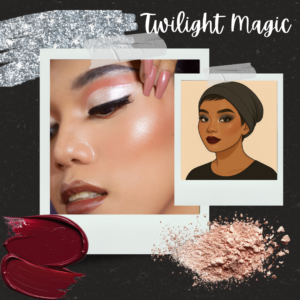
Twilight Magic: Smoky Eyes & Starlit Glow
Thursday, October 1st
Bring a little autumn magic to your routine. This session blends soft smoky techniques and shimmer placement to capture a twilight glow—perfect for fall photos or a subtle Halloween nod.

Holiday Classics: Effortless Skin & Bold Red Lip
Thursday, December 3rd
Wrap up the year with a modern classic. Learn simple techniques to keep skin fresh, eyes softly defined, and lips bold and bright. Choose your finish—sheer, satin, or gloss—and let your red lip shine.
Who can attend?
This workshop welcome teens aged 13 to 17 who are currently facing cancer or have completed treatment in the past year.
A bit older or younger and want to attend? Send us an email at workshops@lgfb.ca
Hang out. Have fun. Repeat.
What if you take our workshop, enjoy it, and want to come to another one? That happens a lot! As long as spots are available, we’d love to you to have you back for another one.
Each session has a new make-up theme AND it’s a great way to build friendships over time!
Come hang out with people who kind of understand what you’re going through!
Register for our Teens Workshop today!
Let’s navigate this together
Join a community that understands. Receive expert advice, useful resources, and compassionate tips throughout your cancer journey in the LGFB newsletter.