I found out that I was positive for the BRCA2 gene in May of 2014 after my 94-year-old father was diagnosed with prostate cancer. He was urged to get tested as there’s a history of pancreatic and prostate cancer on his side of the family and, sure enough, his test came back positive. I was sent to the high-risk clinic and made the decision to have my ovaries and fallopian tubes removed. A small tumour was found, and that was the beginning of a journey of more surgeries, chemotherapy, and a deep struggle with my mental health. I was frightened.
As a professional pianist, it was very important that I did everything possible during my chemotherapy to avoid neuropathy – tingling, pain, or even numbness in my hands and feet. After searching online and asking for advice from all the nurses and doctors who were treating me, I ended up using a very questionable and unproven preventative technique of holding ice packs in my hands during therapy. Thank goodness, it seemed to have worked.
Other side effects were more difficult to deal with. Prior to treatment I had a big, thick head of curly hair and, when it started falling out in the shower, it was very difficult. Losing my eyebrows and eyelashes was tough, too. I had fatigue, heartburn, ear infections, and a perforated ear drum, and a period of time where I was crying a lot. I comforted myself by reminding myself that things could always be worse. And I am so lucky to have had a wonderful support system: my amazing husband, dear friends who supported me daily with a meal train and phone calls, and my adult daughter and son, who called regularly and came in from Toronto and the UK to visit, lifting me up with their presence.
My treatment was isolating. I was told to treat this time as if I were in the COVID pandemic as I was immunocompromised. I couldn’t see anyone in person. I longed for some connection, and so attending the Look Good Feel Better (LGFB) workshop was a very welcome opportunity. I saw people in person there for the first time in months.
I attended because I wanted to have eyebrows. I was scheduled to be in a video that was being made about my parents’ architecturally designed home and this was for posterity. So I signed up with that singular purpose in mind.
What I found out was that LGFB is so much more than learning how to apply makeup. It nourished my soul, gave me hope for the future, and helped me feel like myself again – confident to face myself and others. I was struck by how positive the participants were and especially inspired by the facilitator, who shared with us that she was a cancer survivor of over 20 years. She had humour, vitality, and boundless energy – everything I was longing for. I removed my head covering there for the first time in public, baring my bald head, something I couldn’t even do in front of my husband. That was a feeling I can’t even describe. It took a lot of courage for me to do that. I left that session feeling positive, supported, and connected.
There can be silver linings to having cancer. It has forced me to look at life differently, to value friendships, family, and the little things in life and not let them pass me by. This journey puts life into perspective. It has given me an opportunity to reflect on my priorities and to make sure that I can make a difference in the world.
Last spring I attended my son’s graduation ceremony in London, England. And in the summer I hosted a thank-you party for all my beloved friends who supported me during my treatment. I was able to support a friend going through something similar with greater empathy. We will travel again. Life is short and unpredictable, and I want to make the most of it.
Getting cancer made me feel really alone in some ways. Like, no one else around me was losing their hair or going bald. Being bald made – still makes – me feel insanely unique. I didn’t know anyone my age going through cancer. I celebrated my 19th birthday at home, recovering from a tough round of chemo, while my friends headed out to bars to party and toast their 19ths. Having cancer was a lonely experience.
It was also such a shock. My entire family describes the day I got diagnosed with lymphoma as the most shocking day of our lives. Before, I was such a regular 18-year-old. I felt and seemed healthy. I went to the gym all the time – I was really into bodybuilding. I was in school studying hairdressing. I had a boyfriend. I had a part-time job. Like, so typical. I went from thinking my life was fine one day to being in the hospital the next. Getting chemo, losing my hair – it was all happening before I could register the shock.
My family has been so supportive through everything. I live with my parents and my two brothers, along with two bunnies and a dog. They’ve all been so great. My friends and cousin have also been so supportive. But no one really fully got what I was going through.
Going to a Look Good Feel Better (LGFB) workshop was one of the most helpful things for getting me to feel less lonely. I was nervous to go, but I’m so glad I did. My mom came with me. It was genuinely such a nice night out. Everyone was super nice and we all had some good laughs, like when no one knew I was wearing a wig and I just whipped it off. I was going through a hard time, and a lot of things sucked. Getting to go to a girls’ night, receiving free makeup, and having people help me was so awesome.
And the makeup was super fun. I’ve finished my treatment now, but I still don’t have my hair. Putting on both my wig and makeup helped me to feel prettier, and a bit more like myself. I don’t think I would’ve started wearing makeup if I hadn’t gone to the LGFB workshop. I like being able to put on my wig and makeup and to go out and feel OK. I was so scared to lose my hair, but it ended up being totally fine. I’m having fun with it and if anything, I feel more confident now because I have long, blonde, thick hair and when I go out, nobody really knows that it’s not mine. It’s true: when you look good, you do feel better.
Getting diagnosed so young has definitely been scary. I wonder, is this going to affect me for a long time? I’m sure it will, right? I think about the checkups I’ll need, the precautions I’ll have to take, the things I’ll have to consider.
But it’s also given me a different perspective on things. I’m really grateful for the simple things now. Going to a restaurant with friends, or for coffee, or to the movies, or for a walk – these moments are so special now. If there are little things that you enjoy, just do them, you know?
Cancer runs in my family — it has affected six out of eight siblings, my mom, my aunt, my grandmother, my cousins, and even my niece and nephew. But I’ve never let it define me. I don’t even like to use the “C” word — I call it “the unwelcome intruder.” It infiltrated my body and so now we’re just working on getting it out of there. I don’t allow it to control me or have authority over my body.
Throughout my treatment, some things have stayed constant in my life, and this grounds me. I’ve kept working, because I love my job and it gives me a sense of normalcy. My children are there for me — I’m a single mom of four kids, 22-year-old triplet daughters and a 24-year-old son. I love going on walks with my little nine-year-old Havanese and reading psychological thrillers.
My faith has been another constant source of strength. When I had a recurrence of the unwelcome intruder, I prayed a lot. I was like, “I can’t go through this a second time. Lord, what are you doing?” And I received a message saying that this was not a journey I was to take alone — that this was going to be a community-based journey for me. I have a habit of isolating myself, especially during times of struggle. Thanks to this message that came through, I’ve been staying connected and sharing my journey, especially through the women’s connect group at my church. We all go through struggles in our lives, and my hope is that by sharing mine, it’ll help people to see their own challenges in a better light and to know they’re not alone or stuck. I know there’s an end to this.
It wasn’t just my church community, either. Once I decided to overcome my habit of cutting myself off from others, I was surprised at how vast this community travelled. More and more people outside of my church, outside of my faith, have come to walk alongside me. They send texts, stop by, bring me meals, go for walks with me, and even attend appointments. It has been really uplifting, encouraging, and inspiring. I feel held and supported.
This community extends to Look Good Feel Better (LGFB) as well. Losing my hair was a big thing for me. I cried and cried for weeks on end in anticipation. I just turned 61, but I don’t feel old —and I didn’t want to look old, or sick. My hair started falling out just two days before my LGFB workshop. I felt really shut down. I almost didn’t go. But I’m so glad I did, because the workshop really helped me get through it.
I loved how the volunteer talked about hair loss — so calmly, so casually. She’d rip off her wig, put on another, and then switch to a bandana. Something opened up in me when she was doing that. It felt so freeing. I realized I was no longer stuck to my hair, and that it was okay that it was gone. My hair falling out felt like the end of the world for me, but the workshop helped me realize that hair is just hair. It doesn’t define who I am. This new perspective changed the entire trajectory of my journey. The workshop gave me my life back, basically. It was so empowering. As a bonus, I’ve been having a lot of fun with wigs, trying different hair styles and colours.
My positive mindset has really helped me through this journey. Prayer, connection, community — these have been instrumental. And I really do treat this as a journey — not just a medical, physical journey but also a mental, spiritual, soul-deep transformation. I don’t have to worry about the unwelcome intruder in my body because that’s what my medical team does. My responsibility is to make sure that I’m staying as healthy as possible, physically and mentally. I’m not just focusing on the cancer, but on making myself better.
- For general comfort and sensitive scalps:
Bamboo, cotton, linen, and modal are excellent choices because they are lightweight, moisture-wicking, and allow for good airflow. Bamboo regulates temperature and is soft on sensitive skin, while cotton offers all-day comfort and linen is highly breathable.
- For winter/cold weather:
Look for soft, breathable, and non-irritating fabrics like bamboo, fleece-lined cotton, and wool blends with a soft inner lining. Avoid scratchy wool or synthetic fibres that can cause irritation. A silk or satin lining inside hats can also help prevent friction and dryness.
- For maximum coolness:
Bamboo, cotton, linen, and modal are your best options. In terms of design, loose-fitting caps and lightweight scarves offer versatility, while turban-style wraps provide full coverage.
Consider owning at least 3 to 5 head coverings to ensure you have enough options for different occasions while allowing for washing and drying. Sleep head coverings should be made from softer, more comfortable materials that provide warmth and minimise friction against the scalp, making cotton or bamboo ideal choices. Like pyjamas, it’s important for hygiene to reserve specific items for sleep to reduce transfer of dirt and sweat from daytime activities to bed.
For daily wear, a variety of styles, including caps, scarves, turbans, and hats, can be beneficial. These should be made from lightweight, breathable fabrics that keep the scalp cool and comfortable while providing coverage.
Head coverings can be purchased from various sources, both online and in stores. Most wig boutiques will also carry head coverings and many other accessories. You can also find head coverings on specialty websites that cater specifically to those undergoing treatment. Cancer support organisations often provide resources or even free caps. Department stores and local boutiques may also carry suitable headwear. Additionally, some hospitals/cancer centres provide head coverings or purchasing resources. When selecting a head covering, consider comfort, material, and style to find the best option for your needs.
Ideally, you should wash them every 2 to 3 days, especially if you sweat or wear them for extended periods; daily wear may necessitate more frequent washing. The fabric type can also influence washing frequency—cotton and bamboo can be laundered more often without damage, while delicate fabrics like silk may require less frequent cleaning. Additionally, since chemotherapy can make the skin more sensitive, it’s important to use gentle, hypoallergenic detergents and avoid fabric softeners that could irritate the scalp. If you notice any odours, visible dirt, or signs of irritation on your scalp, wash your head coverings immediately.
A sleep cap is designed for nighttime use and is made from soft breathable material. They help keep the head warm while collecting hair that is coming out and protecting the scalp from friction against pillows.
Unless it is specifically listed as having UV protection you should wear sunscreen under a head covering because UV rays can penetrate these materials. The scalp may be more sensitive during and after chemotherapy, increasing the risk of sunburn. If you plan to be outside for an extended period, sunscreen adds an essential layer of protection, providing peace of mind, particularly if you adjust or remove your head covering throughout the day.
Keep sun protection top of mind by wearing a waterproof sunscreen and/or a swim cap, wide-brimmed hat or head covering with UV protection.
Wear a head covering like a simple cap or wig grip band underneath.
Scarf Styling and Techniques
The square knot (or reef knot) is recommended due to its simplicity and security. To tie a square knot, start by positioning the scarf on your head so that the ends hang evenly down your back or to the sides, depending on your style preference. Cross the right end of the scarf over the left end, then bring the right end under the left and pull both ends tight to form the first part of the knot. Next, take the left end and cross it over the right end, bringing the left end under the right and pulling both ends tight again to complete the knot. The square knot is known for staying tied, making it suitable for all-day wear, and it can be easily adjusted to tighten or loosen the fit as needed. Additionally, the knot lies flat against your head, preventing bulkiness and discomfort.
Yes, at minimum the top of the ears should be covered to create a more comfortable and polished look.
Yes! Search terms like “scarf tying tutorial for cancer patients,” “how to tie a scarf for hair loss,” and “headscarf tying techniques for chemotherapy.” Other effective phrases include “chemo scarf styles,” “head covering tutorials for cancer,” and “easy scarf styles for cancer patients.” Utilizing these search terms on platforms like YouTube or Google can help you find a variety of helpful tutorials tailored to your needs.
Still have questions? We cover these topics and a LOT MORE in our workshops.
We're here to help.
Understanding Your Wig Options
Both kinds of wigs have their advantages and disadvantages. Synthetic hair wigs are lightweight and comfortable to wear and generally easy to care for and style. They are often much less expensive than real hair wigs and are available in a wide variety of colours and styles. Their drawbacks are that they can be damaged by heat and steam, including hair dryers, hair curlers, heat from the oven and steam from a dishwasher.
Human hair wigs feel natural and can be styled using regular hair tools like hair dryers, curling irons and flat irons. They are also quite durable. But, they are more expensive, their colours can fade and they take more maintenance to clean and style.
Hair toppers share characteristics of both hair extensions and wigs. They clip in at the top of your hair, but they generally just cover the crown of the head. Since they have a smaller cap, they sit flatter on the head. Toppers allow you to still use your natural hair and blend it in with the topper. Similar to other forms of wigs and extensions, you can purchase curly hair toppers, toppers with bangs, or even custom pieces with balayage to match your own style.
Halo wigs are a curtain of hair that fit around your head similar to a headband. These are usually used if you have thinning hair or if you are bald and want a curtain of hair on the sides and back of your head under a hat or scarf wrap, but don’t want to wear a full wig.
If you were to wear a halo wig with existing hair, a thick weft of hair wraps around your head and has a thin, clear “fishing line” or elastic that hides under your natural hair to make the halo extension blend in with your hair and be hidden.
Choosing & Purchasing a Wig
Yes, you can buy a wig online. There are pros and cons to looking at wigs online versus visiting a wig salon with medical quality wigs. Online allows you privacy and anonymity with lots of wig styles available. Some people find the options overwhelming, so seeing a few wigs in a salon may feel more manageable. Generally, online wigs are less expensive than wigs in stores. Just remember that it’s harder to tell texture, colour and quality from an online photo and there’s no way to try it on for fit.
It can be useful to talk to an expert, regardless of how you choose to shop. Some online wig shops do offer consultations with a wig professional over zoom, chat or email.
- The climate you live in, especially if you live somewhere with frequent hot or rainy weather.
• Do you want a full or partial wig? You can also opt to attach bangs, side pieces, and ponytails to any remaining hair or head coverings. Think about potential accessories, including scarves, barrettes, and clips.
• Do you want to wear a wig similar to your regular hairstyle? If so, snap a few pics of your current hair and bookmark recent photos. Cut a lock of hair to represent your desired wig colour. Always use natural light to compare wigs to your hair sample.
• If you decide to try out a new style, colour, or length, gather a collection of photos to use for inspiration. You can have a chat with your hairstylist for tips, ideas, and insights. In fact, buying a wig can be a great way to try out a new look.
Medical-grade wigs are designed for long-term wear and can sometimes be covered by health insurance due to their necessity for medical reasons. Both medical-grade and higher-quality wigs are constructed to feel natural and fit well on the scalp, using materials that are hypoallergenic, gentle on the scalp, and designed for extended wear during treatment.
More expensive wigs (whether medical-grade or high-quality beauty wigs) typically have better cap construction, more natural-looking hairlines, and superior craftsmanship. Less expensive wigs may use lower-quality materials and construction that don’t feel as natural and may not be as comfortable for extended wear during treatment.
The Canadian Cancer Society offers an online wig bank where you can submit a picture of your hair style, and they will ship you a wig that best matches what you are looking for (based on their inventory). If you would prefer something local/in-person, you may find a wig bank at your local cancer support organisation, wig shop or at the cancer centre.
If you still have hair but anticipate that you’ll lose it all, you will want to consider this when trying on wigs. You can wet or slick down your hair to help with getting proper sizing. Find out the measurement of your head using a soft measuring tape around your forehead, above your ears, and around the nape of your neck. Wigs typically come in petite, average, and large sizes, so compare your measurements to the manufacturer’s sizing chart. Be sure to always wear a hygiene cap when trying on wigs. Position the wig comfortably at your natural hairline (this is four fingers above your eyebrows), making sure the front aligns with your forehead, and the back covers the nape of your neck.
There are several effective methods:
• Wig grip bands: Adjustable, non-slip bands worn underneath the wig that sit firmly around your head like a headband, providing a surface for your wig to ‘grab’ onto.
• Wig tape: Double-sided, hypoallergenic tape applied to small areas like the front hairline, sides, and nape of the neck. Clean your scalp first, apply tape to scalp, then position the wig and press down where tape is applied.
• Wig liners: Preferably non-slip or silicone-lined, these create a smooth surface that helps prevent slippage.
• Adjustable straps: Many wigs feature built-in straps that can be tightened for a better fit.
• Secure cap constructions: Lace fronts or polyurethane bases provide additional grip.
When removing wig tape, gently lift the wig off and use an adhesive remover or gentle oil to dissolve any remaining residue. Many people find wig grip bands easier to use than tape.
For wigs that are too big:
Many wigs come with adjustable straps inside the cap that can be tightened. Wearing a wig liner can help reduce excess space and provide a snugger fit. For a professional solution, a stylist who specialises in wigs can make alterations, such as taking in the sides or adding structure.
For very large or very small heads:
Look for specialty brands that offer wigs specifically designed for your head size. Choose wigs with adjustable straps or hooks for a customised fit. Stretch caps or lace front wigs provide additional flexibility. If you have difficulty finding a suitable option, consider investing in a custom-made wig tailored to your specific measurements.
If it’s mesh on the front of the wig, the excess lace/mesh can be cut off right back to your hairline (you may want professional help for this). Another option is to hide the mesh along the hairline with eyeshadow, or try dark or dim earthy coloured nontoxic marker or eyeliner to shade the zones where tracks are appearing.
Try these solutions:
Securing the wig: Use small pieces of wig tape on the hearing aids or close to the ear to stop the wig from shifting.
Securing your hearing aids: Look for ear grips (also called anchors or retention lines)—plastic wires that attach to your hearing aid and coil up inside your outer ear, holding the hearing aid in place even with slight jostling from your wig.
Managing Wig Comfort Issues
Synthetic wigs are lighter and cooler than human hair wigs. You may also want to opt for a shorter style so that airflow reaches your neck. Look for wigs that are wefted at the back to allow air flow to the scalp—these are also called cap-less or open capped wigs.
Choose lightweight, breathable wigs with cap designs that allow air circulation, such as lace front or open wefted styles. Wearing a moisture-wicking wig liner made from breathable materials like bamboo can help absorb sweat and keep your scalp cool. Keep cool accessories handy, such as a portable fan, cooling wipes, or a misting spray. Make sure your wig isn’t too tight, as a snug fit can trap heat.
Wig liners designed for scalp protection (different from fashion wig liners) can help. Look for cotton or bamboo materials. Bamboo is especially beneficial as it is soft, hypoallergenic, and moisture-wicking. Choose seamless or tagless designs to reduce pressure points, and ensure they’re machine washable for hygiene.
Caring for your scalp may also help—cleanse and moisturize regularly and consider using a dandruff shampoo about 2 times per week. Massage into the scalp, let it sit for 2-5 minutes, then rinse off.
Consider having the wig thinned to make it less full, which would reduce the weight. It’s best to go to a stylist experienced with wigs for this service.
Styling and Customization
Your hairdresser may be able to cut your wig, but it’s important they have experience working with wigs. For human hair wigs, experienced stylists can cut, colour, and style them much like natural hair. For synthetic wigs, the fibres fall differently than human hair, so wig-specific experience is crucial.
Many wig boutiques offer styling services specifically for wigs with trained professionals who can help with cutting, shaping, and adjusting the fit.
Yes, but be careful not to damage the wig cap. Because of the way a wig is constructed, a high-top ponytail or bun won’t work and will show the wig cap.
Yes, especially with synthetic wigs. Avoid heat from hot ovens, BBQs, fire-pits, steam from dishwashers, or very humid, hot environments. Never use hair dryers, curling irons or flat irons on synthetic wigs unless they’re specifically heat-resistant.
Throughout your wig experience, don’t hesitate to consult with professionals. Wig boutiques, experienced hairstylists, and wig specialists can provide valuable guidance on selection, fitting, styling, and maintenance. Many offer services even if you didn’t purchase the wig from them.
Use products specifically designed for synthetic fibres to maintain their appearance and longevity. This includes synthetic wig shampoo, synthetic wig conditioner, and synthetic wig leave-in conditioner.
Yes, but proceed with caution. A light dusting of powder (baby powder, cornstarch, or translucent face powder) can sometimes help tone down excess shine. For darker wigs, a tinted dry shampoo is a better option to avoid leaving a chalky cast. These are DIY, at-your-own-risk methods and may leave the wig looking dusty or uneven if overapplied.
For a safer, longer-lasting solution, look for a synthetic wig dulling spray. These sprays are designed specifically for wig fibers to create a matte, natural finish without residue, stickiness, or buildup. Many are lightweight aerosols or “dry wax” sprays that also add a bit of texture and hold. Using wig-specific shampoos and conditioning sprays can also help manage shine over time.
If you’re unsure, it’s always best to consult a wig professional for product recommendations suited to your wig’s colour and fibre.
Chlorine and saltwater can damage both synthetic and human hair wigs. If you choose to swim, rinse your wig with fresh water before entering the pool to create a barrier against chlorine or salt water. Rinse with fresh water immediately after and then wash and condition.
Fixing frizzy ends:
• Wash the wig with synthetic wig shampoo
• Apply leave-in conditioner designed for synthetic wigs
• Use a wide-tooth comb, starting from the ends and working up
• Apply a small amount of anti-frizz serum designed for synthetic wigs
Preventing frizzy ends:
• Regular maintenance with proper products
• Store on a wig stand away from direct sunlight or heat
• Minimize heat exposure and friction
• Use humidity-resistant products if you live in a humid climate
• Be gentle when brushing, always starting from the ends
Products designed specifically for synthetic wigs such as gel or mousse, anti-frizz serum, and finishing spray.
Use a wide-tooth comb for detangling, especially when wet, as it minimizes tugging and prevents breakage. For daily maintenance, use a wig brush specifically designed for wigs with soft bristles. Always start brushing from the tips and work your way up to the roots, using gentle strokes when the wig is dry.
Only if your wig is heat-resistant synthetic or human hair. Always check the manufacturer’s guidelines for maximum heat settings. Standard synthetic wigs cannot handle heat styling. If using heat on a heat-resistant wig, apply a heat protectant spray and keep temperatures below 300°F (150°C) for synthetic wigs. Test a small, inconspicuous section first.
We’re here for you.
Find community and practical advice in our Wigs & Scarves workshop.
Let’s Listen
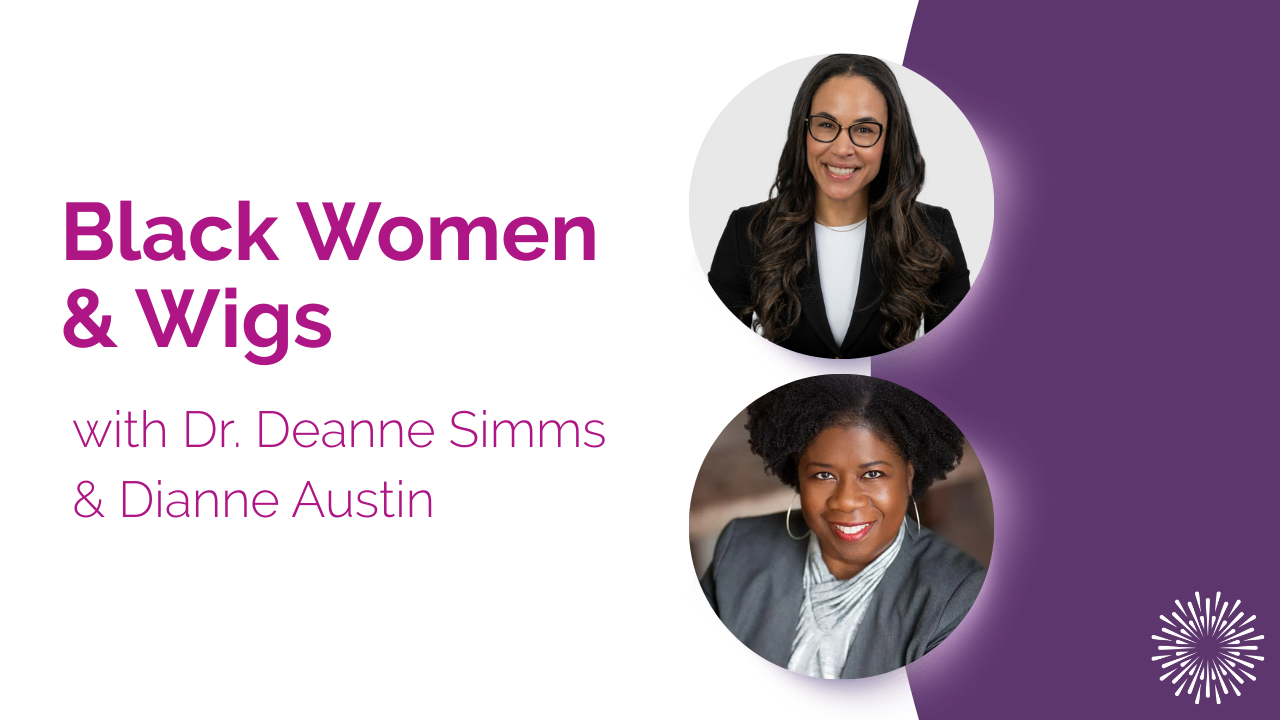
Dr. Deanne Simms, Clinical Psychologist will speak to the mental health benefits of managing appearance during cancer, the impact of the loss of control and the connection between hair and identity, specifically for BIPOC women.
Dianne Austin, Cancer Survivor and Entrepreneur, will then share her story of how her personal experience has led her to create a social enterprise to meet gaps in supporting Black women facing hair loss.
Discussions with Dr. Deanne Simms & Dianne Austin
<iframe width="560" height="315" src="https://www.youtube.com/embed/CQ5BGMpeR0I?si=UjFbSZUxswN83ThX" title="YouTube video player" frameborder="0" allow="accelerometer; autoplay; clipboard-write; encrypted-media; gyroscope; picture-in-picture; web-share" referrerpolicy="strict-origin-when-cross-origin" allowfullscreen></iframe>
Our Speakers
Dr. Deanne Simms
President and CEO, ThriveSpace Health and Wellness
Dr. Simms is a senior Clinical Health Psychologist who has a well-established career providing specialized care for children, adolescents and adults with complex mental and physical health challenges or conditions. In her work, Dr. Simms works collaboratively with her clients while utilizing evidence-based, cognitive behavioral interventions within a measurement-based care framework. In her work ranging from primary to tertiary care settings across 4 Canadian provinces, Dr. Simms has worked to build and evaluate evidence-based practices and programs. Dr. Simms strives to support the health and well-being of the individuals she works with, while enhancing and improving service delivery in both the private and public health sectors.
Dr. Simms is a passionate leader whose responsibilities have extended to provincial and national health leadership. Dr. Simms is an innovator who drives change, and is a sought-after consultant for system-level projects. Using her scientific background, combined with her dedication to enhancing and extending health service delivery, Dr. Simms contributes meaningfully to boards, steering committees, working groups and initiatives aimed at transforming the health care landscape through disruptive, data-driven innovation. Dr. Simms is the President and CEO of ThriveSpace Health and Wellness, a company which focuses on delivering and enhancing digital health services. In this space, Dr. Simms consults with individuals, clinicians, organizations and health systems to augment and enhance service delivery. Dr. Simms is passionate about ensuring individuals everywhere can access the right care, at the right time, in the way that most suits their needs.
Dianne Austin
Co-founder and CEO of Coils to Locs
Dianne Austin, B.S. is the co-founder and CEO of the startup, Coils to Locs, a direct to hospital distributor of high-quality coily, curly hair prosthesis (wigs) for Black women or any woman with highly textured hair. Coils to Locs is at the forefront of addressing an unrecognized health care disparity that impacts Black women experiencing chemotherapy-related hair loss: The lack of coily, curly wigs that are available at cancer centers in the U.S. that can be purchased with health insurance reimbursement.
A five-year breast cancer survivor and thriver, Dianne is passionate about healthcare equity issues given her personal experiences and that of family and friends within the healthcare system.
“I liked getting information that was specifically for teens and connecting with other people who understood what I was going through in the teen workshop.”
Maddie W., Workshop Participant
Prefer direct information from a professional?
Try one of our workshops today!
“I didn’t want to invest in a wig but after reviewing these resources and attending the LGFB Hair, Wigs & Scarves workshop, I changed my mind. It will be a good option to improve my self image and look and feel better. Now I’m in the process of buying one. Thanks!”
Linda G., Workshop Participant
Prefer direct information from a professional?
Try one of our workshops today!
Dealing With Hair Loss During Cancer Treatment
For some people, losing their hair can feel even harder than getting a cancer diagnosis. And that’s totally valid. Your hair might feel like a big part of who you are—it’s how you express yourself, feel confident, or just feel like you. Since hair loss is a visible sign of illness, it can mess with how you see yourself and how others see you. You might feel anxious, vulnerable, or just off.
But here’s the good news: Hair loss is temporary
And there are lots of things—like wigs, hats, or even totally new looks—that can help you feel more confident while your hair takes a break.
Whether you want to keep things feeling familiar or try something bold and new, we’ve got a few tips to help you through it.
Before Your Hair Starts to Fall Out
Not everyone loses all their hair, but depending on your treatment, your hair might thin or fall out completely.
Your oncology team can give you a heads-up on when it might happen.
If you’re thinking about getting a wig that looks like your current style, it’s a good idea to start shopping before treatment begins.
Lots of Hair Selfies!
Take some pictures of your hair from all angles to bring with you when you’re picking one out—it helps with finding the right colour and style.
Thinking About Shaving Your Head?
Watching hair fall out in clumps can be really tough emotionally. That’s why some people choose to shave it before it gets to that point.
If you decide to shave, don’t go all the way down to the scalp—it can irritate your skin. Instead, cut your hair to about 1/8 of an inch.
A super short cut can help reduce scalp sensitivity and make the process feel a little more in your control.
Dealing With Thinning Hair
If your hair’s starting to thin, here are some ways to take care of it:
Don’t dye or bleach it—your hair is more fragile right now
Use a moisturizing shampoo and conditioner to help soften brittle strands
Try going shorter—it can make thinning hair less noticeable and puts less stress on the roots
Avoid heat styling tools (like blow dryers and curling irons), hairsprays, and products with alcohol
Sleep on a satin or silk pillowcase—it’s way gentler on your hair and scalp
When You've Lost Most or All of Your Hair
Hair usually falls out gradually and your scalp may start to feel sore or sensitive.
– You can cut your hair to 1/8 of an inch at this point to avoid the emotional stress of watching it fall out in chunks.
– A soft sleep cap (worn day or night) can help catch hair as it falls and keep your head warm and comfy.
When your hair’s gone, your scalp might feel dry or itchy. Take care of your scalp.
You can:
– Gently massage your scalp with facial moisturizer to help with dryness and improve circulation. This helps reduce itchiness and makes it easier (and more comfy) to wear a wig, hat, or scarf!
Hair loss is hard…
but remember, it’s not forever. You’re still you, with or without hair. And whether you rock a wig, scarf, beanie, or go totally natural, the most important thing is feeling good in your own skin.
Not everything has to change during treatment.
Get tips about nails, skincare makeup and hair in our Teens Workshop.