
Wigs & Scarves Workshop
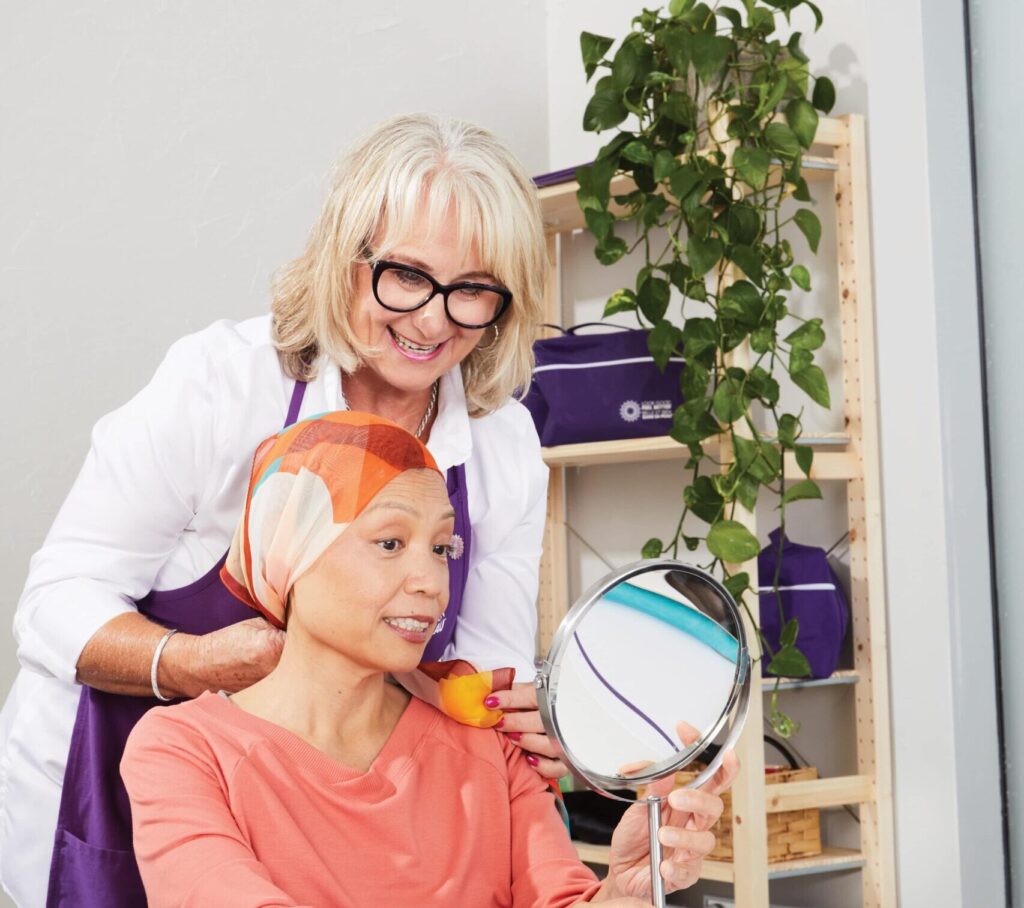
Learn about hair loss and caring for your scalp during treatment, all about wigs, and other hair alternatives, including scarf-tying techniques.
About this Workshop
What you will learn:
Caring for your scalp during and after cancer treatment
What to expect with hair regrowth
Discover all types of head coverings, including wigs
What to consider if selecting a wig
Pros and cons between synthetic and human hair
Easy scarf-tying techniques and more
The information and dialogues are designed to help you:
Manage the physical side effects of cancer treatment with simple, practical guidance
Connect with others who may understand what you are going through
Know what to expect during treatment
Prepare for treatment to help minimize potential side effects
Feel more like yourself
This workshop is available ONLINE and IN-PERSON
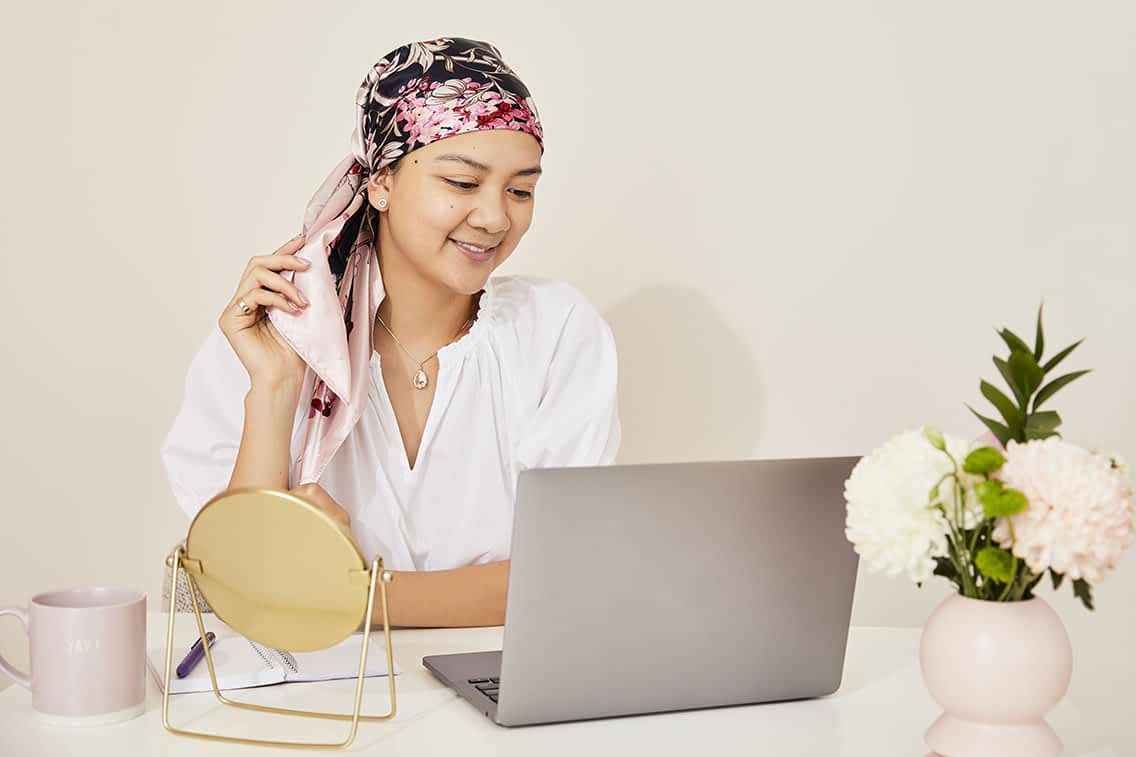
Online
- The ONLINE workshop is ONE HOUR long and is delivered via Zoom.
- Relax and join us from the comfort of your home.
IN-PERSON
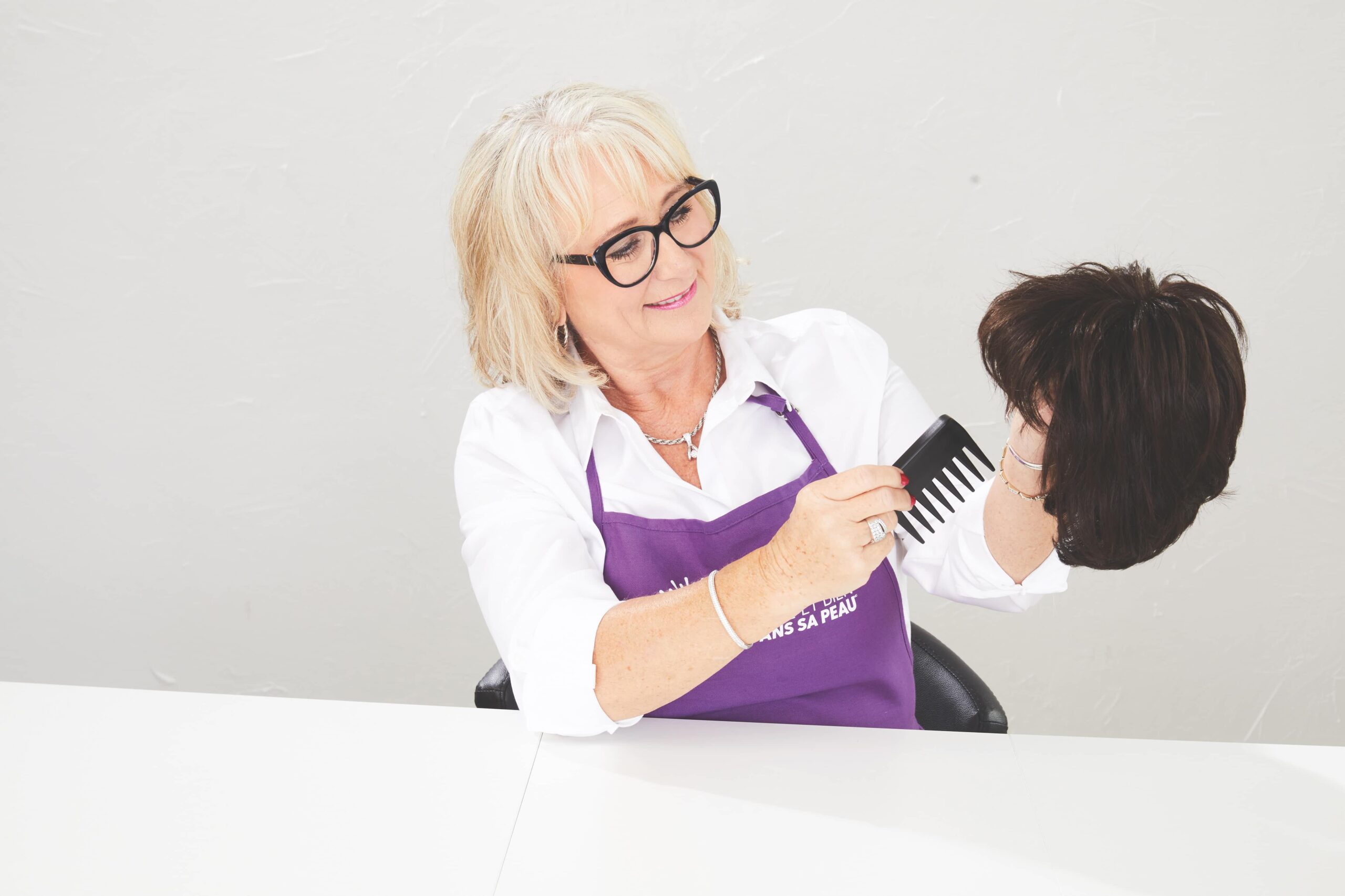
- The IN-PERSON workshop is 2 HOURS long and is called Skincare, Makeup & Hair.
- It combines our Wigs & Scarves and our Skincare & Makeup Workshops into a single 2-hour session.
- The in-person workshop is only available in select locations around Canada.
Who should attend this workshop?
This workshop is available to anyone who is about to start cancer treatment, is currently in treatment or has completed treatment in the last 12 months and would like information about or support around this topic.
What are participants have to say
“The volunteers were excellent and so caring. It’s the first time I’ve laughed in awhile.”
- Workshop Participant
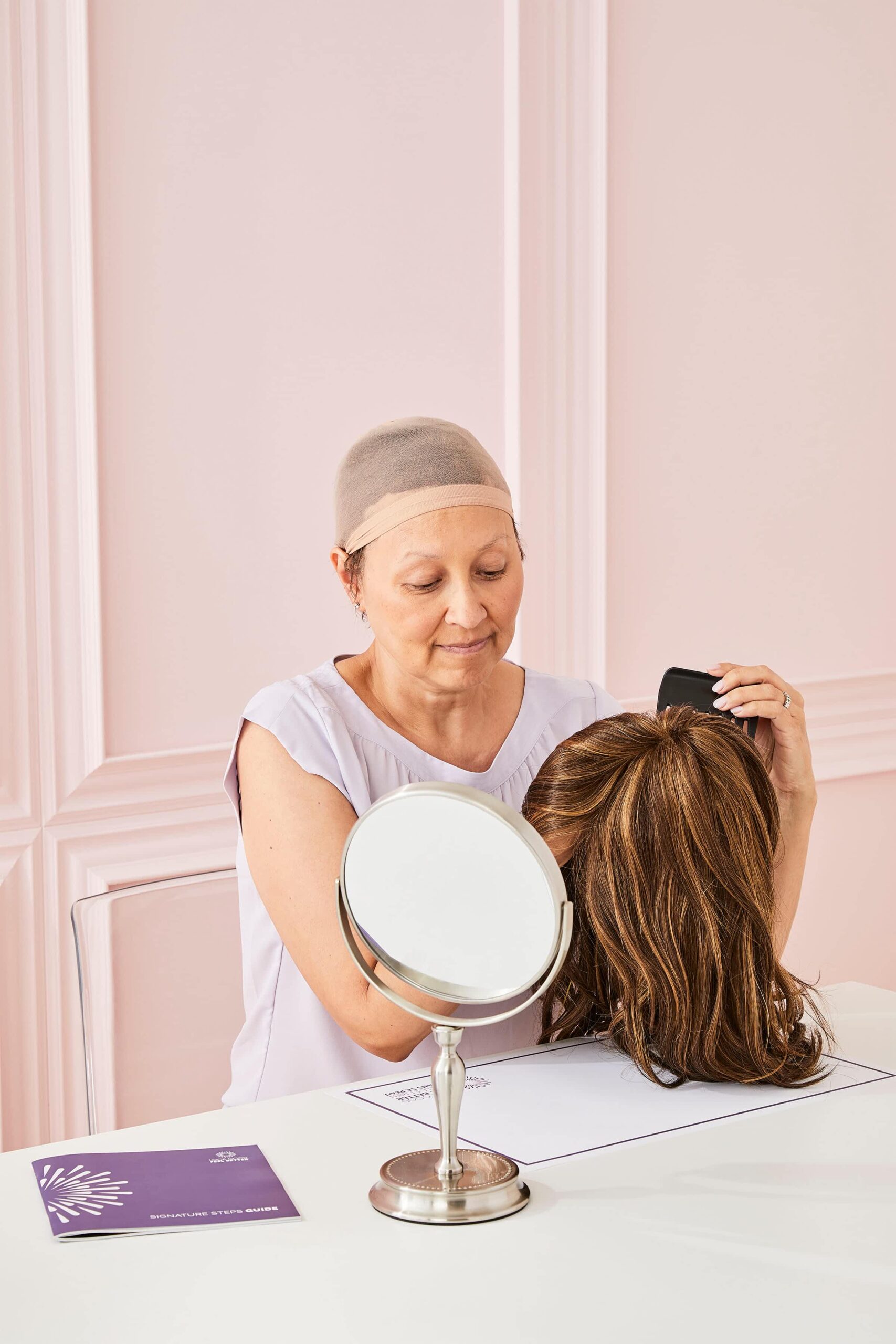
“This workshop exceeded my expectations. It helps to talk to an expert who is positive, fashionable and gives all the tips. One example – I had no idea how a chemo/sleep cap is such an important base layer!”
- Workshop Participant
Let’s navigate this together
Join a community that understands. Receive expert advice, useful resources, and compassionate tips throughout your cancer journey in the LGFB newsletter
Newsletter Form
Some Women Say…
that the loss of their hair is more devastating than their cancer diagnosis. You may feel like your hair is essential to looking and feeling like yourself.
Hair loss is also a visible sign of illness and can impact self-image and self-esteem. You may feel vulnerable and anxious.
Remember… Hair Loss is Temporary!
Prior to Hair Loss
- Depending on your specific treatment protocol, your hair could thin or fall out completely during treatment.
- Your oncology team will be able to inform you when to expect hair loss.
- If you want a wig to match your current hairstyle, colour and texture, consider looking for a wig before starting treatment.
- You can also take pictures of your current hair from all sides and bring those with you when choosing a wig.
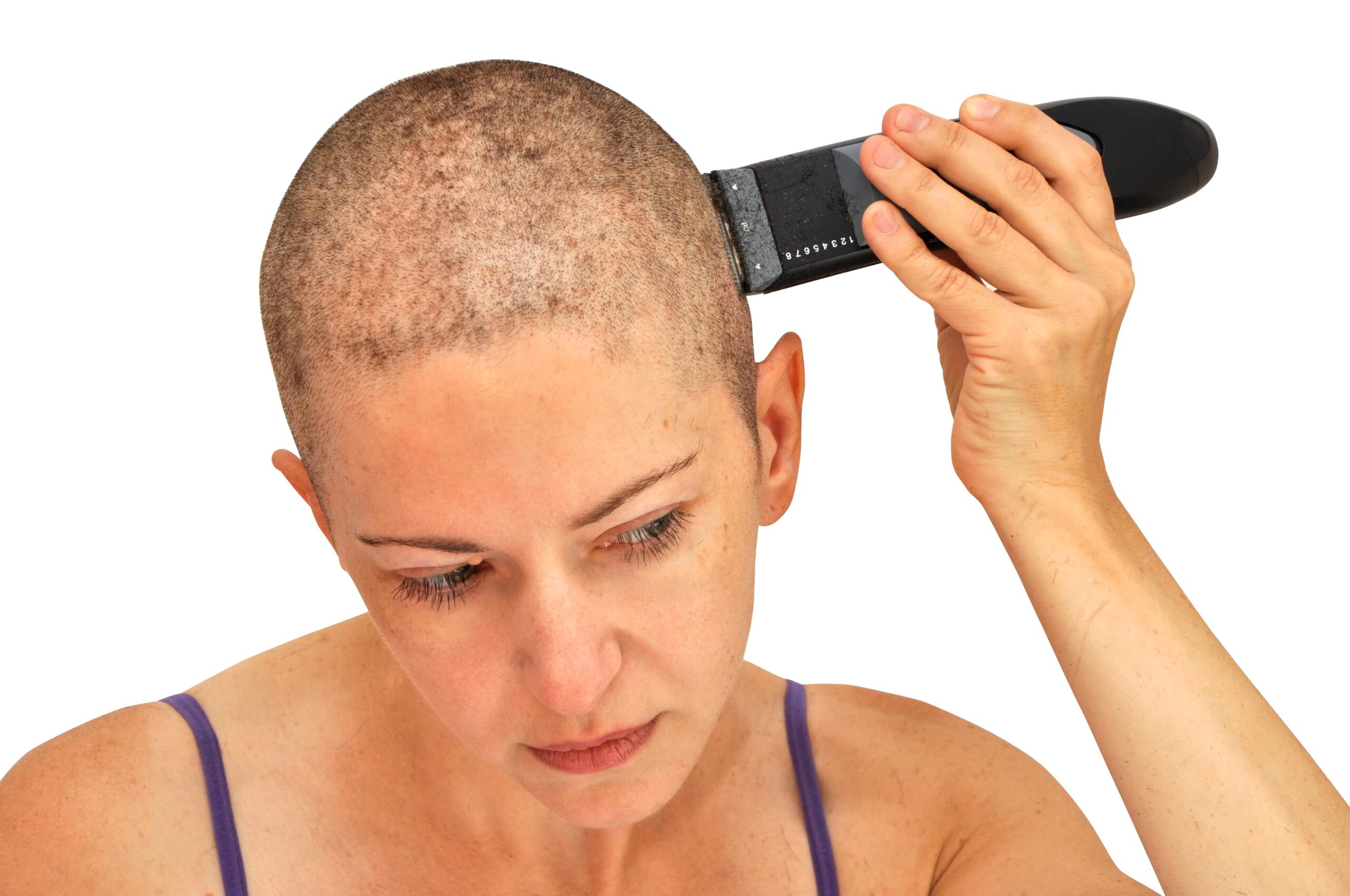
Shaving your head
- Watching hair fall out in clumps can be emotionally distressing. Some people prefer to shave it off before too much hair falls out.
- A very short haircut (e.g. 1/8 of an inch) can help ease scalp sensitivity and ease the emotional distress of seeing hair fall out in clumps.
Thinning Hair
If you notice that your hair is thinning, consider these things:
Don’t colour your hair right now. It may break and make it thin more quickly.
As the texture of your hair will change and may feel brittle, a hydrating shampoo and conditioner will help your hair feel softer.
Consider cutting your hair shorter than you usually wear it. It can help your hair look thicker and make hair loss less noticeable. Also, short hair doesn’t put stress on already weak hair follicles.
If possible, avoid overusing blow dryers, curling irons, hot rollers, hair sprays and any products with an alcohol base.
When sleeping, use a satin-like pillowcase to minimize tugging your hair at the scalp.
Full Hair Loss
- When hair loss starts, your scalp will be very sensitive, and hair will fall out gradually
- This is when you might want to cut your hair to at least 1/8 of an inch
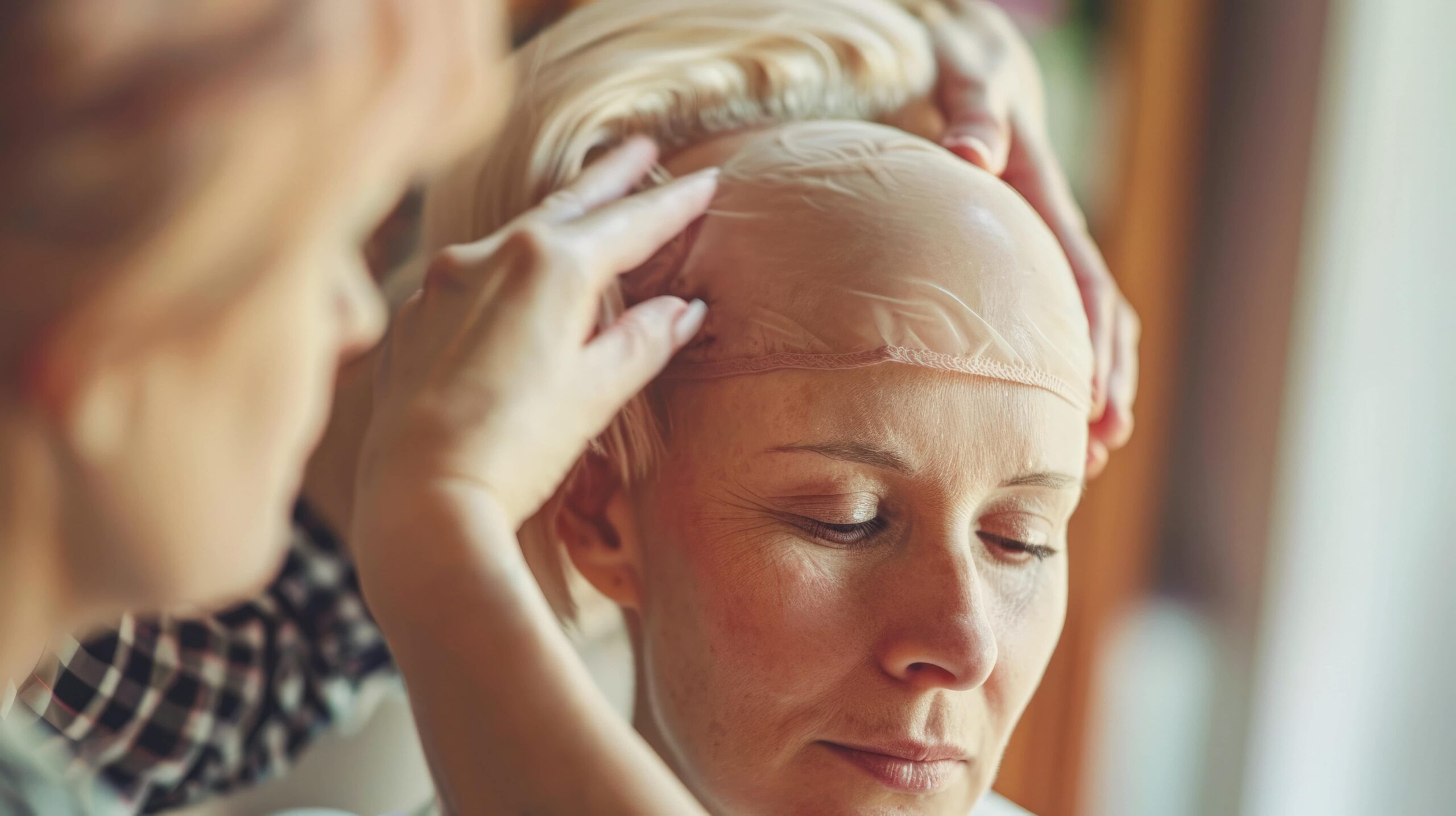
- You also may want to wear a sleep cap during the day and at night to catch your hair
- Consider having two sleep caps – one for day, the other for sleeping
Caring for your Scalp
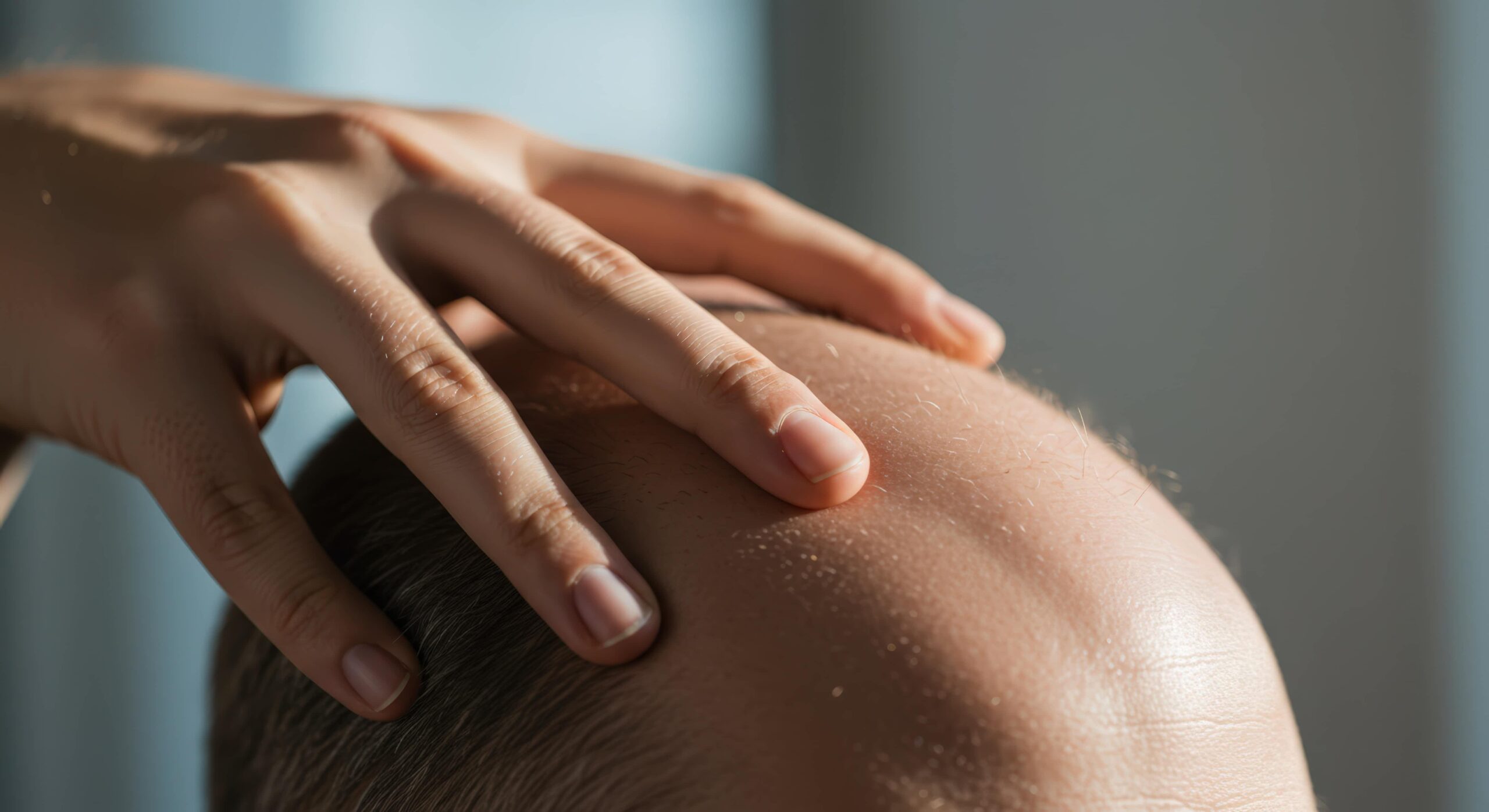
- When you’ve lost your hair, your scalp may become drier
- Gently massage your scalp with your facial moisturizer to make it feel more comfortable and increase circulation to your stressed hair follicles
- Caring for your scalp will greatly reduce sensitivity and itchiness, allowing you to wear a wig, scarf, or hat more comfortably
Let’s navigate this together
Join a community that understands. Receive expert advice, useful resources, and compassionate tips throughout your cancer journey in the LGFB newsletter
Newsletter Form
When I think back to having cancer and going through treatment, a lot of it is a blur. It was almost like a four-month-long out-of-body experience. I was 15 and in grade 10 when I was diagnosed. I was in the culinary arts program at my school in Toronto, which I had wanted to do forever. And so much was already going on in my life. It was a tough year. My dog had recently died, which was really hard for my family, and my grandmother had also had a cancer scare. And, things were hard at school. I’d met someone who turned out to not be a very nice friend, so I stopped hanging out with him and then I found out a few months later that he’d been writing mean stuff about me online. And then he started threatening me and following me around school. He was friends with a lot of my friends and it was hard to get away from him. And I had also just parted ways with my entire friend group, because they were just not nice friends. One of them even told me she had hated me from the moment she met me. That was hard. I’d dealt with a lot that year, and so getting cancer just kind of felt like an extra bonus. It was the cherry on top of some terrible sundae.
Suddenly I was spending pretty much every single day, hours and hours of the day, in doctors’ offices trying to figure everything out. I started failing most of my classes at school because cancer was suddenly taking up most of my time.
I got through it, though. My school supported me with my class work when they heard what was going on. I was able to make some great new friends who were kind and supportive. And I got through my treatment.
Chemo was hard but it wasn’t as bad as movies would make it seem. In some ways it’s true that chemo can be very intense, but it wasn’t as scary as I thought it was going to be. My surgery went really well. Heading into it, my parents were super nervous, but I was just like, “OK cool, I’ll see you guys later!”
My hair did fall out, which was not fun. I had really long curly hair, and I was sad to lose it. And I had a lot of skin problems – sore skin, chemo blisters that turned dark purple on my feet, a lot of sensitivity in my hands, and red marks on my shoulders. Doing a Look Good Feel Better workshop helped me feel a lot better. I loved not just playing with makeup – I love getting to express myself in that way – but also getting to meet other people who had cancer. They told me about their experiences, which was really helpful for me. It made me feel less alone.
That’s all behind me now, and I get to focus on being a teenager and doing what I love. I still enjoy being creative in the kitchen. Baking is my favourite. I’m really good at making chocolate cake – I think I’ve perfected it. I also like to crochet, embroider, sew, and do crafts. I’m glad that this is my life again, and that cancer is in my past.