
The smell of broth is what I remember most about my childhood home. I’m the daughter of Southeast Asian immigrant parents, raised in Montréal. Growing up, health was such a big part of our lives. My mom is really into Chinese medicine and naturopathic health. She would make us broths and herbal teas. We had the kind of healthy lifestyle habits that made illness seem like something that happened to other families, not ours.
When I moved out of my parents’ home, I stopped drinking broth because I never made it myself. But now, at age 38, broth is back in my life. My mom has been bringing me her homemade broths ever since I began treatment for triple-positive breast cancer (ER/PR+ and HER2+).
When I first felt something in my left breast, I thought it might be a clogged milk duct as I’d just finished breastfeeding my son. But when the lump didn’t go away after I finished lactating, I decided to book a mammogram. The doctor insisted that I didn’t need one, that I was too young to worry. I had to advocate for myself – I wanted the peace of mind, and I felt intuitively that something was wrong.
At the time of my diagnosis, so many opportunities were coming my way in life, and I was saying yes to all of them. My career was thriving. I have a wonderful husband and our two boys, Mylo and Theo, the heartbeat of my life, were both in daycare. There was one thing, though – my health was taking a backseat.
What also shocked me was that there was no known history of breast cancer on either side of my family. I have seven aunts, and none of them have cancer. My grandma never had cancer. I thought this meant I’d never get cancer, but I was wrong.
I’ve completed chemotherapy, surgery, and radiation, and I’m now receiving a targeted treatment that combines an antibody with a chemotherapy drug. Even though I’ve come a long way, treatment is still challenging, especially mentally. Every time I sit in that infusion chair, I’m reminded, “Holy crap, I have cancer. I’m still here, receiving treatment for something I never imagined would happen to me.” I’ve had to develop a strong and resilient mindset to keep showing up, even on the hardest days. It’s not just about getting through the physical treatments, but also learning to live with the emotional weight of everything I’ve been through.
Through all this, Look Good Feel Better (LGFB) has been a lifeline. It was so important in helping me regain confidence and find community. I attended the makeup workshop and found it so reassuring. Having a professional teach me how to draw eyebrows was really helpful.
I also met two new friends that day. One was starting treatment a week after me and the other had just finished treatment and was a triple-negative breast cancer survivor. She was as young as me, and Asian – so I saw a bit of myself in her. I’ve kept in touch with both of these women ever since the workshop – just chatting, sharing information, supporting each other.
When I look back on my experience with LGFB, I think about how there was a lot of laughter at that workshop. We often associate cancer with sadness, but there sure was a lot of joy in that room.
These connections have meant a lot to me. Having friends and family checking in on me has been very important as well. And my kids keep me grounded. Thanks to them, I’ve been able to maintain a sense of normalcy. They need me, and they provide a routine.
Cancer has forced me to slow down in ways I never imagined. But along the way, it has also reminded me of the importance of human connection, kindness, and finding joy in unexpected places. What started as a simple makeup workshop became something much more meaningful: a reminder that even during life’s most difficult moments, there is still room for laughter, friendship, and hope.
Getting diagnosed with breast cancer at age 30 was a huge shock. Everything had been going so well. I was a newlywed, living in the heart of Winnipeg with my husband Peyton and our giant rescue dog Bowie and two cats. We loved taking long trail walks and going out to concerts and art shows. I’m an elementary school teacher and I was teaching grades 1 and 2, which are such a fun age to teach. Life was good.
No one in my family has had breast cancer, and it was an even bigger shock to find out that mine was stage 4. Before my diagnosis, I had no idea that there were different types of breast cancer. Mine is HER2-positive, an aggressive but highly treatable form of breast cancer.
One of the hardest things after I learned of my diagnosis was finding someone to connect with. In all the literature I was given, like booklets on advanced breast cancer, all the pictures and information were geared toward people in their 60s or older. We don’t often come across other 30-year-olds with stage 4 breast cancer. Not being able to find someone I could really relate to was challenging.
Going through my treatment plan was a rollercoaster of emotions. It was tough physically, too. The nausea in the beginning had me feeling seasick, and I had bad bone aches. But all my doctors and nurses were so positive and supportive, and they really helped me to stay positive too.
Staying positive was a big theme for me. My husband was a big part of it. During chemo, when I wasn’t feeling well, we’d watch old sitcoms together and laugh as much as we could. We watched The Great British Bake Off and then started baking together. We just tried to keep things light.
In the moments when I wasn’t positive, Peyton would be there to lift me up and remind me that I was going to be okay and that we were in this together. He helped me through some challenging times. He took notes at my doctors’ appointments and reassured me when I was overwhelmed. When I was nauseous from chemo and had no appetite, he got creative in the kitchen, making soup or bao buns to try to get me to eat protein and vitamins.
The Look Good Feel Better workshop helped me to stay positive too. I was okay with losing my hair – I did a super short, fun haircut with the kitchen scissors. But I was really nervous about losing my eyebrows. The workshop had so many great tips. Learning how to do my eyebrows was a huge thing for me. And I finally learned how to do blush properly.
It’s true that when you feel like you look good, you feel better. The makeup tips and tricks I learned gave me the confidence to go out and do things, to be more social and to feel more like myself again. Especially now that I’m done with chemo – I don’t have the side effects anymore, but I also still don’t have hair. Some days I feel really good but when I look in the mirror, my appearance doesn’t match how I feel. It’s almost like a reminder that I’m still going through this – that I’m still sick. I feel good and I want to look that way, too.
I grieve for my old life before my diagnosis and the future that could have been, but I’m very thankful for targeted therapy and that I’ll be able to live and move forward with my supportive husband and my wonderful fur babies. I’m looking forward to trying a pixie cut, travelling to Italy and eating all the pasta, and getting back to “my regular life.” If you’re going through this, stay positive. It’s going to be okay. Enjoy life, and try to smile.
Support groups have always been an important part of my life. I’m a big believer in them. As an extrovert, being around others energizes me and I enjoy hearing people’s stories. And I relish the give-and-take dynamic support groups provide. Sometimes you’re receiving support, and sometimes you’re giving back. This rhythm has long shaped my life.
It started in the early ’90s, with a women’s group I was in. Nearly 35 years later, some of those women are still my dearest friends. This was my first glimpse at how support groups could help me through each stage of life, and help me feel better about what I was going through – less alone, less scared, more educated, and more connected.
The second impactful support group I was part of was the Deaf Moms. I joined because I wanted to figure out the best way to raise and support our deaf son and hearing daughter. It didn’t just serve the parents; it brought our children together. It was a pivotal group in my life.
I consider the wonderful women in my Quilting Guild as another support group of sorts. I joined it when I retired, and it’s become such a big part of my life. I couldn’t have gotten through cancer without my Quilting Guild. One of the quilters, Maureen, would drop off warm buns every Saturday. Another, Janice, brought over pies for my biggest supporter, my husband, when I was going through treatment. So many quilters fed us dozens of meals and became a lifeline during my breast cancer journey. And many of them have been through cancer themselves, so they understood, and many were retired nurses. But they didn’t just feed me physically, they fed me mentally too.
When I found out I had cancer, my first instinct was to look for a support group. I was delighted to discover the Look Good Feel Better (LGFB) workshop, which has been incredibly supportive. It provided some much-needed fun and encouragement while I was going through treatment. Most of my outings during treatment were to doctors’ appointments that left me feeling scared and anxious. How refreshing it was to have a positive, uplifting experience with LGFB. I enjoyed myself, I learned new skills, including eyebrow techniques and concealer application, and I left feeling more like myself again, instead of like Kim who has cancer. Even better, I made a new friend through the workshop.
I’ve recommended LGFB to so many people. It really was a joyful day. There was something really nice about doing a cancer-related activity with other women going through similar experiences that wasn’t scary. We weren’t doing chemo together. We were doing something uplifting, and something that was special, just for cancer patients.
Being in a group and a member of a community is an important part of our humanity. Getting support and also giving support – pulling someone else up after you’ve gone through the process yourself – are so rewarding. Whatever you give, you get back tenfold.
I know that finding a support group can seem daunting, especially if you have cancer and don’t want to see people – it’s not exactly a social time. But I strongly encourage everyone to get out of your comfort zone and to seek community. It’s okay if you’re not an extrovert like me. You don’t have to talk, if you don’t want to, at an LGFB workshop. You can just go and listen. What you could gain by attending could be absolutely enormous. Nothing ventured, nothing gained. Life is better when you have a community. Together, we can get through the hard times, celebrate the good times, and share what we’ve learned along the way.
Right before my breast cancer diagnosis, I was in probably the best shape of my life. I couldn’t believe this happened. The people around me were shocked too. They were like, “Are you kidding me? You’re one of the healthiest people I know. How did this happen to you?” Who knows? We take all these steps to lead a healthy life, but there’s no rhyme or reason when it comes to cancer. Cancer is very mysterious. It lives within us.
I was hoping I’d only need surgery, but the tumour was larger than expected, and I ended up needing chemo too. I thought it was going to cause me a lot of harm. I was devastated and wished there was a better way. But I put all my trust in the doctors to do what was right for me, and I’m glad I did. I never googled anything because I didn’t want to find wrong information online, and I politely said “thanks but no thanks” to all the well-meaning people offering me unsolicited advice. I didn’t want fear-mongering, I didn’t want to hear about alternative treatments or the dangers of X-rays. I trusted my health care team and both the surgery and chemo went better than I could have ever dreamed.
I’ve been an elementary school teacher for 25 years, so I’m used to having a lot of structure in my life. I live by the bell. Being stuck at home while I was undergoing chemotherapy, with nowhere to be, was one of the hardest parts.
Having a good mindset and a routine – that sense of structure – really helped. I stayed positive, I kept moving forward. Family support and community connection were also huge parts of my healing. When my hair started falling out, one of my teenage sons shaved both my head and his own. We were both fully bald. That felt good, to do it together. My other son eventually shaved his, too. He had shoulder-length, wavy, surfer-style blonde hair, and off it all went. It was a big deal for him, and it felt monumental. He joined our little cancer solidarity group– and it meant the world to me. My caregiver circle also included Carly, who I used to mentor through the Big Brothers Big Sisters program. She came all the way from England to support and advocate for me. My sister Marty and my close friend Janet also offered help and companionship.
The Look Good Feel Better (LGFB) workshop was part of my healing, too. There’s something about this “look” of cancer that felt impossible to escape. I could get away with my fake hair and a hat, but without eyebrows or eyelashes I just didn’t feel like myself, and my pale skin wasn’t helping either. It was making me avoid social interactions. I felt that people were uncomfortable around me – they didn’t know where to look or what to say. I signed up for LGFB thinking I’d learn how to paint on eyebrows. And I never quite mastered the eyebrows, but that workshop gave me such a positive vibe, with a long-lasting impact. All the women were laughing and sharing and listening. It was uplifting.
After my treatments, I also received support through a variety of programs. In addition to LGFB, I participated in expressive art, yoga, and mindfulness programs. Every form of support helped me in ways that I can’t explain.
This season of life won’t last forever. Soon my hair will grow back, I’ll be in the classroom again, and I’ll feel like myself. I’m still keeping myself busy at home – watching classic movies, rearranging my furniture, doing puzzles, making bone broth. I’m staying active – kayaking, biking, gardening, and participating in a 12-week fitness study for cancer patients through the University of Calgary. I’m waiting for a sense of normalcy to resume. And I’m getting to know the new me. I’m way more relaxed now and more accepting of what the world presents us with. I’ve come to understand that there is learning and growth in every experience, even if it can be hard to recognize at the beginning.
Tips for “the village” of caregivers
In many families, one person — often a spouse, child, or sibling who lives nearby — takes on most of the everyday responsibilities of caring for someone with cancer. But friends, neighbours, and co-workers can also play a vital role in supporting both the person with cancer and their primary caregiver.
Practical Support
As you spend time with your friend and see how cancer is shaping their daily life, you’ll discover meaningful ways to help. Here are some places to begin:
Stay in touch. Send short, frequent texts or emails, or make quick calls at times that work for them. Setting a regular check-in can take the pressure off them to reach out.
Support the primary caregiver too. Ask what they need. Offer to take one or two regular tasks off their plate, or simply listen without judgment.
Show up. Cancer can feel isolating. Even a short visit matters, whether or not your loved one feels like talking. Your role is to be present without pressure.
Be specific. Instead of saying “Let me know what I can do,” offer concrete help and follow through — a weekly meal, grocery run, school pickup, or light housework. Small, consistent contributions add up.
Compassionate Conversation
Many people worry about “saying the wrong thing.” What matters most is showing up, listening, and meeting your loved one where they are.
Let them lead. If they’re withdrawn or quiet, don’t push them to be positive. If they’ve had good news, check how they feel before celebrating.
Offer grace. Treatments, side effects, and fatigue can impact mood. Don’t take irritability or withdrawal personally — it’s often a normal part of coping.
Talk openly — but not only about cancer. Acknowledge their illness when it feels right, but remember they may also want to chat about everyday topics or weigh in on what’s happening in your life.
Offer quiet presence. If they’re comfortable, sitting beside them or holding their hand can be more powerful than words.
Let’s navigate this together
Join a community that understands. Receive expert advice, useful resources, and compassionate tips throughout your cancer journey in the LGFB newsletter.
Newsletter Form
“When my mom was diagnosed with cancer, we both took on new roles. It wasn’t always perfect, but caring for her helped me bring our love full circle. And, it demonstrated to my kids that none of us can take on anything alone. We were all in this together. The Look Good Feel Better workshops brought her a lot of joy and support. They also showed me real, tangible ways family and friends could help.”
Chelsea W., Caregiver of Workshop Participant
Talking to Kids About Cancer Workshop
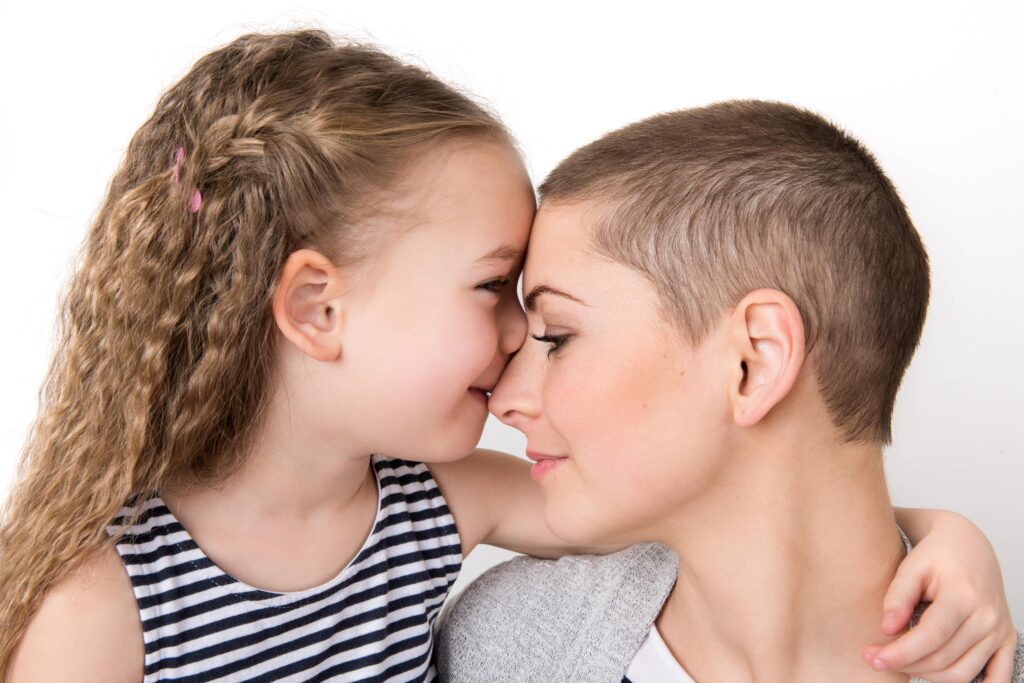
Talking to kids about cancer requires sensitivity and care. These conversations can feel overwhelming, but with the right approach, you can help children understand and cope in age-appropriate ways.
About this workshop
What you will learn:
Practical, age‑appropriate strategies to help you face tough conversations with confidence
How to share medical information clearly—what cancer is, why it happens, and what to expect—while creating a safe space for kids to ask questions, share feelings, and avoid misconceptions
Navigate Emotional Responses and the “Six Cs”
Understand how children at different developmental stages may react—whether preschoolers, school‑age kids , or teens —and how you can tailor your approach accordingly.
You’ll learn real phrases and tools to foster trust and emotional resilience.
What is cancer?
Did I cause it?
Will I catch it?
Who will care for me?
Can I be cured?
How do I stay connected?
This workshop is available Online
Join us!
- It is led by a NanKind Child-Life Specialist and delivered over Zoom. It is an hour and 15 minutes long.
- French translation is offered for French speakers.
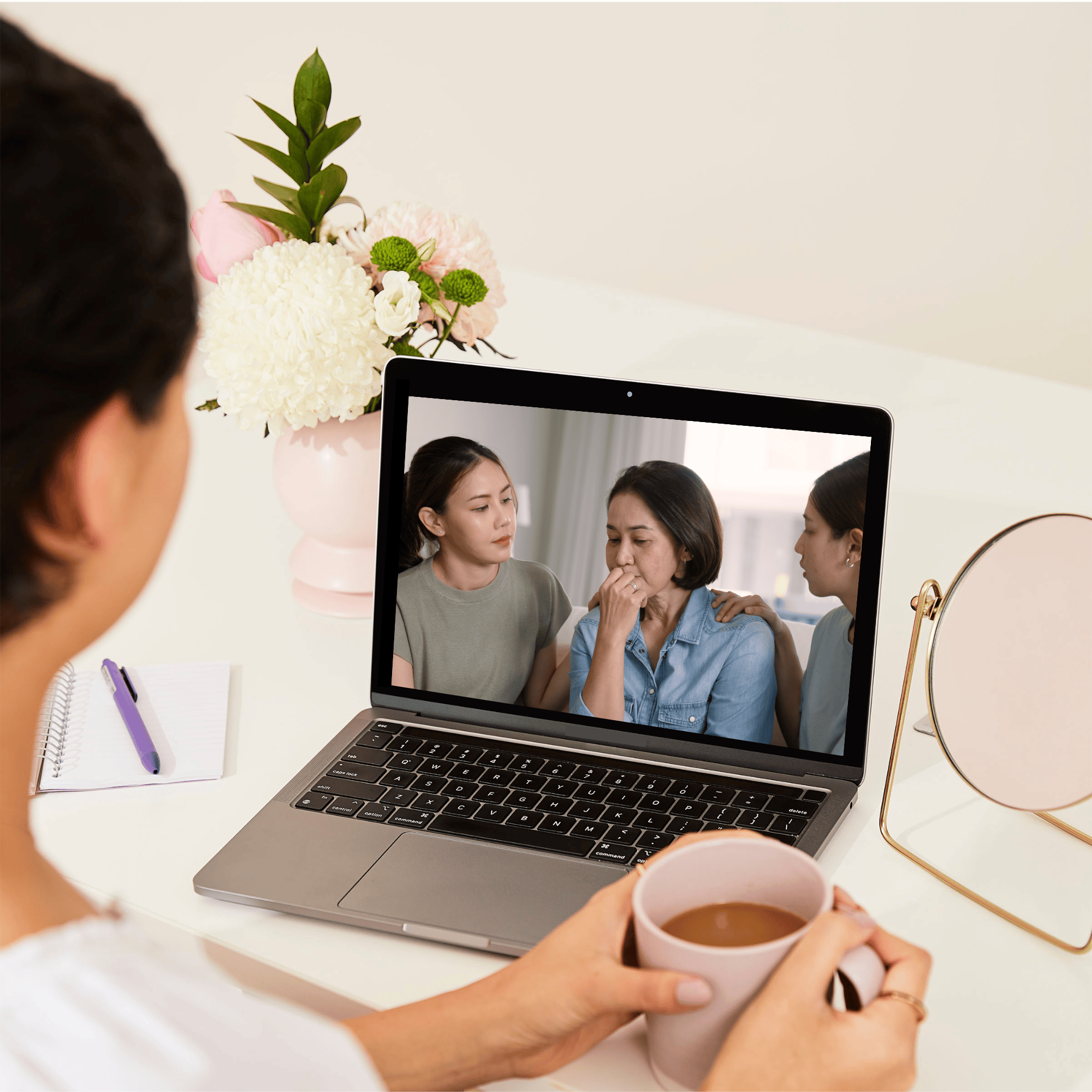
Who should attend this workshop?
- This workshop is ideal for parents, teachers, caregivers, coaches, or anyone who supports children emotionally – giving you the tools needed to approach these vital conversations with empathy and clarity.
Let’s navigate this together
Join a community that understands. Receive expert advice, useful resources, and compassionate tips throughout your cancer journey in the LGFB newsletter.
Newsletter Form
Working as an oncology nurse has been my dream for so long. Losing my mom to breast cancer definitely influenced my decision to work in oncology and my desire to help people. It’s incredibly rewarding. But one thing’s for sure – I never expected to be on the other side of the diagnosis, facing cancer myself.
I especially didn’t expect it at just 30 years old – and 24 weeks pregnant with my first child. My mom passed away when I was only two years old, and to suddenly get the same diagnosis while I was on the verge of becoming a mom myself was beyond terrifying. I practically blacked out when I heard the news. I kept thinking, “What? I’m pregnant. This isn’t supposed to happen.” It was quite the curveball, to say the least.
While it was the most difficult news to receive, I’m so grateful they caught it early. I’m thankful that there were chemo medications I could take that were safe for my unborn son. I have the most phenomenal doctors and nurses – my colleagues in the cancer centre in Sudbury, Ontario, became my caregivers overnight. I have a wonderful support team through my husband, Ryan, and my step-mom, who I really think of as my mom, as she’s been a mother to me my whole life. She has been my rock. And this whole ordeal has given me a completely new perspective on facing cancer, despite the fact that I’ve cared for cancer patients for seven years now.
For example, although I supported cancer patients in their journeys everyday as a nurse, I underestimated the mental and emotional toll that cancer treatment would have on me. For one, losing my hair was so tough. I had always been like, “Oh, it’s just hair, it’ll grow back.” But it’s not just hair. It was part of me and my self-esteem and how I presented myself to the world.
I already knew about Look Good Feel Better (LGFB) through my work in the chemo room, and it became such a valuable resource for me. I signed up for a workshop right away, and boy, was it ever awesome. As a nurse, I had often heard about the impact of LGFB but experiencing it firsthand was completely different. Like losing my hair, I didn’t fully grasp how much it would mean to me until I was living it.
I took my mom to the workshop as my support person, and it was so good for the soul. I learned some great hair and makeup tips, but more than that, it gave me a powerful sense of hope. It helped me reclaim my self-esteem and made the scary experience I was going through feel a whole lot less scary. I loved connecting with other women who were going through what I was going through. Having cancer can feel so lonely – I had all the support in the world, but people didn’t really understand what I was going through, because, well, they didn’t have the diagnosis. Being able to share my experience with the women in the workshop was really special.
I’m so grateful that LGFB exists, and that my future patients will have the opportunity to attend the workshops. And now, I can speak to the experience personally. When I’m able to go back to work, I know I’ll be able to connect with and support my patients on a whole new level.
My son, Matthew, has arrived, and things feel so much better now. A lot of the anxiety and fear of the unknown that I experienced – about cancer, about being a first-time mom – have faded. This journey has given me a deeper understanding of resilience, both for myself and my patients.
I thought I had moved on. I thought that my cancer journey was behind me — far in the past. When a routine mammogram led to a new breast cancer diagnosis in 2023, it was a complete shock. My cancer had recurred after 13 years.
At first, I beat myself up over the diagnosis. I thought I had been doing everything right — eating well, working out, taking care of myself. “What did I do wrong?” I wondered. “How could this have happened?” I started to doubt my every move, every bite that I put in my mouth. My self-confidence declined. But I quickly realized that blaming myself wasn’t going to help. I had to act. I needed to take back control.
This time, I chose a double mastectomy with reconstruction. It felt like the safest option — I didn’t want to rely on mammograms anymore. And although I was reluctant to undergo chemo again after my painful first experience, I knew it was necessary. Thankfully, the treatment was a little easier this time. I received a new scalp cooling treatment that helped prevent hair loss, which made a huge difference for me emotionally. Though the chemo still brought its challenges — nausea, fatigue, and rashes — keeping some of my hair helped me feel like I hadn’t completely lost myself to the disease. Scalp cooling was a new innovation that hadn’t been available to me the first time around, so I was grateful for the opportunity to try it out.
Building a support system was also a priority for me. I’m from Mauritius, a tropical island off the coast of South Africa, and most of my family is still there, so I had to create my own network here. I discovered Look Good Feel Better (LGFB), and attending their workshop made a huge difference. My “look” is very important for me, and it was comforting to feel pampered and cared for, especially after all the blows and bad news I’d been receiving. The workshop helped me to regain confidence and connected me to a group of women who understood exactly what I was going through.
I also started a walking group for cancer patients and later joined a dragon boat group for breast cancer survivors. Looking at the strength of these paddlers made me feel strong, too. If they can do it, so can I. It was encouraging. After my first cancer experience, I was eager to move on and forget about it. But now, I realize there’s power in staying connected with the cancer community and with other survivors. I’m a two-time survivor. This is my life and my reality, and I accept it now.
This time, my son also played a bigger role in my recovery. He was just a toddler the first time I had cancer, but now, as a teenager, he became part of my support system. He loves photography, and whenever I did my makeup, he’d take photos of me and edit them. It made me feel good about myself and it became our bonding time, and those photos now hold a special place in my heart.
Today, I cherish every moment with my husband and son. We cook, go for walks, shop, watch movies — those little everyday moments mean everything to me now. I’m grateful for each day and, rather than cry about what happened to me or worry about the future, I choose to live in the present. Cancer may be part of my story, but it doesn’t define who I am.
When my doctor told me I needed to fast-track fertility treatments if I wanted to have more children in the future, I was overwhelmed with emotion. I was 33 and suddenly the option of having more children — the spontaneity, the joy of it — wasn’t mine anymore. I didn’t want to tell my partner, who didn’t have any children of his own yet. I felt like I was robbing him of an experience he might have naturally had with someone else, someone who wasn’t going through breast cancer. It made me feel flawed, as though something was wrong with me.
Eventually I did tell my partner, and he was very supportive. He accompanied me to my treatments. But opening up about my diagnosis was hard. In Caribbean culture, especially among the older generation, people tend to be very private about their health. When I found out I had cancer, I wanted to keep the news to myself — even from my partner, family, and friends. But as things progressed, I realized I couldn’t do it alone.
I’d had a lumpectomy years ago, for a benign lump, which I had kept secret. I thought I could do the same this time — have a bit of chemo and downtime and then go back to my regular life and work as a nurse, with no one the wiser. I didn’t want my mother to worry. “Here we go again,” I said to myself. “I can do this.” But this time was different. I didn’t realize how much my treatment would break me down physically. Suddenly, I couldn’t even walk to the bathroom or wash my face on my own. I told my family and they stepped in to help.
My sister was an absolute godsend. She moved in and helped with all the day-to-day stuff — laundry, groceries. But most importantly, she really helped with my 10-year-old daughter. She took her to the movies, did her nails, and took her to her dance lessons and recitals, making sure her life wouldn’t be completely turned upside down.
I had trouble breaking things down and explaining what was going on to my daughter. Kids learn about cancer at school through Terry Fox, so naturally she asked if I was going to die like he did. I couldn’t answer her questions without falling apart, so having my sister there — and also getting my daughter into a children’s support group — was essential.
My treatment — chemo, a mastectomy, radiation, and IV therapy — took everything from me physically, mentally, and emotionally. I felt like cancer had stripped me bare, leaving me with no say, no control, nothing.
And then I was introduced to Look Good Feel Better (LGFB). Honestly, I wasn’t going to go. I was feeling awful and I didn’t want to socialize. I was very closed off and isolated. But I put my fear aside and attended the workshop, and I’m so grateful I did. The air felt so loveable when I got there — so welcoming, inviting, uplifting, and warm. It ended up being the most amazing experience. Everyone was talking and joking around, being so supportive. I didn’t expect to feel beautiful when I walked out. LGFB is like a sisterhood. When I was feeling broken and bare, it lifted me up and helped me to feel loved.
Today, I’m getting used to a new normal. I’ve had to accept that I’m never going to feel the way I did before cancer. But I’ve also realized that it’s okay to lean on others and to find strength in sisterhood.