
Skincare, Makeup, & Hair Workshop
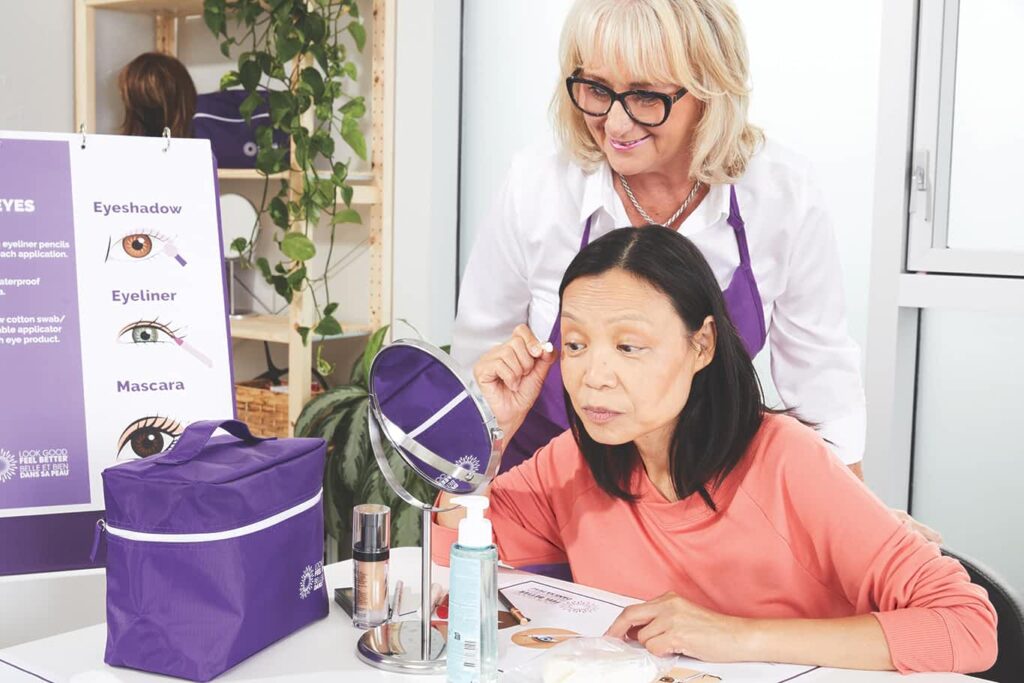
Discover practical ways to manage the physical side effects of cancer treatment on your skin, hair, and face, including skincare, makeup, hair loss, wigs and other head coverings. Connect with a community who gets it.
About this workshop
What you will learn:
Counteract side effects such as discolouration and dry skin
Practice simple makeup steps to add colour back to your face
Makeup hygiene and sun safety
Find tips and techniques for managing the loss of brows and lashes
Caring for your scalp during and after treatment
What to consider if selecting a wig
All types of head coverings including wigs
Pros and cons between synthetic and human hair wigs
The information and dialogues are designed to help you:
Manage the physical side effects of cancer treatment with clear, practical guidance
Connect with others who may understand what you are going through
Understand what to expect during treatment
Prepare for treatment to help minimize potential side effects
Feel more like yourself again
This workshop is available IN-PERSON.
IN-PERSON
- The IN-PERSON workshop is 2 hours long.
- Called Skincare, Makeup & Hair, it combines both our Skincare & Makeup and our Wigs & Hair Alternatives workshops.
- In-person workshops are only available in select locations around Canada.
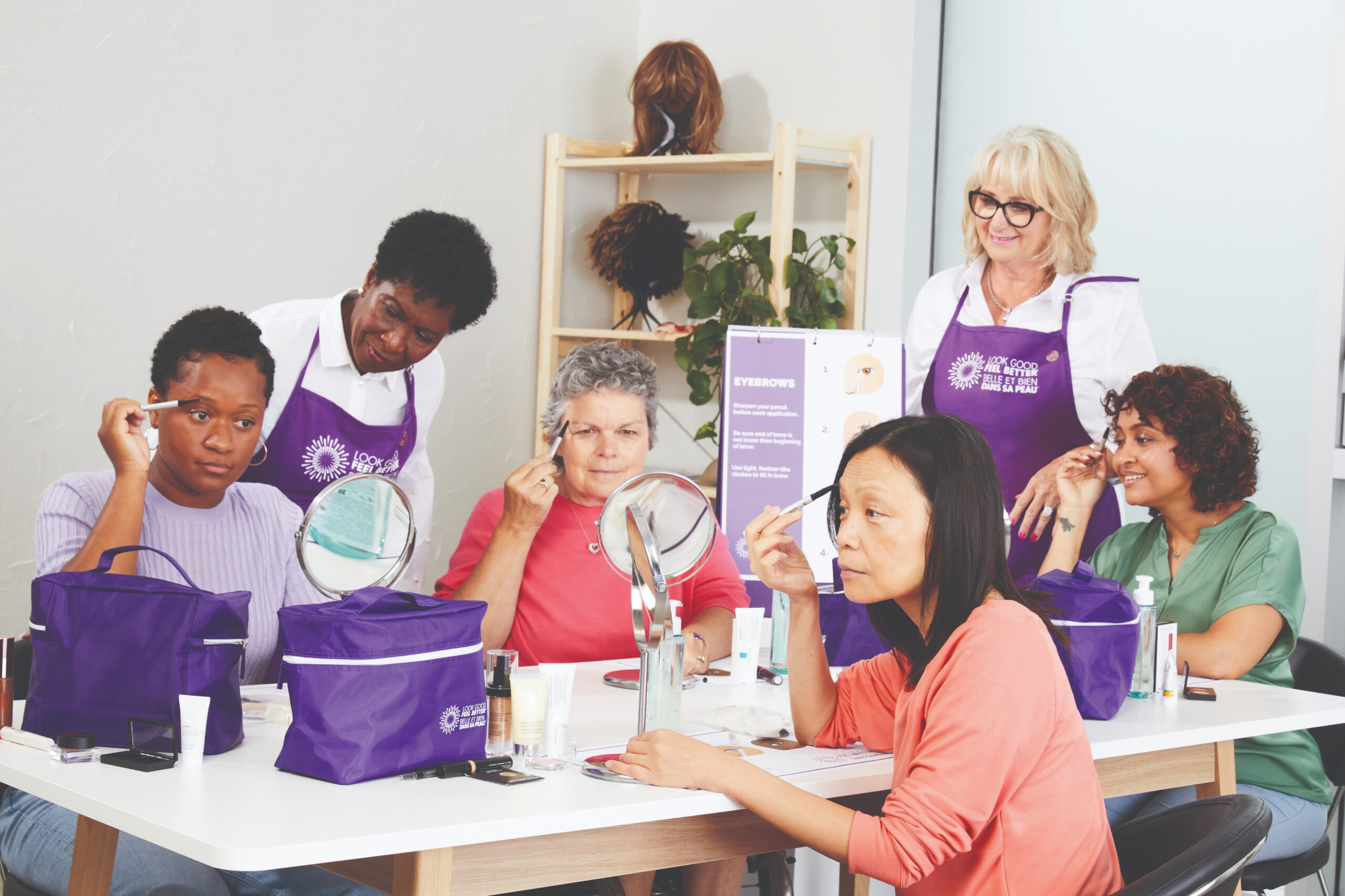
Who should attend this workshop?
This workshop is available to anyone who is about to start cancer treatment, is currently in treatment, or has completed treatment in the last 12 months and would like information about or support around this topic.
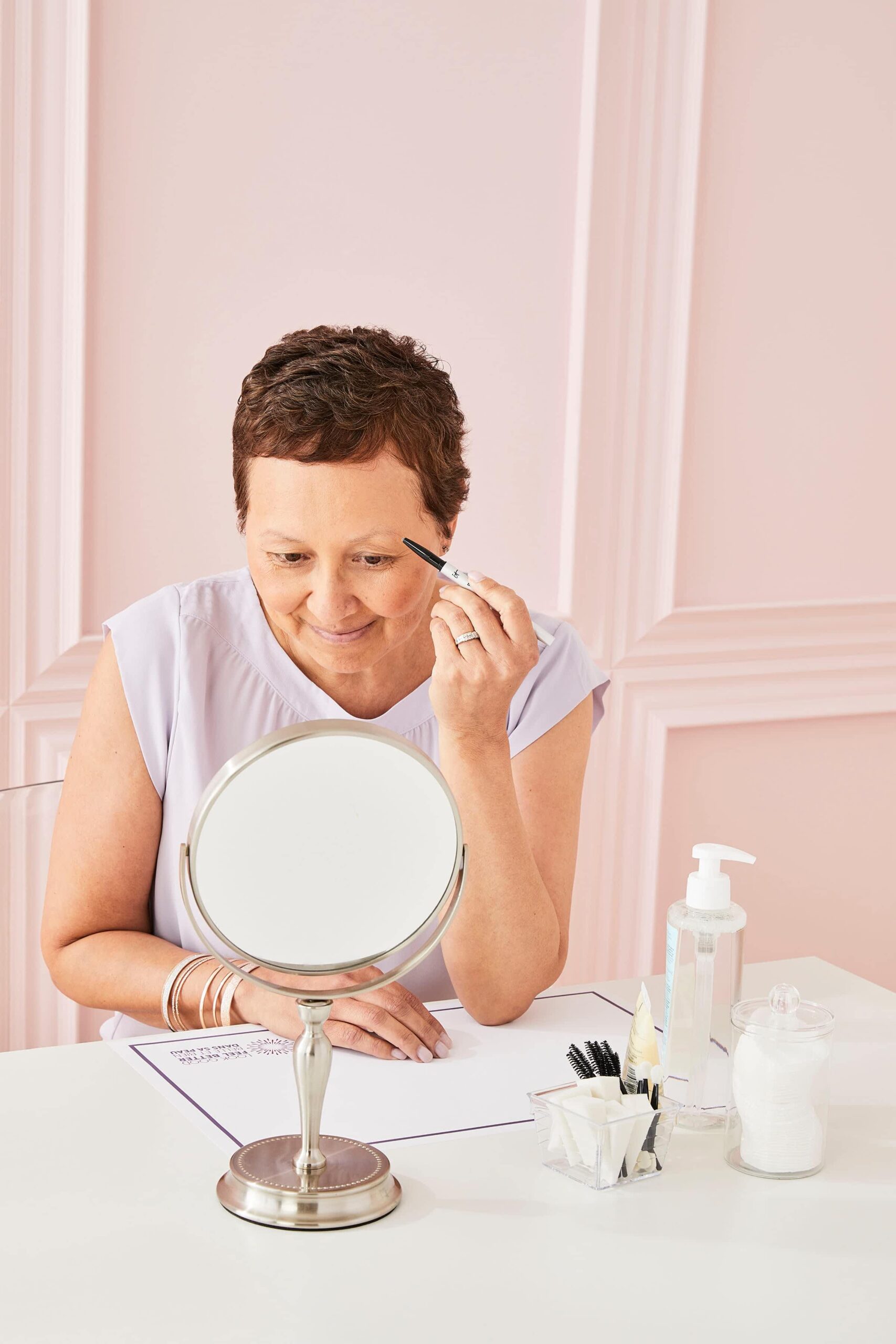
The Confidence Kit
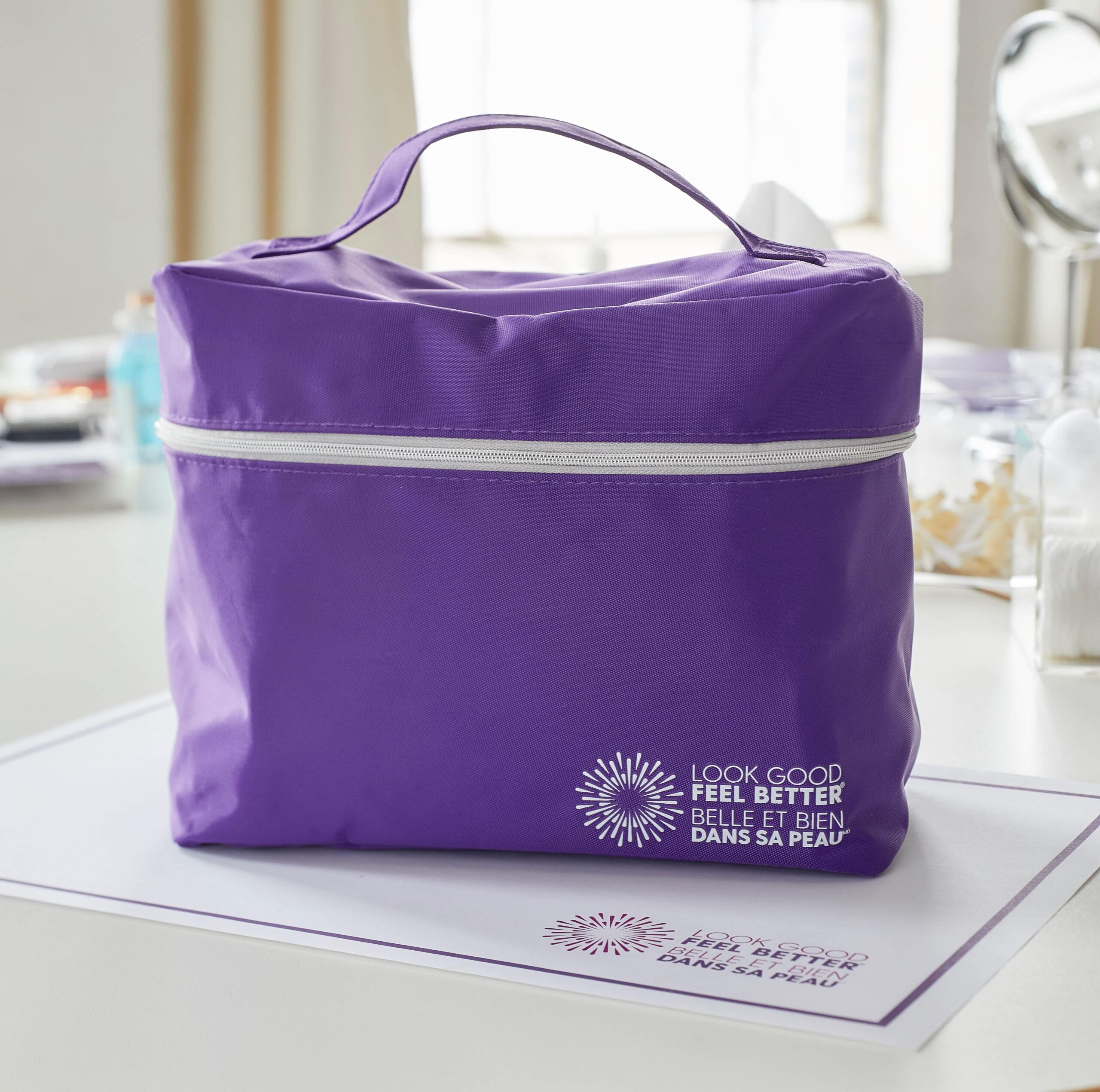
Participants in the Skincare & Cosmetics workshop receive a free kit of skincare and makeup products.
These products are generously donated to Look Good Feel Better and meet the regulations set forth by Health Canada.
These products are for educational purposes, so you may practice the techniques explained in the workshop.
- You will receive the kit in the workshop.
What Our Participants Have to Say
“This workshop was so useful because it wasn’t just information. It ‘normalized’ the techniques to cope with cancer & treatment related challenges to appearance. Yes, wear makeup and take care of your skin not just in spite of cancer and treatments but here is how to do it well and safely!”
- Joan L., Workshop Participant
“The volunteers were excellent and so caring. It’s the first time I’ve laughed in awhile.”
- Joan M., Workshop Participant
Participating in our workshops
97%
of Workshop Participants
would recommend our workshops to another person facing cancer.
32%
of Our Participants
feel somewhat confident BEFORE our workshops.
89.1%
of Our Participants
reported feeling somewhat confident or confident about their appearance AFTER our workshops.
Let’s navigate this together
Join a community that understands. Receive expert advice, useful resources, and compassionate tips throughout your cancer journey in the LGFB newsletter.
Newsletter Form
Wigs & Scarves Workshop
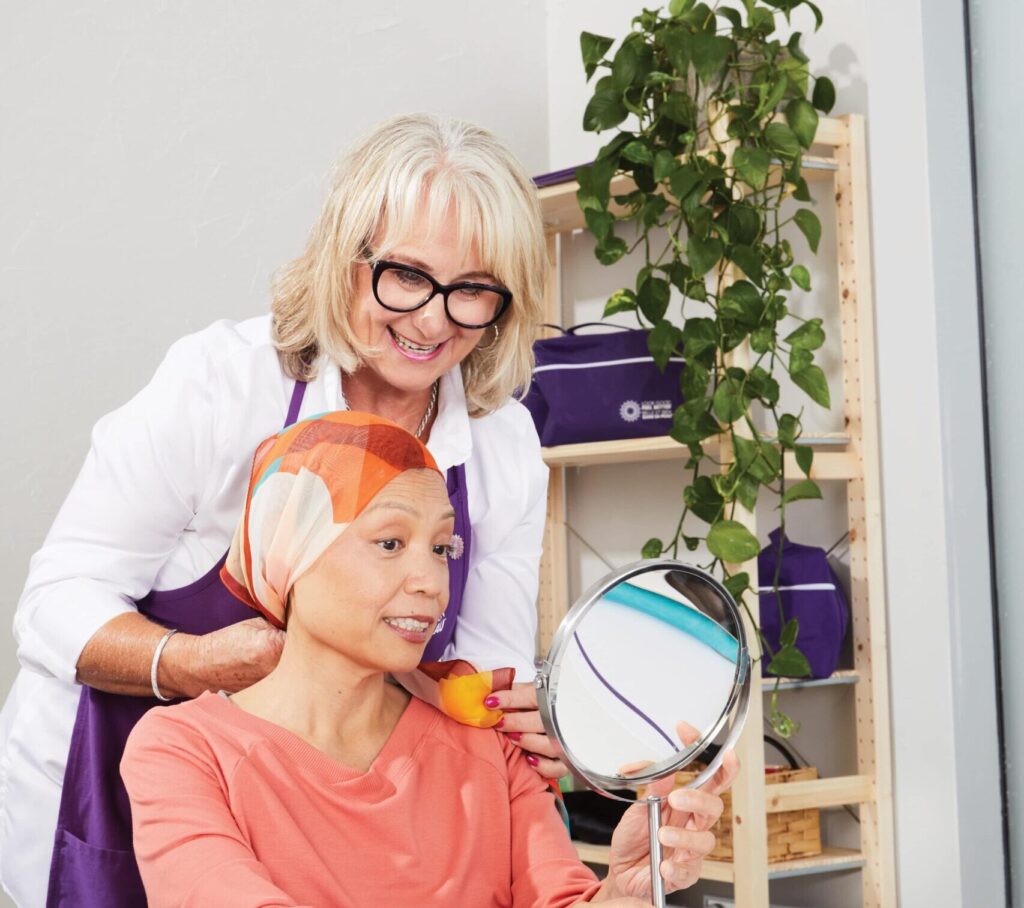
Losing your hair during cancer treatment can be emotional and overwhelming. Learn about what to expect with hair loss, how to care for your scalp during and after treatment, all about wigs and other hair alternatives, including scarf-tying techniques.
About this Workshop
What you will learn:
Caring for your scalp during and after cancer treatment
What to expect with hair regrowth
Discover all types of head coverings and hair alternatives, including wigs
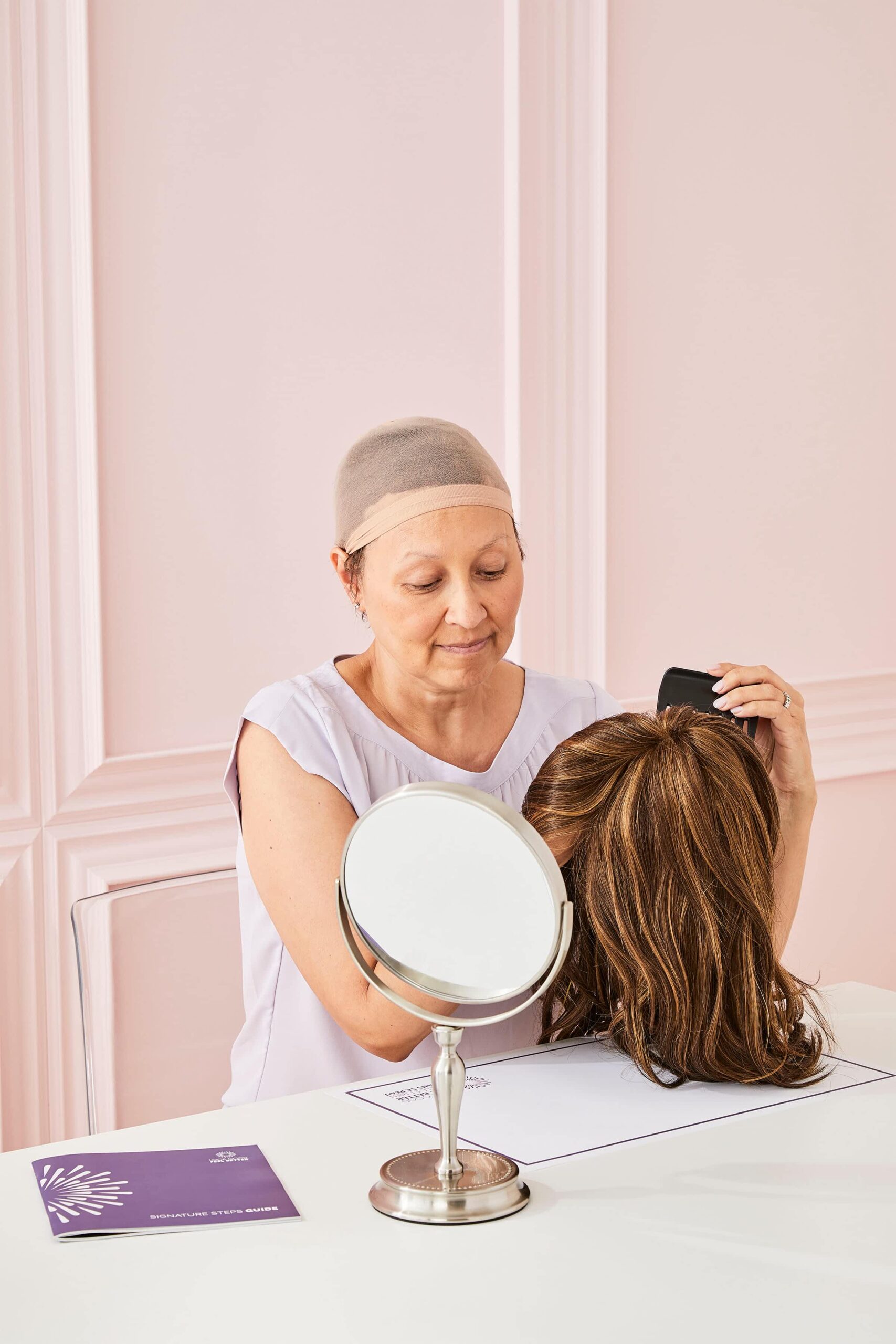
What to consider if selecting a wig, including how to take care of and style them
Pros and cons between synthetic and human hair wigs
Easy scarf-tying techniques and more
The information and dialogues are designed to help you:
Manage the physical side effects of cancer treatment (including hair loss) with simple, practical guidance
Connect with others who may understand what you are going through
Know what to expect during treatment
Prepare for treatment to help minimize potential side effects
Feel more like yourself
This workshop is available ONLINE and IN-PERSON
Online Workshop
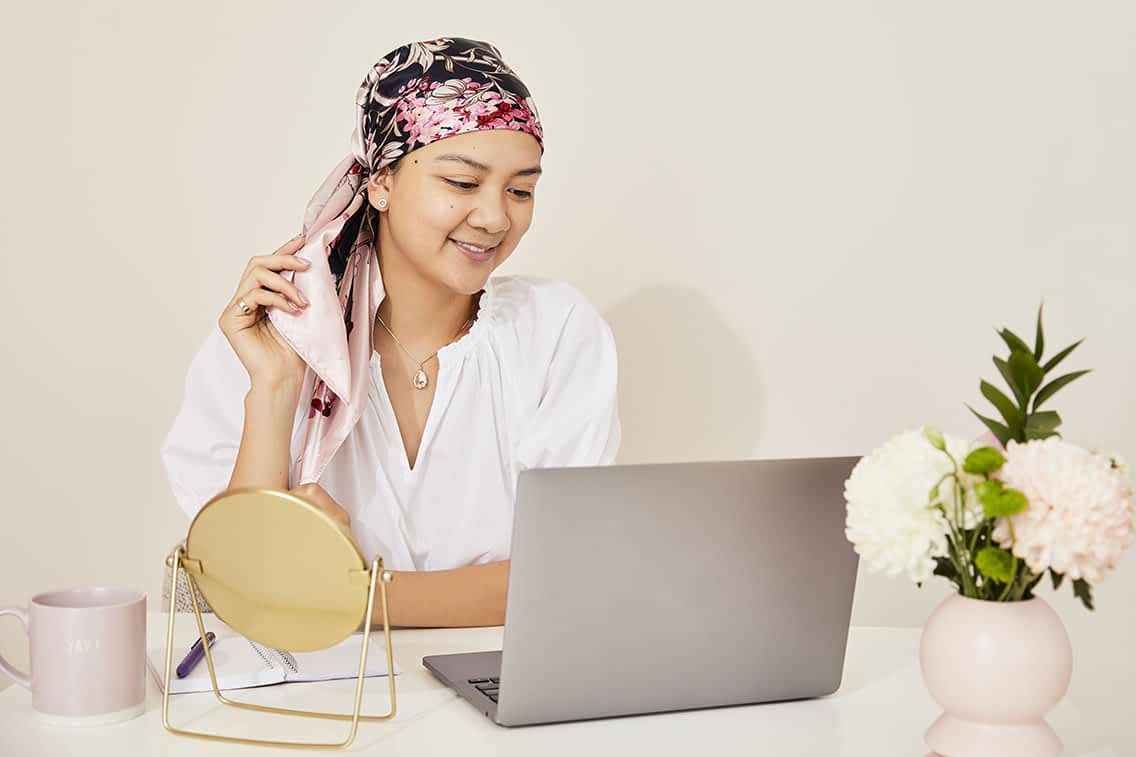
- The ONLINE workshop is ONE HOUR long and is delivered via Zoom.
- Relax and join us from the comfort of your home.
In-person Workshop
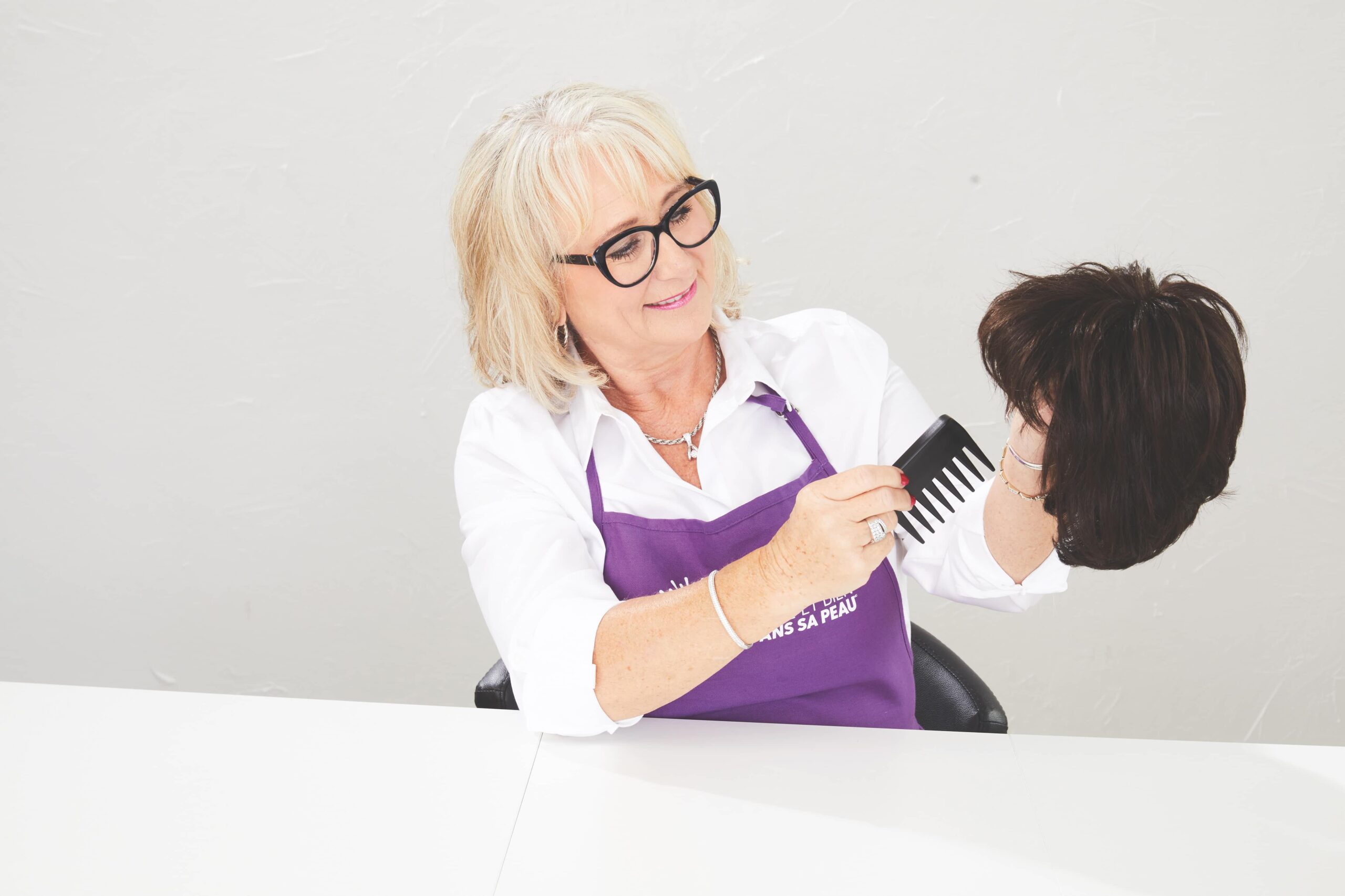
- The IN-PERSON workshop is 2 HOURS long and is called Skincare, Makeup & Hair.
- It combines our Wigs & Scarves and our Skincare & Makeup Workshops into a single 2-hour session.
- The in-person workshop is only available in select locations around Canada.
Who should attend this workshop?
This workshop is available to anyone who is about to start cancer treatment, is currently in treatment or has completed treatment in the last 12 months and would like information about or support around hair loss, wigs, and other hair alternatives.
What are participants have to say
“The volunteers were excellent and so caring. It’s the first time I’ve laughed in awhile.”
- Workshop Participant
“This workshop exceeded my expectations. It helps to talk to an expert who is positive, fashionable and gives all the tips. One example – I had no idea how a chemo/sleep cap is such an important base layer!”
- Workshop Participant
Ready to Register for the Wigs & Scarves workshop?
Find the right one for you!
Let’s navigate this together
Join a community that understands. Receive expert advice, useful resources, and compassionate tips throughout your cancer journey in the LGFB newsletter.
Newsletter Form
By Adriana Lombardo
Let me be blunt with you. These past few months have been crap – to put it politely.
Only now is it hitting me: Survivor’s Guilt.
Why did I survive a deadly disease while I had to bury people I’ve met along the way?
Why am I finding it so difficult to move forward with my life without feeling extremely guilty?
This sucks!
I knew this feeling may come. I’d heard of survivor’s guilt and was aware of the emotions I had yet to face, but to be honest with you, I had started living and actually enjoying life without having to worry about appointments, etc, that I didn’t think it was going to happen.
I thought I was one of the lucky ones who wouldn’t go through it – who am I kidding.
As sad as this may be, or as weird as it may come across, I miss having cancer.
Weird, huh?
Who would ever say such words?
Let me explain:
Life was easier when I was sick; at least it seemed to be.
I didn’t have much to worry about other than chemo, appointments, procedures, if the cancer was going to kill me or not, you know, the usual “cancer stuff.”
Now that I’m back “in the real world,” I find myself struggling to accept that chapter has now closed.
It was two-plus long years of fighting and not having any worries about anything other than me.
I’ve moved on, almost as if nothing ever happened, but I find myself holding onto anger and pain and all these other emotions that I have never accepted until now.
I smiled all throughout my treatment – a genuine smile – but now I find I’m faking one to show people that I’m still alright.
How do you explain to people that while going through cancer I was genuinely doing fine, but now I feel as if I’m not?
I know it’s not up to me to explain this to anyone but that’s the thing about society – once you’ve gone through any sort of heartache, they expect you to pick up and keep going without actually acknowledging what you’ve gone through.
But that’s just it: once you’re “healed” or “cured”, people stop asking how you are because they assume everything is alright. That you’re “back to normal”.
I’m still trying to figure out my new normal while juggling these emotions.
It saddens me to know I had to remove my rose-coloured glasses at such a young age and that the benefit of the doubt doesn’t really exist once you’ve gone through cancer.
You see things and people for what and who they really are.
Anger and frustration followed.
Like I mentioned earlier, there are a lot of emotions that I’m battling now with Survivor’s Guilt.
It’s a matter of finding a balance between not letting go and moving forward.
I’m going to challenge myself for the next month. My goal is not to have it all figured out, but to accept what I’m feeling and just let myself feel it.
No one will ever have it figured out, so why should I?
I’m not sure that I’ll figure out why I’m feeling the way that I do, but I do owe myself ways of figuring out how to deal with it.
It’s going to be challenging but I’m going to learn to love myself all over again for the sake of my mental health and wellbeing.
When my doctor told me I needed to fast-track fertility treatments if I wanted to have more children in the future, I was overwhelmed with emotion. I was 33 and suddenly the option of having more children — the spontaneity, the joy of it — wasn’t mine anymore. I didn’t want to tell my partner, who didn’t have any children of his own yet. I felt like I was robbing him of an experience he might have naturally had with someone else, someone who wasn’t going through breast cancer. It made me feel flawed, as though something was wrong with me.
Eventually I did tell my partner, and he was very supportive. He accompanied me to my treatments. But opening up about my diagnosis was hard. In Caribbean culture, especially among the older generation, people tend to be very private about their health. When I found out I had cancer, I wanted to keep the news to myself — even from my partner, family, and friends. But as things progressed, I realized I couldn’t do it alone.
I’d had a lumpectomy years ago, for a benign lump, which I had kept secret. I thought I could do the same this time — have a bit of chemo and downtime and then go back to my regular life and work as a nurse, with no one the wiser. I didn’t want my mother to worry. “Here we go again,” I said to myself. “I can do this.” But this time was different. I didn’t realize how much my treatment would break me down physically. Suddenly, I couldn’t even walk to the bathroom or wash my face on my own. I told my family and they stepped in to help.
My sister was an absolute godsend. She moved in and helped with all the day-to-day stuff — laundry, groceries. But most importantly, she really helped with my 10-year-old daughter. She took her to the movies, did her nails, and took her to her dance lessons and recitals, making sure her life wouldn’t be completely turned upside down.
I had trouble breaking things down and explaining what was going on to my daughter. Kids learn about cancer at school through Terry Fox, so naturally she asked if I was going to die like he did. I couldn’t answer her questions without falling apart, so having my sister there — and also getting my daughter into a children’s support group — was essential.
My treatment — chemo, a mastectomy, radiation, and IV therapy — took everything from me physically, mentally, and emotionally. I felt like cancer had stripped me bare, leaving me with no say, no control, nothing.
And then I was introduced to Look Good Feel Better (LGFB). Honestly, I wasn’t going to go. I was feeling awful and I didn’t want to socialize. I was very closed off and isolated. But I put my fear aside and attended the workshop, and I’m so grateful I did. The air felt so loveable when I got there — so welcoming, inviting, uplifting, and warm. It ended up being the most amazing experience. Everyone was talking and joking around, being so supportive. I didn’t expect to feel beautiful when I walked out. LGFB is like a sisterhood. When I was feeling broken and bare, it lifted me up and helped me to feel loved.
Today, I’m getting used to a new normal. I’ve had to accept that I’m never going to feel the way I did before cancer. But I’ve also realized that it’s okay to lean on others and to find strength in sisterhood.
I’d already survived a life-changing event when I was just 16 years old. It was the first day of summer. I was fresh out of grade 10 and excited to be doing my very first parachute jump. But the parachute didn’t open, and I plummeted 3,000 feet to the ground. The impact left me with a spinal cord injury, and I’ve used a wheelchair ever since.
I was able to move on with my life I went back to school and got a university education. I got married and had a daughter, who’s in her 30s now. I had a fulfilling career as a French immersion teacher. I also got very involved in wheelchair sports, from curling to hand cycling. My life was moving forward in a positive, productive way.
I thought that surely my spinal cord injury was the biggest challenge that life would throw my way. Cancer had never been on my radar. I was feeling great. When I discovered the lump, I didn’t panic. I’d been getting regular mammograms with nothing showing up. But when the nurse called and said, “There’s a 97.5% chance it’s malignant,” everything changed. It felt like the world had shifted beneath me once again, just like that day in 1981 when my parachute failed.
My breast cancer diagnosis was shocking. It was an aggressive cancer with all these names I’d never heard before: ER-positive, PR-positive, and HER2-negative. I had no idea there were so many forms of breast cancer. And it felt extremely unfair. I had already been dealing with a spinal cord injury for most of my life – wasn’t that enough? Hadn’t I experienced enough traumatic moments? I was also initially very concerned that I was not going to survive, as I’d watched my mother die of cancer. I was devastated.
My spinal cord injury changed my life, but cancer was even worse. It wasn’t just physically brutal – it caused an immense emotional toll, invading all aspects of my life and leaving me constantly on edge, with the steady fear of recurrence looming over me. And navigating the complexities of cancer care treatment was especially challenging because of my spinal cord injury. For example, the chemo table was too high for me to get up onto on my own. I had to lobby the hospital for better accessibility.
In the past year, I’ve gone through a lumpectomy, what felt like endless chemotherapy, radiation, and ongoing hormone therapy. I’ve gone from having long blond hair to short grey hair with chemo curls. I still don’t recognize myself when I look in the mirror. It’s like I’m a different person now, in many ways.
Amid the whirlwind of treatments and fear, finding support became essential. Having an organization like Look Good Feel Better (LFGB) was so helpful. Peer support is one of the big methodologies used to help people with spinal cord injuries. You can have a doctor explain about the injury and physiotherapy and occupational therapy, but peer support – meeting someone else living with the same condition – is often far more valuable. It was the same with having cancer. When I got my cancer diagnosis, I didn’t have any friends or colleagues who were going through it. I didn’t feel like there was much of a community or people I could speak with. No one in my family had had this diagnosis or any type of cancer treatment. I found that sense of peer support from LGFB’s workshops – peers getting together, and volunteers who are well-versed in cancer treatment. For me, the more I can meet others going through similar circumstances, the easier it is to go through the experience. I’m not alone. I’m part of a shockingly large community of women dealing with the same thing. This is an additional piece to the recovery process.
Other things that have helped in my recovery and my holistic approach to treatment are taking care of my appearance, staying active in my communities, and travelling. I’m aware of my mortality in a new way now. I no longer put things off. Cancer has taught me to live each day with intention and gratitude, embracing each moment to the fullest.